Menu

Posts tagged “music”

Link roundup for March 1, 2023

Open Circuits is “a photographic exploration of the beautiful design inside everyday electronics. Its stunning cross-section photography unlocks a hidden world full of elegance, subtle complexity, and wonder.”

Good conversations have lots of doorknobs. This is a fascinating essay about the elements of good conversation and the difference between “takers” who keep things going, “givers” who tend to ask a lot of questions, and how the wrong match-up can cause a conversation to stall. Includes good advice backed up by tons of academic research. This is one to save and revisit often.

Why do modern pop songs have so many credited writers? Some of the examples are wild. “When these cases are settled in favor of the plaintiff, more songwriting credits are added after a song’s release. This is why the number of songwriters listed on Mark Ronson’s “Uptown Funk” has increased over the years. To avoid a Mark-Ronson-style-courtroom-induced headache, artists will sometimes preemptively credit writers of older songs even if the similarity between the older song and their composition is purely coincidental.”

A “Last of Us” Episode 7 musical mystery (light spoilers). I just want to say don’t worry The Last of Us fans, I’m thinking about the important things over here.

The choice is easy. Robin Sloan with a good reminder: “Anyone who adds one of those email newsletter pop-ups to a website demeans them selves and makes the world worse for everyone else.” Reminder that if you are an author using Substack you can turn off “Subscribe prompts on post pages” in Settings.

Quick Review Summary. Ok this seems like an actually good use of OpenAI. Instead of poring over hundreds of reviews of a hotel, copy the Tripadvisor URL of the hotel into this website and it will generate a summary of the general sentiment of the hotel.

Neurodiversity Design System. Great resource. “The NDS is a coherent set of standards and principles that combine neurodiversity and user experience design for Learning Management Systems. Design accessible learning interfaces supporting success and achievement for everyone.”

SoundPrint is an app to “discover quiet places and share them with others.” This looks really useful, especially if you’re a fellow tinnitus sufferer.

The 90s, having time, and always rushing to the next thing

I’m sure every generation writes lots of articles like Freddie deBoer’s It’s So Sad When Old People Romanticize Their Heydays, Also the 90s Were Objectively the Best Time to Be Alive. But hear me out. This is the impassioned, forceful, yet balanced Gen X take I wish I had the skill and wherewithal to write. It is a balm to the nostalgic soul in a way that somehow doesn’t feel like cringey old-person fanfic.

Here he is on the experience of visiting a record store:

When you were there you were Doing Music. Now we’re never doing anything—we’re always getting through something to get to something else to get through, using various time-saving techniques that maximize the amount of time we have to get through things while keeping our attention divided into a thousand things we then get through. When you went to a record store you were intent on music, and sometimes, you’d care enough about a particular artist that you paid for their album, real money, so that the artist got a cut that was more than the .002 cents they get per stream now.

This reminds me of the question Alan Jacobs asks: What exactly are we’re rushing towards with all our 2x listening and cliff notes skim-reading?

My question about all this is: And then? You rush through the writing, the researching, the watching, the listening, you’re done with it, you get it behind you—and what is in front of you? Well, death, for one thing. For the main thing. 

But in the more immediate future: you’re zipping through all these experiences in order to do what, exactly? Listen to another song at double-speed? Produce a bullet-point outline of another post that AI can finish for you?

Maybe the 90s have a thing or two to teach us yet.

Mono no aware

What would happen if we look at time through the lens of attachment theory? That’s the question my friend Simon asks in Attachment Styles to Time. I definitely have an “anxious attachment style” with time:

An anxiously attached person to time will try to arrest it: to find comfort again in a space where time felt distant. A coping strategy is to try and keep things the way they were. To hold onto people and places even if you aren’t present anymore.

The framing also reminds me of the Japanese phrase Mono no aware:

Mono no aware (物の哀れ), lit. ‘the pathos of things’, and also translated as ‘an empathy toward things’, or ‘a sensitivity to ephemera’, is a Japanese idiom for the awareness of impermanence (無常, mujō), or transience of things, and both a transient gentle sadness (or wistfulness) at their passing as well as a longer, deeper gentle sadness about this state being the reality of life.

That is also basically what the entire “synthwave” genre is about so if you’d like to hear what that concept sounds like as a song, just make your way over to Los Angeles by The Midnight.

Link roundup for February 11, 2023

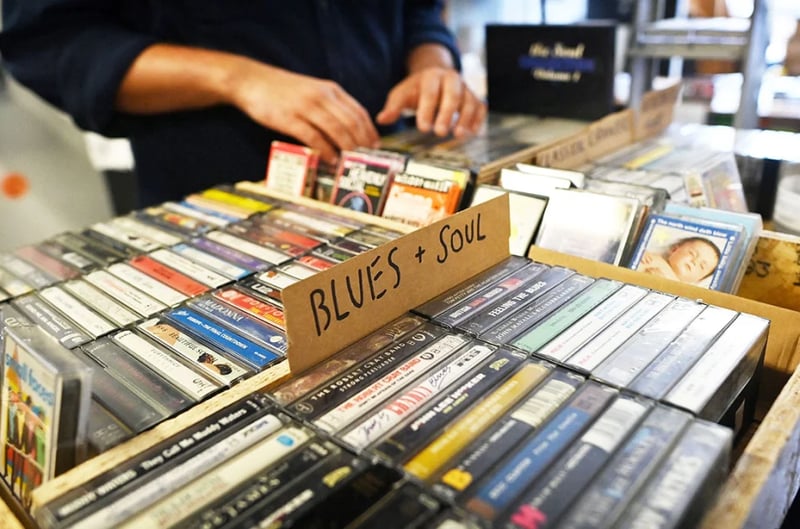
Cassettes Are Making a Comeback, But Can Production Keep Up? “After music cassettes died in the late ’90s, National Audio kept busy with cassettes for instructional materials, spoken-word bibles and Library of Congress work until indie bands and labels came calling as early as 2006. ‘Suddenly, we were back in business,’ Stepp says.” I love that story. [billboard.com]

Things I Do Not Like Hearing. I appreciate a well-written personal grievances post. This one—about phrases the author doesn’t like—is bound to become a classic of the genre. “I have never read the words ‘friendly reminder’ and not imagined that person seething, incandescent, smoke blowing out of their ears like a hot kettle, just absolutely furious. I simply don’t believe you. I do not think that you think we are friends or that this interaction is friendly. If you want to fight, we can fight.” [holapapi.substack.com]

Engagement, Attention, Shining a Light. This is a great writing goal: “My goal is for my writing to engage readers on a ‘shared inquiry’ level, where whatever I am saying is not viewed as a declaration that demands agreement, but an exploration attempting to illuminate the subject at hand in a way that encourages the reader to go exploring with a light of their own.” [biblioracle.substack.com]

A library of words. I bet you didn’t think you’d want to read about the real purpose of a Thesaurus today, but you’re going to have to trust me. This post is fantastic. “The purpose of an ordinary Dictionary is to simply explain the meaning of the words. After you look up the word, you are given the idea the word is supposed to convey. The Thesaurus is supposed to work in the opposite direction: you start with an idea, and then you find the words to express it. A dictionary turns words into ideas and a thesaurus turns ideas into words.” [austinkleon.substack.com]

SF’s Market Street Subway Is Running on Floppy Disks. This is quite something. “SFMTA is hardly unique in using them, however. As recently as 2020, British Airways was loading avionics software onto 747s via floppy disk.” I also love that they felt the need to include a photo of a floppy disk in the article. [sfstandard.com]

Latex, severed legs and fake erections: why is a whole new generation obsessed with DVD menus? This is a wonderful homage to the lost art of DVD menus. “Some turn-of-the-century landing pages were so imaginative they cut through into popular consciousness: 2003’s House of 1,000 Corpses featured a murderous clown directly addressing (and mocking) the viewer, while the Harry Potter DVD let viewers choose a wand, cast spells, and solve puzzles to access deleted scenes.” [theguardian.com]

An Imperfect List of Books Like “Tomorrow and Tomorrow and Tomorrow”. This is my favorite book I’ve read in a long time. Good list of others to try. [bookriot.com]

Link roundup for February 1, 2023

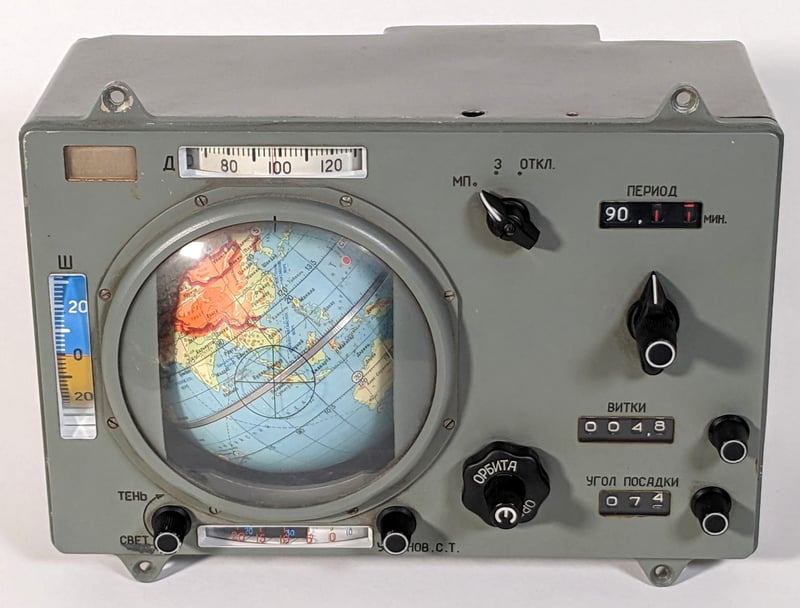
Inside the Globus INK: a mechanical navigation computer for Soviet spaceflight. Dang this thing is beautiful. And what an amazing piece of engineering.

Youth Spies and Curious Elders. Life goals: “Waters is what I call a Curious Elder — someone who manages to retain their curiosity as they age and stays interested in what young people are up to. The curious elder isn’t interested in judging youth, they’re interested in learning from them.”

The Thoughts of a Spiderweb. This is a fascinating article about animal cognition but I am especially blown away by the idea of spiderwebs being “an extension of the spider’s cognitive system” because I’m reading the sci-fi novel Children of Time right now and that is how the spiders communicate in the story.

Audi’s new EV is a luxury SUV with augmented reality that doubles as a pickup. I can’t decide if I love this or hate it.

Prisoners Usually Can’t Have Cell Phones. See How People Use Them Anyway. “Some men use their phones to take online classes, posing as regular students in the free-world, a ruse that only works in the age of Zoom classrooms and online meetings.”

It’s the Coolest Rock Show in Ann Arbor. And Almost Everyone There Is Over 65. “The show always starts at 6:30 p.m. and ends at 9 p.m., in time to get to bed at a reasonable hour.” Sign me up! (NYT Gift Link)

How ‘The Last of Us’ changed gaming, strained relationships and spawned an empire. Probably my favorite read of the week. “‘The Last of Us’ always felt like a mission statement, a game that wanted to prove that big-budget action shooters could not only have a sense of gravitas but could advance the medium in narrative, gameplay and representation.”

Link roundup for January 29, 2023

Stray Links for January 22, 2023

Every few days I post some links to things I enjoyed that don’t neatly fit into the topics I usually cover on this blog. Use it to fill your reading queue with interesting stuff.

  • The Most Ridiculous and Weird Tech Gadgets From the Last 25 Years. “The Hushme was a ‘voice mask’ intended to let you make phone calls without bothering anyone.”
  • Between-time by Mandy Brown. “We live in a world full of distractions but short on breaks. The time between activities is consumed by other activities—the scrolling, swiping, tapping of managing a never-ending stream of notifications, of things coming at us that need doing. All that stuff means moments of absolutely nothing—of a gap, of an interval, of a beautiful absence—are themselves absent, missing, abolished.”
  • Movie Trailers Keep Tweaking Well-Known Songs. The Tactic Is Working. (NYT gift article link) “As a composer, Rosen is at the forefront of the trailerization movement: He’s in demand for his ability to rework existing songs to maximize their impact in trailers for films and TV shows.”
  • All Human Systems are Enormous Trash Fires. “Once you recognize that all human systems are enormous trash fires, you stop trying to figure out how to switch to a system that isn’t an enormous trash fire, since they don’t exist. […] Eventually you even start to appreciate the beauty of it. How impressive it is that we manage to get anything done at all, given how completely trash everything is, and how on fire it is all the time.”
  • This is a beautifully-written piece about standup comedy but also about so much more. I don’t want to spoil it, except to say it starts like this: “Perhaps due to lockdown and the interruptions to normal service, but more likely due to autumnal intimations and a long dormant weakness for sentimentality, I now cherish the belief that the only flavour for which a grown-up should cultivate a taste is the bittersweet.”
  • KC Green reflects on creating the “This is Fine” meme. “When a work gets as big as this has, is it still yours?”
  • Eightify: AI Youtube Summary with GPT. A Chrome plugin that promises: “Instant AI summaries for Youtube videos using GPT. Summarize video into 8 key ideas.”
  • Can Doom Run It? An Adding Machine in Doom. “I demonstrate that it is possible to run any bounded computation in Doom, minus constraints on level size.”

Stray Links for January 20, 2023

Every few days I post some links to things I enjoyed that don’t neatly fit into the topics I usually cover on this blog. Use it to fill your reading queue with interesting stuff!

  • The Astronomy Photographer of the Year 2022 Winners are out.
  • Did the Music Business Just Kill the Vinyl Revival? “On an aggregate level, consumers are simply not buying music. They prefer to stream it for pennies rather than purchase it for dollars.”
  • How Do Big Tech Giants Make Their Billions? I know infographics are so 2000s, but this comparison data is super interesting.
  • This week’s useful appReadow provides book recommendations powered by AI.
  • This week’s WTF LinkThe lights have been on at a Massachusetts school for over a year because no one can turn them off. “The lighting system was installed at Minnechaug Regional High School when it was built over a decade ago and was intended to save money and energy. But ever since the software that runs it failed on Aug. 24, 2021, the lights in the Springfield suburbs school have been on continuously, costing taxpayers a small fortune.”
  • This week’s Gen X linkRemembering horse_ebooks in the age of GPT3. “it’s this fear of the uncanny which i think drove the negative response to the discovery that horse_ebooks was actually no longer a bot at all. more than the disgust at feeling like you’d been played in service of a viral marketing campaign, the deeper sense that a future is coming where it won’t be possible to reliably tell the difference between bot activity and human activity lay underneath that negative reaction. and ten years later - that future is here.”

The importance of getting customer feedback before product launches

I’m not usually a fan of posts like this, but I just couldn’t resist clicking on Pink Floyd Were Masters At Achieving Product-Market Fit. The first of seven “lessons” is the one that stands out for me:

Obtain Customer Feedback Before You Release Your Product

Musicians spend their entire youth writing songs and performing them in front of live audiences, which ensures that their initial album is validated by their fans before they enter the recording studio.

Unfortunately, successful musicians seldom have the luxury of market testing their subsequent albums. Instead of refining their material based on customer feedback, they are often lock away in a recording studio, isolated from their fans. Thus, it is no surprise that many bands suffer the sophomore jinx, in which their second album fails to achieve the success of their initial release.

Pink Floyd recorded Dark Side of the Moon after a year of writing and performing the material in front of live audiences. This audience feedback allowed the band to iteratively modify their creation.

Lesson: Avoid the sophomore jinx with your product launches by continuing to seek market validation, despite your initial success.

I guess in the interest of full disclosure, I should admit that I wrote a post like this once: A story about Miles Davis and the nature of true genius.

How Spotify uses personas to make product decisions

I always love a good persona case study, and The Story of Spotify Personas is no exception. But more than the story behind it, I am most interested in how teams use their personas (if at all). So I was happy to see the team devote some time to that towards the end of the article:

For instance, teams that want to create features from scratch can now choose their personas, map out the existing opportunities, pick a direction and start ideating from there. Although personas don’t replace user research, they can help us create educated hypotheses and save us time – meaning we don’t need to run foundational research every time we want to explore a new topic within the music listening experience. Our teams can now focus their resources on diving deeper into problems from the level set by the personas.

Equally, when teams are more focused on maintaining features, they can now map out their work and see how different personas would use it. They can create mental model diagrams for different personas and discover how they experience their journeys. And in doing so, they can refine the features to better fit certain ways of listening to music, whilst making sure they don’t alienate others.

I know I’m kind of in the minority here, but I am still a fan of personas—if they are based on actual research, and used to make better product decisions.