Menu

Posts tagged “music”

Old music, new music, and our not-so-new fear of technology

I get these weird obsessions sometimes—a thing that starts small in my head until it becomes all-consuming for weeks on end. Maybe you can relate? Anyway, my current obsession is centered around jazz, and how much we can learn from it about technology, how we listen to music, and yes, even design.

If you follow me on Twitter you’ll know that I just finished reading How to Listen to Jazz, a book I thoroughly enjoyed. I shared screen shots of some of my favorite sections from the book here, but suffice to say it is about so much more than jazz, and I highly recommend it not just for music lovers, but for anyone who works in a creative role.

Right on cue, as so often happens on the internet, I came across Ken Norton’s excellent post Please Make Yourself Uncomfortable, about some of the leadership lessons we can learn from great jazz records (especially the all-time best one, Kind of Blue):

Miles, Ella, and Duke were adept at guiding their bands into the optimal anxiety zone, making them restless and opening up a space where they could create masterpieces. Such talent is also needed in product management. So much of what we’ve learned, our instincts, are to do the complete opposite. We’re told to minimize risk, communicate a clear plan, and document every step. As product managers, our most important job is to help our teams find the place of optimal discomfort—the goldilocks zone of ambiguity and uncertainty.

The same day I read Gretta Harley’s The Slow Listening Revolution, about why she still has a vinyl collection:

Why vinyl? Commitment. In this mid-second decade of the 21st century, music is being taken for granted on a collective scale. An entire generation of music listeners will never pay for music, nor do they believe that they should. The long form music medium has taken a back seat to song culture, yet the average person only listens to a song for approximately 24 seconds before deciding if it’s worth their time to continue to listen. I ponder the substantive value of something that our capitalistic, corporate-model culture places on “free.” When we can listen to a whole song, or usually only 24 seconds of a song without paying for it, do we really value the music? I wonder if we listeners are as committed to music as we were pre-internet? I really like the internet, so these words are in no way a complaint or indictment, but merely observation.

All of this—jazz, new music, old habits—came together as I picked up Dire Straits’s 1985 CD Brothers In Arms, which in some versions had this cover:
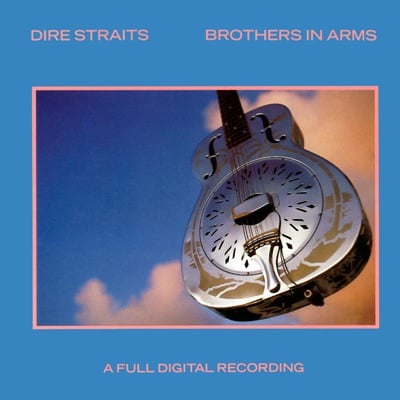
It used to be that proclaiming “A FULL DIGITAL RECORDING” was a selling point. Now, the first thing I look for when I buy an album is the phrase Mastered from the original master tapes, a sure sign of its 100% no-digital, analog-only experience.

Or, wait, maybe we’re just being anti-technology in our criticisms of digital music? There has always been a reluctance to adopt new things—a longing for the past and how things used to be. Clive Thompson gives us another example of this historical skepticism in That cursed newfangled technology, “electric lights”:

Robert Louis Stevenson penned “A Plea for Gas Lamps” in 1878, hoping to dissuade London’s authorities from installing obnoxious electric streetlamps like those in Paris. “A new sort of urban star now shines at night,” he wrote, “horrible, unearthly, obnoxious to the human eye; a lamp for a nightmare!”

So I don’t think we’ll solve this particular “which one is better” musical argument any time soon. But if history teaches us anything, it’s that it’s not a new argument, so we should just roll with it. And rock with it1.


  1. Sorry, that’s a really bad joke. I’ll see myself out. 

The streaming music ceiling

Cortney Harding makes some good points about the behaviors of different music buying personas in Is There a Streaming Ceiling?

The future is beginning to look like it will be a two tiered system — the top group of music fans will pay for streaming and everyone else will buy a handful of albums a year. Think of all the people you know who bought the Adele album, and I’ll bet that for many of them, it was the only album they bought this year. Many of these consumers aren’t all the interested in what streaming can offer them — they are content with hearing new music on the radio, buying one or two albums a year, and perhaps seeing one or two concerts.

It feels like the music industry has never been this complicated.

Why sad songs make us feel good

Princess Ojiaku summarizes some recent research on Why sad songs can be feel-good and noise music can be nice:

Sad music might make people feel vicarious unpleasant emotions, found a study published last year in Frontiers in Psychology. But this experience can ultimately be pleasurable because it allows a negative emotion to exist indirectly, and at a safe distance. Instead of feeling the depths of despair, people can feel nostalgia for a time when they were in a similar emotional state: a non-threatening way to remember a sadness.

I guess this is the reason we love to immerse ourselves in all kinds of books and stories as well. It’s a safe way to experience unsafe things. Or, as C.S. Lewis put it, “We read to know we are not alone.”

From the phonograph to streaming and how we now listen to music

I really enjoyed Clive Thompson’s history of How the Phonograph Changed Music Forever. I found a couple of observations particularly interesting. First, on the “new” phenomenon of listening to music alone:

A curious new behavior emerged: listening to music alone. Previously, music was most often highly social, with a family gathering together around a piano, or a group of people hearing a band in a bar. But now you could immerse yourself in isolation. In 1923, the writer Orlo Williams described how strange it would be to enter a room and find someone alone with a phonograph. “You would think it odd, would you not?” he noted. “You would endeavor to dissemble your surprise: you would look twice to see whether some other person were not hidden in some corner of the room.”

This is particularly interesting when you consider it in the context of the latest trend: headphones as the new walls for people in open-plan offices. We went from listening to music together, to listening to music alone, to using music to indicate we don’t want to be bothered. Also see How Headphones Changed the World as a great companion article to the phonograph one.

Second, this is something I hadn’t considered before1:

“In the age of the iPod, and the age of Pandora, and the age of Spotify, we’ve seen the average college student go from being a hard-core ‘rock fan’ or a hard-core ‘hip-hop fan’ to being a connoisseur of a lot of different genres, and a casual fan of dozens more,” he says. “It’s very rare to come across someone of college age or younger who’s only invested in one or two styles of music,” and they’re less likely to judge people on their musical taste.

I’ve written before on the tyranny of endless musical choice, and how much we lose in the age of streaming, but this is most certainly a positive thing. We used to be narrowly defined by the genres we liked, and now we’re able to dip in and out of interesting musical experiences we wouldn’t have been exposed to in the age of the phonograph and CDs.


  1. These “man, I’m old” moments are happening with increasing and concerning frequency now. 

Elezea Newsletter 31: Authenticity, grammar heroes, the web, streaming music, texting & driving

If you’d like to receive these updates in your email, you can subscribe to the newsletter here.

My friend Gio tells me he liked the tone of the last newsletter. Sure, it’s a sample of one, but I like writing how I talk, so I guess I’ll keep going—until I get a request to be a little more “corporate”, in which case I’ll start using words like “engagement” and “take it offline”. I refuse to use “ask” as a noun, though. One has to draw the line somewhere.


Anyway, the quote I can’t get out of my head this week is from Madeline Ashby’s No one cares about your jetpack — an article about the relative box office failure of the movie Tomorrowland. The whole thing is good, but this paragraph stands out:

In the end, the lacklustre performance of Tomorrowland at the box office has nothing to do with whether optimism is alive or dead. It has to do with changing demographics among moviegoers who know how to spot an Ayn Rand bedtime story when they see one. There are whole generations of moviegoers for whom jetpacks don’t mean shit, whose first memories of NASA are the Challenger disaster. And you know what? Those same generations believe in driverless cars, solar energy, smart cities, AR contacts, and vat-grown meat. They saw the election of America’s first black president, and they witnessed a wave of violence against young black men. They don’t want the depiction of an “optimistic” future. They want a future where their concerns are taken seriously and humanely, with compassion and intelligence and validation. And that’s way harder than optimism.

I’ve felt for a long time that what people (I agree with Rebecca Onion that we need to ditch generational labels) now crave the most is authenticity. We’ve learned how to see through most flavors of BS, and we are drawn to people situations that don’t try to dress things up to hide the truth. In short, we prefer “I made a mistake” to “Mistakes were made”.


I love What exactly are our rules comprised of?, a story in The Economist about a guy who believes his grammatical mission in life is to remove every Wikipedia instance of the phrase “comprised of” that he can find. And then there’s the guy who doesn’t believe in the past perfect tense. We should all have this much conviction about something in our lives.


In The Web of Alexandria (follow-up), Bret Victor continues a very interesting discussion about the role of the web to both preserve knowledge (the idea of a “common record”) and forget certain things (ephemeral discussions). He draws the following, well-argued conclusion:

[The web] currently has the property that it forgets what must be remembered, and remembers what must be forgotten. It manages to screw up both the sacredness of the common record and the sacredness of private interaction.


Mike Errico looks at the economics of music streaming, and those who try to game the system, in Everything in the Music Industry Has Changed Except the Song Itself. There’s a fascinating story about a band who made $20,000 by releasing an album of silent tracks and convinced their fans to stream it while they slept. It’s a weird new world in this industry.


Here’s an upside down thought. Clive Thompson asks us to consider that maybe when people text and drive, the most important of the two activities isn’t the driving, it’s the texting. So maybe we shouldn’t stop people from texting, but rather look for ways to get them to stop driving. Park the Car, Take the Bus is a very intriguing take on this topic.


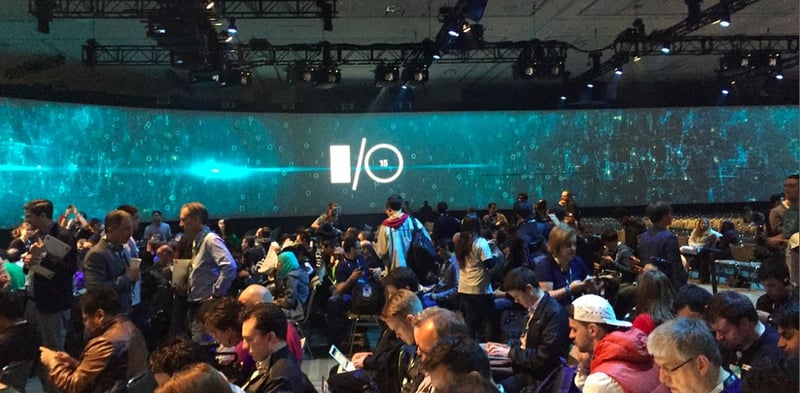
And finally, in honor of Google I/O this week, I’ll leave you with this:

Let us know everything about you. We promise it’ll be worth your while. http://t.co/vJv4ucoZmt

— Josh Clark (@bigmediumjosh) May 29, 2015

Happy weekend, everyone!

Streaming music and venture capital

Ben Thompson wrote the best analysis of Tidal I’ve seen so far. From Tidal and the Future of Music:

I would again draw an analogy to venture capital: startups can spread via Twitter or new discovery services like Product Hunt; minimum viable products are cheaper to build than ever thanks to Amazon Web Services, Microsoft Azure, etc.; and distribution channels like App Stores have natural promotional channels. And yet the importance – and amount – of venture capital has never been greater.

The truth is that because so many folks can now get started it is that much harder – and more expensive – to cut through the noise. Consumer companies need massive growth for many years, and enterprise companies need expensive sales forces, and the only folks enabling both are venture capitalists.

It’s a great overview of the all the challenges Tidal will have to overcome to beat incumbents like Spotify and Pandora.

Excuse me while I kiss the sky

Melissa Dahl talked to some people to find out Why You Keep Mishearing That Taylor Swift Lyric:

“There’s a piece of what we understand that comes from the sound that comes in our ear,” but another piece of our understanding comes from our minds — from our expectations, in other words. It’s easy to see how this explanation applies to many misheard lyrics, specifically the most-often cited one from Jimi Hendrix’s “Purple Haze,” which contains the lyrics “Excuse me while I kiss the sky”; people often mishear that line as “Excuse me while I kiss this guy.” It makes sense: People are more accustomed to hearing someone talking about kissing some guy, less so the entire sky.

The real reason for vinyl

Dave Pell in a short note about music streaming, radio, and high-res audio:

I’m at the tail-end of a pretty severe audio-related midlife crisis (related: Anyone want to buy some vinyl?) and I’m convinced that the return to Vinyl and the quest for audio excellence has less to do with sound quality and more to do with nostalgia for what listening to music used to be — an often communal activity that required focus and was more than just a soundtrack for whatever else you happened to be doing at the moment.

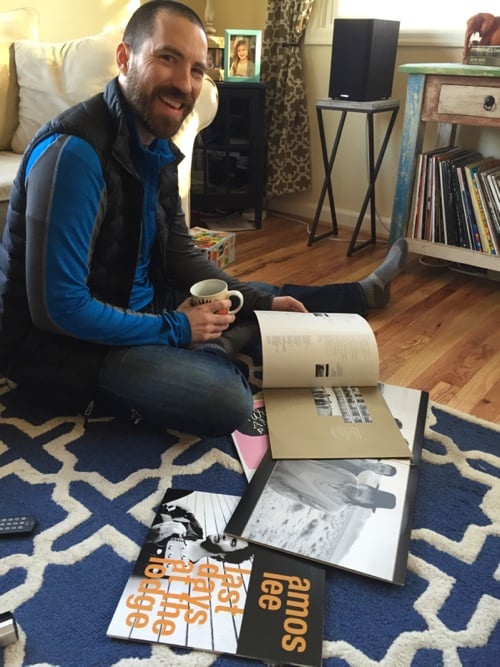
As someone who is at the beginning of his vinyl-related mid-life crisis, Dave’s words really resonated. Yes, I’m chasing upgrades and better sound, but I also know that one of the real reasons I’m doing it is because I get to sit on the floor with friends and nerd out about music:

Yes, it makes me write pretentious pieces on Medium about “the experience” of vinyl, and I feel a little bit embarrassed about that. But on the other hand, maybe it’s ok. I think it’s possible to be self-aware about the real reason why we do things, yet still embrace what we thought it represented and enjoy that. I have to believe it’s possible to hold those opposing things in my head without spontaneously self-combusting. And you know what, if my chase for audio excellence is actually about a chase for closer connection with other people, it’s probably ok anyway.

That’s my story and I’m sticking with it.

Taking back the music

I wrote a story about jazz, coffee, and liner notes, and hopefully managed to turn it into something with a logical conclusion. But feel free to judge for yourself by reading Taking back the music:

We like things fast and disposable — I get that. I mean, no one even knew what the word “ephemeral” meant until Snapchat came along. But moving quickly from one thing to the next will just never be as satisfying as really spending time with something or someone, with no escape from the person or the artist’s intentions and successes and failures. We can all do with a little bit more of that.

Human curation vs. algorithmic recommendations

Conor Friedersdorf talks about the differences between recommendations provided by people and algorithms in Would You Rather Get Tips from an Expert or an Algorithm?

The Amazon.com algorithm is very good at using what you’ve just bought to recommend things that you’ll want to buy, [David Weinberger, a senior researcher at the Berkman Center for Internet and Society] observed, but it can be hard to tell why. Perhaps you’ll be attracted to the content of the recommendation — or perhaps it’s the fact that the cover is also green, or that the print is in Helvetica font. 

In contrast, a skilled librarian is usually going to recommend a book solely because of its intellectual value, without any lurking, contentless variables. The librarian is therefore likelier to send a person in a direction they wouldn’t otherwise have gone in a way that will advance their thinking, education, or aesthetic taste, because they’re not just meeting needs that have already been expressed.

We’re seeing this divide come out in products as well, and some are starting to use their “humanness” as a differentiator. Whereas most music recommendation systems like Pandora, Spotify, and Rdio use algorithmic approaches, Beats touts the power of human curation on their product.

Go Book Yourself is a Tumblr site that publishes curated recommendations for books you might like based on other books you read and liked. Their tag line is Book recommendations by humans, because algorithms are so 1984.

The humans are coming.