Menu

Posts tagged “creativity”

My Reading Philosophy in 17 Guidelines

I like Tracy Durnell’s Reading Philosophy in 17 Guidelines, especially this one:

Treat my To Be Read list as a stream to dip into, not a to-do list. I know I won’t get to all the books on my TBR.

It reminds me of an article from 2011 that I come back to often—The Sad, Beautiful Fact That We’re All Going To Miss Almost Everything:

Now, everything gets dropped into our laps, and there are really only two responses if you want to feel like you’re well-read, or well-versed in music, or whatever the case may be: culling and surrender.

Culling is the choosing you do for yourself. It’s the sorting of what’s worth your time and what’s not worth your time. It’s saying, “I deem Keeping Up With The Kardashians a poor use of my time, and therefore, I choose not to watch it.” It’s saying, “I read the last Jonathan Franzen book and fell asleep six times, so I’m not going to read this one.”

Surrender, on the other hand, is the realization that you do not have time for everything that would be worth the time you invested in it if you had the time, and that this fact doesn’t have to threaten your sense that you are well-read. Surrender is the moment when you say, “I bet every single one of those 1,000 books I’m supposed to read before I die is very, very good, but I cannot read them all, and they will have to go on the list of things I didn’t get to.”

Reading Well

I love the point Simon Sarris makes here about the importance of reading fiction, and how it’s useful for work purposes as well:

I also tend to stress fiction because I think, especially among my professional peers in the industry of software, that there is too great a fondness for non-fiction. I think this arises from a belief that superior knowledge of the world comes from non-fiction. This thought is attractive to people who build systems, but over-systematizing and seeing systems in everything can be a failure mode. Careful descriptions and summaries miss too much of the world. Hard distinctions make bad philosophy. Reading fiction helps you become an unsystematic thinker, something that is equally valuable but more elided by some engineers. It is easy to maintain an intellectual rigidity. It takes more care to maintain a loose poeticism of thought.

Creating from a deeper place

There’s a lot going on in John Warner’s Speed and Efficiency are not Human Values. It’s primarily a reflection on generative AI tools in the context of being a published author—and well worth reading.

But the reason I am linking to it here is because it gives you an excuse to watch (or re-watch!) what John calls “the greatest guitar solo ever captured on a recording” (he is 100% correct). Here is Prince at the Rock and Roll Hall of Fame induction ceremony in the year both he and George Harrison (posthumously) were enshrined:

Here’s how John describes the solo in his post:

Prince was obviously a highly skilled guitarist capable of blazing speed on the fretboard (like the “Flight of the Bumblebee” guy) and indeed there’s a couple of spots where he just rips through some rapid note runs, but it’s also intensely musical, totally its own thing, while also managing to reference aspects of the solo from the original version (performed by Eric Clapton). […]

A great guitar solo is not about how fast you can play, or your degree of technical skill. It comes from a deeper place.

I know you’re going to roll your eyes, but seriously, the solo and that quote—it comes from a deeper place—inspires me to think a little bit more about the feel of the products we make, and a little bit less about the ”correctness” of fitting a specific mold.

Mono no aware

What would happen if we look at time through the lens of attachment theory? That’s the question my friend Simon asks in Attachment Styles to Time. I definitely have an “anxious attachment style” with time:

An anxiously attached person to time will try to arrest it: to find comfort again in a space where time felt distant. A coping strategy is to try and keep things the way they were. To hold onto people and places even if you aren’t present anymore.

The framing also reminds me of the Japanese phrase Mono no aware:

Mono no aware (物の哀れ), lit. ‘the pathos of things’, and also translated as ‘an empathy toward things’, or ‘a sensitivity to ephemera’, is a Japanese idiom for the awareness of impermanence (無常, mujō), or transience of things, and both a transient gentle sadness (or wistfulness) at their passing as well as a longer, deeper gentle sadness about this state being the reality of life.

That is also basically what the entire “synthwave” genre is about so if you’d like to hear what that concept sounds like as a song, just make your way over to Los Angeles by The Midnight.

Don't build a personal brand, build a reputation

I love this post on the personal brand paradox by Debbie Millman:

But rather than manufacturing a personal brand, why not build a reputation? Why not develop our character? Imagine what we could learn from each other if we felt worthy as we are instead of who we project ourselves to be. Imagine if we could design a way to share who we are without shame or hubris.

Tracy Durnell builds on this:

I’m more interested in following people as people — while I might have been drawn to certain blogs in the past because of the topic, the reason I keep reading many of them is having gotten to know the writer.

Those two posts articulate why I’ve decided to relax a little bit on the blog this year. For too long I didn’t really post here any more because it was so hard to get over my own self-imposed “this is worthy of a post” line. But these days I’m so much less interested in “building a brand” than I am in just… having fun and, well, being a person. So I am sharing things I find interesting, I am publishing unfinished thoughts alongside the deeply-researched posts. And I am slowly getting comfortable with posting more personal things as well (like yesterday’s LotR post).

I know this is the year of saying “this is the year of the personal blog” so I’m sure you’re pretty tired of hearing it from yet another person. But seriously, consider it. Consider thinking out loud and sharing those thoughts on a place that you own. Plant that digital garden—it might just give you life.

Link roundup for February 4, 2023

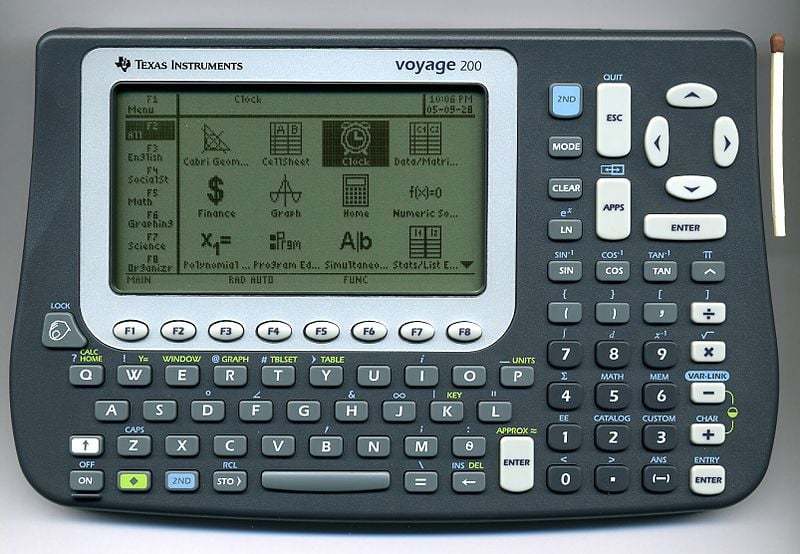
The Calculator Drawer is “a collection of emulated calculators, providing reference to how they worked and what the often unique interfaces would consist of.” (via Clive)

The Last Boeing 747 Leaves the Factory (NYT Gift Link). “The plane known as ‘Queen of the Skies’ helped make air travel more affordable, but it has been supplanted by smaller, more efficient aircraft.”

Here’s everything you ever wanted to read about the “This Is Fine” meme. The Meme That Defined a Decade (The Atlantic, possible soft paywall): “Memes are typically associated with creative adaptability, the image and text editable into nearly endless iterations. ‘This Is Fine,’ though, is a work of near-endless interpretability: It says so much, so economically. That elasticity has contributed to its persistence. The flame-licked dog, that avatar of learned helplessness, speaks not only to individual people—but also, it turns out, to the country.”

See also ‘This Is Fine’ creator explains the timelessness of his meme (The Verge), ‘This is fine’ creator reflects on 10 years of the comic meme (NPR), and the artist’s own reflection on the anniversary.

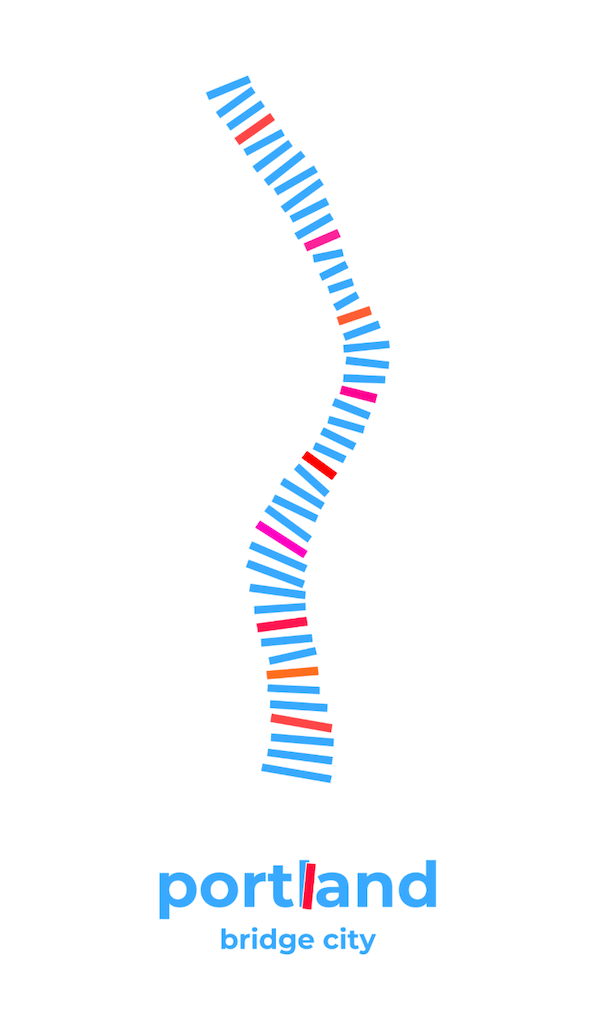
I adore the Barely Maps project—a collection of minimalist maps of places the author has visited. Here’s my local one:

I like this idea of “critical ignoring” as a way to be more intentional about our online time: “Critical ignoring is the ability to choose what to ignore and where to invest one’s limited attentional capacities.” See also The Sad, Beautiful Fact That We’re All Going To Miss Almost Everything.

Obsession, endless curiosity, and the joy of iterative projects

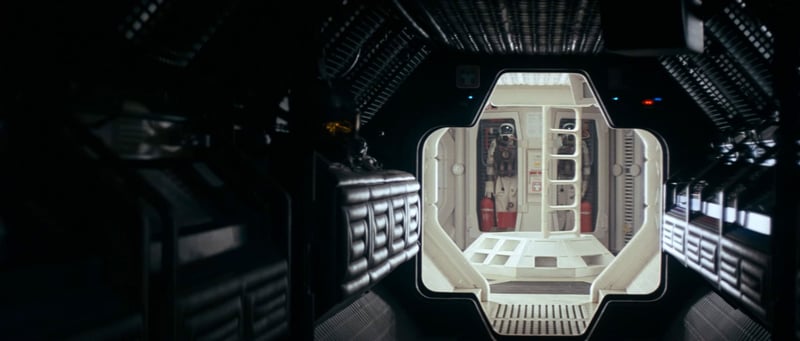
I love when people get obsessed with a topic and then turn that obsession into an “iterative project” where they do the same thing over and over until the topic has nothing left to give. An example: my friend Dave watches sci-fi movies hundreds of times and obsesses about the typography for his blog Typeset in the Future. I think his post on Alien is my favorite:

The opening credits for Alien are nothing short of a typographic masterpiece. You can watch them in their entirety on the Art Of The Title web site, but here’s the general gist: a slow, progressive disclosure of a disjointed, customized Futura reveals the movie’s central theme over 90 seconds of beautifully-spaced angular lettering.

Dave’s book is also amazing and you should buy it.

Clive Thompson wrote about this topic recently in his essay The Power of Indulging Your Weird, Offbeat Obsessions. His point about the value of following your obsessions is this:

It’s enormously valuable to simply follow your curiosity—and follow it for a really long time, even if it doesn’t seem to be leading anywhere in particular. Surprisingly big breakthrough ideas come when you bridge two seemingly unconnected areas.

A few other recent examples got me thinking about this again. Ander Monson watched Predator 146 times and wrote a book about it. From an interview with him:

In following every rabbit hole of his obsession with the film through to its end, Monson creates a book that is truly one-of-a-kind—not just a dose of nostalgia for movie buffs, but a revelatory investigation for anyone who’s ever really loved a singular piece of culture, enough that it got tangled inextricably in their identity and could never quite be excised. In Monson’s own words: “I believe that if you look long and hard enough at what you loved best at fourteen and how you lived then and what you saw in the world, it will reveal both the world and you.” As the pages turn, a question inevitably arises: What have you loved in the way that Monson loves Predator? And, for better or worse, how has it made you who you are?

A few weeks ago Monson published an essay about a similar project: Sean T. Collins’s “Pain Don’t Hurt”, an out-of-print book of 365 essays about the movie Road House (you can read every essay on his website). Monson starts off by calling this a “bad idea essay”, and if anyone is qualified to say that, it’s the guy who watched Predator 146 times. But he goes on to say this:

The reason I love bad idea essays is not because they seem dumb or bad but that they’re hard. Anyone can write a good idea essay. But only a real pro—or a real fool, and it’s hard to tell which you are when you start one, which is the entirety of the stakes of the bad idea essay—can write a bad idea to its exhaustion/completion. Only after exhausting yourself will you see if it was worth it.

But it’s these paragraphs that really get to the heart of the matter for me:

365 essays about Road House is an idiotic thing, and its idiocy is part of its appeal. I am often moved by iterative projects, because in repeating an action every day or every week or every year you make time a subject. […]

The reason I love iterative projects is that the plot is inevitably the movement of the mind (or the life or the body) through time. Every piece is a technical problem: oh shit, what am I going to do today? And the technical problem just gets harder as it goes deeper: How can I not bore myself on essay 241?


The reason obsessive projects like these—or what Monson calls iterative projects—are so appealing to me is two-fold. One, there is The Sad, Beautiful Fact That We’re All Going To Miss Almost Everything:

Surrender, on the other hand, is the realization that you do not have time for everything that would be worth the time you invested in it if you had the time, and that this fact doesn’t have to threaten your sense that you are well-read. Surrender is the moment when you say, “I bet every single one of those 1,000 books I’m supposed to read before I die is very, very good, but I cannot read them all, and they will have to go on the list of things I didn’t get to.”

Two, if we agree that we’re going to miss almost everything, there is a certain beauty in picking a small number of things you want to know everything about, and then sharing that with those around you. We know from the African philosophy of Ubuntu that “I am because you are”, or:

Humanity is not embedded in my person solely as an individual; my humanity is co-substantively bestowed upon the other and me. Humanity is a quality we owe to each other. We create each other and need to sustain this otherness creation. And if we belong to each other, we participate in our creations: we are because you are, and since you are, definitely I am.

One of the most tangible ways we can “owe humanity to each other” is by crawling deep into the corners of a specific topic and picking out the best pieces of it for the people around us. It’s saying, “I know we’re going to miss almost everything, but on this thing I got you. I’ll go deep so you don’t have to, and I’ll share what I learn so we can both enjoy what makes it special.”

There’s one more thing that really drove this point home for me recently. Substack has an interview up with Nicola Lamb, author of the Kitchen Projects newsletter. Nicola has built a very large following on Substack, and her answer to the question “What have your subscribers taught you?” summarizes this entire post so well. In essence, her audience taught her that we all want to hear about each other’s obsessions:

[My audience taught me] to be unashamedly obsessed with whatever you are into. To not shy away from details and to get deep into whatever it is that you love. Thank you for that.

So maybe this is something for all of us to ponder a bit more. What are you obsessed with that seems so niche that surely no one else would care? I’ll say this: if someone can write a fascinating book about watching Predator, I guarantee that your “bad idea essay” is probably actually a really good idea for an iterative project. I, for one, would love to read it.

Distractions, monk productivity, and the importance of “between-time”

Sometimes the internet seems to think about the same things at the same time. Last week we were all in on meetings (see here, here, here, and here), and this week we’re all talking about distractions. Here are three excellent articles about this topic that all came across my feeds this week.

First, there is a new interview with the father of deep work, Cal Newport (NYT gift article link). He talks about context switching and “slow productivity”—and it’s really good:

I’m trying to develop this notion of productivity that’s based on, at the large time scales, the production of things you’re proud of and that have high impact, but on the small time scale, there’s periods where you’re doing very little. […] So how do you actually work with your mind and create things of value? What I’ve identified is three principles: doing fewer things, working at a natural pace, but obsessing over quality. That trio of properties better hits the sweet spot of how we’re actually wired and produces valuable meaningful work, but it’s sustainable.

Matt Reynolds has a catchy title in Wired: Easily Distracted? You Need to Think Like a Medieval Monk. It’s a fun exploration of how medieval monks were, as he calls them, “the original LinkedIn power users” who kept trying to one-up each other with how distraction-free they were living:

These kinds of stories reminded monks just how hard it was to stay focused. They weren’t expected to be concentration machines. They too would come up short every now and then. “Acknowledging that upfront is a kind of compassion,” says Kreiner. “Monks are really good at being compassionate to each other, and to how hard it was to really follow through on stuff.” Freeing ourselves from distraction is really difficult. We don’t have to feel awful about not always matching up to our lofty goals.

And finally, in a short read Mandy Brown talks about the importance of Between-time:

We live in a world full of distractions but short on breaks. The time between activities is consumed by other activities—the scrolling, swiping, tapping of managing a never-ending stream of notifications, of things coming at us that need doing. All that stuff means moments of absolutely nothing—of a gap, of an interval, of a beautiful absence—are themselves absent, missing, abolished.

If I had to find a thread through all these pieces, it would be this:

  • Not every moment needs to be filled with work that produces output. Cal Newport calls this working at a natural pace: “one with more variability in intensity than the always-on pace to which we’ve become accustomed.”
  • Everyone gets distracted. Have some grace for yourself, and others. And try to distinguish between “distractions” (filling time with stuff) and “between-time”—those real breaks that we all need but get so little of.

Letting books talk to each other

I love this bit from Austin Kleon’s Letting books talk to each other:

If you read books on different topics and different genres and different formats at the same time, your brain can’t help but find weird connections between them.

This is one of my favorite things—not just with books, but with articles too. It’s such a good feeling when your brain makes those connections. I’ll add that I think this is what makes blogs like Kottke so effective and compelling. When you are able to find and share the connections between things, you have something special going on.

Using storytelling to demystify meditation

I enjoyed this interview with Anna Charity, the head of design at Headspace. Here she explains designing the product specifically to make meditation feel more inclusive:

One of the main things that we considered when we created the brand was that meditation should feel like it’s for everybody, and it should feel accessible and inclusive. More importantly, we try to show meditation in a really everyday way — we show it in contexts that people can easily imagine. And one thing that all of us have in common is, is that we have a mind. Ever since Headspace’s inception we have always used characters and storytelling to explain meditation. As we all know, our minds are a complex place. They are full of different thoughts and emotions, and it isn’t always an easy place to inhabit. (That’s the reason meditation is so valuable.) From this, we knew we had to develop a style that communicated these ideas in an approachable and relatable way. And more importantly we found that characters are a great vehicle to represent the weirdness inside your head because they feel playful and memorable.