Menu

Posts tagged “creativity”

That Dragon, Cancer: a game that explores faith, hope, and love

Tomorrow, a game called That Dragon, Cancer becomes available to play. The premise is heartbreaking:

An immersive narrative videogame that retells Joel Green’s 4-year fight against cancer through about two hours of poetic, imaginative gameplay that explores faith, hope and love.

Earlier this month Wired did an incredible profile on the creator of the game: Joel’s dad, Ryan Green. From Jason Tanz’s A Father, a Dying Son, and the Quest to Make the Most Profound Videogame Ever:

Over time, That Dragon, Cancer became Green’s primary method of dealing with Joel’s illness, as well as a way for him to preserve a connection to his son, whom he struggled to get to know. In real life, Joel couldn’t talk about his feelings, leaving Green to guess at his thoughts and emotions. Joel’s reaction to radiation therapy was particularly puzzling. Children usually hated being placed on the gurney inside the giant linear accelerator, resisted the anesthetic, fought and clawed at their parents and doctors every time they entered the room. But Joel loved it. He grew impatient in the waiting room, and his face lit up when the doctors came to get him, more excited than his parents had ever seen him. Green couldn’t know just why Joel was so enthusiastic about undergoing the anesthesia, but he wrote a scene imagining the adventures Joel might be experiencing in his mind—riding animals made of stars, giggling and tearing across the cosmos.

It is an incredible story—equal parts sad and inspiring. This game scares me—I’m not sure I have the strength to play it. Here’s the trailer…

Norman, the boring anti-hero

Halfway through his day at work, Norman yawned.

“Oh no, don’t start doing that!” a coworker joked.

Norman chuckled. “Yeah, I know.”

“Rough night?”

“You could say that,” Norman lied.

Norman didn’t have a rough night. Norman had gotten eight hours of restful sleep. Norman was just always a little tired.

That’s a story from The Life of Norman, a reddit thread where thousands of people tell boring stories about the fictional Norman’s boring life. And it’s fascinating. From Michell Woo’s The Life of Norman (and the Rise of Boring):

Now, all day, every day, redditors construct the intricacies of the life of this unremarkable man, mostly in 500 words or less. Reading through the titles feels like watching paint dry. Norman goes into his office building. Norman makes a steak for dinner. Norman receives a text message. Norman does the laundry. Norman meets a friend and they talk about how they both used to enjoy opening Microsoft Paint, drawing some squiggles, and coloring in the spaces. Life of Norman is possibly the most action-deficient fanfiction series in existence—and that’s what makes it so compelling to its creators and audience.

Why are people drawn to this? One possible reason:

After writing 40 stories about Norman and following his journey so closely, [Cameron Crane, a moderator of the Life of Norman subreddit] believes he’s drawn to the character partly because he’s an example of what he doesn’t want for his life. Redditors will sometimes tell him that they’re grateful for Norman, sharing with him that they’ve been depressed and stuck in a rut and that Norman serves as a wake-up call.

That’s true for him, too. “At the heart of it, I think I’m just afraid, afraid of becoming Norman,” Crane says. “Norman isn’t a role model. It’s okay to be like Norman, but you shouldn’t accept it. He’s comfortable, and the only way to get ahead in life is to make yourself uncomfortable.”

Book review: The Girl on the Train by Paula Hawkins

Living like this, the way I’m living at the moment, is harder in the summer when there is so much daylight, so little cover of darkness, when everyone is out and about, being flagrantly, aggressively happy. It’s exhausting, and it makes you feel bad if you’re not joining in.

— Paula Hawkins, The Girl on the Train

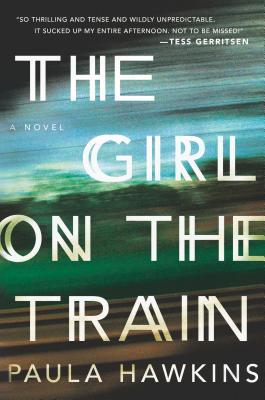
The first thing you should know about The Girl on the Train is that it is sad. Unrelentingly, never-lifts-out-of despair sad. So if that’s something that freaks you out, it’s probably best to stay away.

The second thing you should know about The Girl on the Train is that it is a bloody good mystery for about 80% of the book. It’s fast-paced, and not as badly written as many of these thrillers often are.

I guess the third thing you should know about The Girl on the Train is that it takes a really long time to wrap up once you figure out what’s going on.

The last thing you should know about The Girl on the Train is that it’s a great way to clean the palate between two more serious books. It’s a good mystery, the writing won’t annoy you (too much), and it’s a fast read. It’s exactly what I needed after the heaviness of The Mechanical (my review here).

Oh, one more thing. It’s really sad.

Hollowness: that I understand. I’m starting to believe that there isn’t anything you can do to fix it. That’s what I’ve taken from the therapy sessions: the holes in your life are permanent. You have to grow around them, like tree roots around concrete; you mould yourself through the gaps.

— Paula Hawkins, The Girl on the Train

The power of making things

Jon Kolko wrote a wonderful personal essay called Look, I Made a Thing: Confidence in Making:

If you stick with it, through the years of shitty ashtrays and embarrassing critiques and rejections, you start to learn that making things is powerful, mostly because on the way to making things, you build confidence. You can take on problems that are out of your league. You can become a teacher with no teaching experience. You can make money and provide value. You can lead a conversation, advance an idea, and drive specificity where there were only vague generalities.

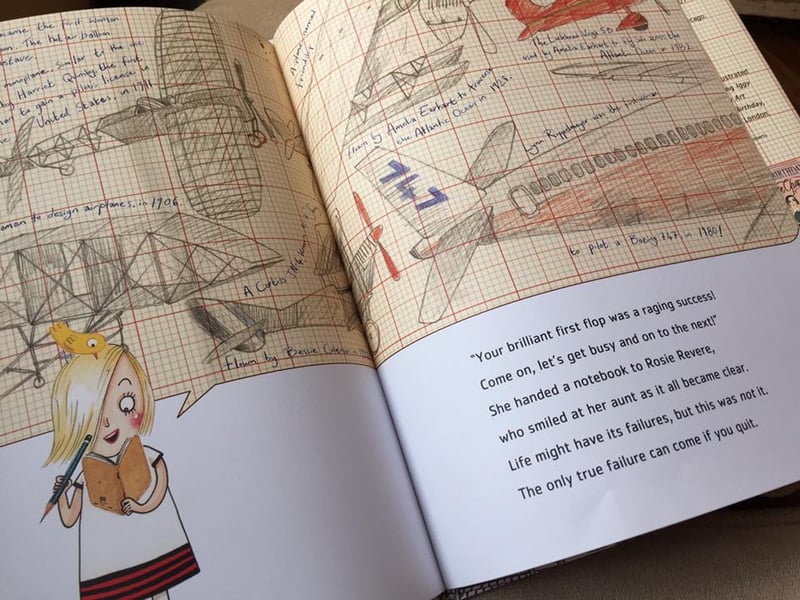
This idea—that just because you’re not good at something right now, it doesn’t mean you can’t become good at it—is something I try to instill in my daughters as well. And in doing that, I end up lecturing myself in the process too. One of my favorite books to read my daughters is Rosie Revere, Engineer by Andrea Beaty and David Roberts, because it explains this concept in language even I can understand…

Book Review: The Mechanical by Ian Tregillis

For the creation of the mechanicals was a seismic event, an earth-rending convulsion that left nothing untouched: palaces, thrones, and empires, yes, but also the way men and women thought about themselves and their relationship to the world, to God, even their own bodies.

― Ian Tregillis, The Mechanical

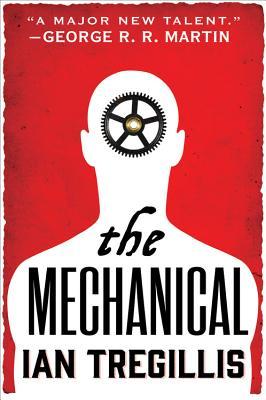
The Mechanical wasn’t on my radar until a friend recommended it, but it jumped to the top of my reading queue as soon as I read the blurb. I’m not usually a fan of alternate history or steampunk, but this story about a mechanical creature that attains free will—and thereby freedom from his creators—felt too good to pass up. And I wasn’t disappointed.

The plot is a new twist on the story we’ve seen many times before in movies like The Terminator and I, Robot. Humans create a thing that becomes self-aware, and general chaos ensues. What makes this story interesting is the mid-1900s setting, an unbalanced war between the Dutch (who created the mechanicals) and the French (who struggle to find weapons that can compete), and the fascinating inner thoughts of Jax, our mechanical protagonist.

As with most good stories, this one is only about robots and war on the surface. Dig a little deeper and you find insightful reflections on free will from the perspective of someone who wasn’t born with it. Here is Jax, describing what it feels like to be free from the geis (the painful compulsion to serve his masters) he’s been under since his creation:

Freedom felt like… nothing. Free Will was a vacuum, a negative space. It was the absence of coercion, the absence of compulsion, the absence of agony. A gap in his consciousness where geasa had perpetually jostled for priority, demanding his obedience. It was the photographic negative of Jax’s existence during every minute of the 118 years since he’d been forged. It was overwhelming. Exhilarating. Terrifying.

And a little later in the story, his realization that free will comes with certain responsibilities:

But he’d given her his word. And Jax realized, to his own surprise and disappointment, he didn’t want that to be meaningless. What point in having the freedom to enter into promises of your own choosing, to forge bonds of your own design, if your only aim is to shatter them? No. That couldn’t be his legacy.

I’m not sure what genre to put this book in. It’s a bit of sci-fi and alternate history combined, but it has a distinct literary fiction feel to it with its beautiful prose and wonderful storytelling. I have a couple of small complaints—the story meanders a bit at times, and it stops rather suddenly (but that’s ok, because the second book in the trilogy just came out). It still gets a big thumbs up and recommendation, though. I really enjoyed it.

Buy The Mechanical on Amazon
SimCity and the virtues of games about societal issues

On the surface, Ian Bogost’s Video Games Are Better Without Characters is a nostalgia piece about SimCity:

Such was the payload of SimCity: not a game about people, even though its residents, the Sims, would later get their own spin-off. Nor is it a game about particular cities, for it is difficult to recreate one with the game’s brittle, indirect tools. Rather, SimCity is a game about urban societies, about the relationship between land value, pollution, industry, taxation, growth, and other factors. It’s not really a simulation, despite its name, nor is it an educational game. Nobody would want a SimCity expert running their town’s urban planning office. But the game got us all to think about the relationships that make a city run, succeed, and decay, and in so doing to rise above our individual interests, even if only for a moment.

But later on it turns into a strong argument for games that are about bigger issues in society. Games not about fighting one’s way out of a prison or getting off a deserted planet, but games that focus on living systems, politics, and the economy. Great article.

Maybe offices aren't so bad, after all

Jamie Hodari makes the point that the recent blowback against office spaces (and open office plans) might be slightly overblown. She asks, Is Working Remotely Sapping Your Creativity?

A creative work life requires social relationships and serendipitous interactions. It requires contending with ideas you don’t agree with. It requires getting up and moving around. As a result, it’s becoming increasingly clear that for many people, working at an office isn’t a relic of a pre-digital age, but a vital element in reaching their creative potential.

Bumping into coworkers, chatting in hallways, sitting down over lunch, a day at the office results in dozens of interactions everyday. The result, shown both anecdotally and in statistics, is more creativity and greater effectiveness. For instance, in one study tracking the behaviors of a sales team of a pharmaceutical company, “when a salesperson increased interactions with coworkers on other teams … by 10%, his or her sales also grew by 10%.” Cross-functional, seemingly spontaneous interaction facilitated greater effectiveness on the part of workers–something that would not have been possible had sales representatives been working from their homes.

Design wars

Lukas Mathis’ False Dichotomies is a great post about how quickly design feedback can turn into an argument about the wrong things:

In creative endeavors, tribal, black and white thinking can be problematic, because it prevents you from noticing all possible options. Whenever the discussion veers from «how can we solve this problem» to «should we pick option A or option B», you need to take a step back, and ask yourself — and your team — if these are really the only two options.

Is there any kind of middle ground?

Are there entirely different approaches we didn’t consider?

Are there valid concerns the other group is raising, and can we take these concerns into account without completely dismissing our own concerns?

The importance of non-makers

Debbie Chachra wrote a great essay on our current obsession with the word “Maker”, and how that devalues other professions like educators and caregivers. From Why I Am Not a Maker:

When new products are made, we hear about exciting technological innovation, which are widely seen as worth paying (more) for. In contrast, policy and public discourse around caregiving—besides education, healthcare comes immediately to mind—are rarely about paying more to do better, and are instead mostly about figuring out ways to lower the cost.

New Sonos logo pulses when you scroll

New Sonos logo

This is pretty fantastic. The new Sonos logo pulses like sound waves when you scroll up and down. Brand New comments:

There is no doubt this is a party.

Indeed.

Designed by Bruce Mau Design.