Menu

Posts tagged “writing”

Social media and ambient humanity

I can’t get this quote from Dan Cohen’s Back to the Blog out of my head:

It is psychological gravity, not technical inertia, however, that is the greater force against the open web. Human beings are social animals and centralized social media like Twitter and Facebook provide a powerful sense of ambient humanity—the feeling that “others are here”—that is often missing when one writes on one’s own site. Facebook has a whole team of Ph.D.s in social psychology finding ways to increase that feeling of ambient humanity and thus increase your usage of their service.

For anyone who doesn’t get why features like Instagram Stories are so popular, there you go. “Ambient humanity” is a very strong force. We share seemingly insignificant details about our lives not because we think everything we do is important or worth sharing. We do it to know we’re not alone.

(link via Kottke.org)

The unreadable city

I really enjoyed Christopher Hawthorne’s essay called Los Angeles, Houston and the rise of the unreadable city:

This is going to be a column, instead, about something slightly different: about the legibility (and illegibility) of cities more generally. About how we react — as reporters and critics and simply as people — when we’re confronted with a city that doesn’t make sense to us right away.

I have never liked Los Angeles. I just couldn’t get over what I simply saw as a lot of dirt and too much traffic. But this viewpoint made me realize that, as with most cities, you can’t really love a city until you’ve lived there for a while.

If I had to put my finger on what unites Houston and Los Angeles, it is a certain elusiveness as urban object. Both cities are opaque and hard to read. What is Houston? Where does it begin and end? Does it have a center? Does it need one? It’s tough to say, even when you’re there — even when you’re looking directly at it.

I highly recommend reading this piece through the lens of a city you strongly dislike. Who knows, it might change your mind…

New e-book: Practical User Research for Enterprise UX

I worked with the wonderful folks at UXPin to write a short e-book on how to overcome some of the challenges of doing user research in large organizations. From the introduction:

Once a company grows over a certain size, the internal politics and number of people involved in every decision increase so much that it becomes virtually impossible to stay focused on fulfilling user needs and business goals. Instead, the focus turns inward to the opinions and whims of individuals inside the company. Add the complexity of designing B2B products to the mix and, well, things go bad very quickly.

When an abundance of stakeholders are involved in a product, user research is the only way to focus a whole team on the real needs and goals required for success. It’s also the only way to get people out of the habit of thinking “Well, I want this, so everyone else must want it too”—a view that I find much more common in enterprises than in smaller organizations.

If that sounds familiar to you, you’ll hopefully find the e-book useful. I discuss why it’s often so hard to get support for user research in enterprises. Then I provide some advice on how to sell the value of user research. Finally, I offer some practical tips for addressing the subtle differences of conducting research in larger organizations with users who aren’t buyers.

You can download the (free) e-book here: Practical User Research for Enterprise UX.

There's nothing wrong with reading ebooks

Paula La Farge challenges the idea that ebooks are inferior to physical books in The Deep Space of Digital Reading:

There’s no question that digital technology presents challenges to the reading brain, but, seen from a historical perspective, these look like differences of degree, rather than of kind. To the extent that digital reading represents something new, its potential cuts both ways. Done badly (which is to say, done cynically), the Internet reduces us to mindless clickers, racing numbly to the bottom of a bottomless feed; but done well, it has the potential to expand and augment the very contemplative space that we have prized in ourselves ever since we learned to read without moving our lips.

Last year I went through a phase of reading physical books again, but I gave it up pretty quickly. There are two things about the Kindle platform that I missed too much:

  • The ability to highlight sections, share to Goodreads, and access those highlights any time at the hugely under-appreciated kindle.amazon.com (I tried the app TextGrabber for a while to turn passages from a book into digital text, but it’s just not worth the effort).
  • I can’t live without the X-ray function that lets you look up details about the book and its characters.

Anyway, one of the major academic complaints about e-books is that reader comprehension is lower. But, hey, turns out…

It’s true that studies have found that readers given text on a screen do worse on recall and comprehension tests than readers given the same text on paper. But a 2011 study by the cognitive scientists Rakefet Ackerman and Morris Goldsmith suggests that this may be a function less of the intrinsic nature of digital devices than of the expectations that readers bring to them. Ackerman and Goldsmith note that readers perceive paper as being better suited for “effortful learning,” whereas the screen is perceived as being suited for “fast and shallow reading of short texts such as news, e-mails, and forum notes.” […]

If those same students expected on-screen reading to be as slow (and as effortful) as paper reading, would their comprehension of digital text improve? A 2015 study by the German educator Johannes Naumann suggests as much. Naumann gave a group of high-school students the job of tracking down certain pieces of information on websites; he found that the students who regularly did research online—in other words, the ones who expected Web pages to yield up useful facts—were better at this task (and at ignoring irrelevant information) than students who used the Internet mostly to send email, chat, and blog.

My guess is that a generation from now this simply won’t be a debate any more.

PowerPoint: Does it suck or is it evil?

In a journal article for Computational Culture Erica Robles-Anderson and Patrik Svensson presents a scholarly critique of PowerPoint, and it is fantastic. It’s long and in-depth and the rare academic article that is a joy to read. From the conclusion of “One Damn Slide After Another”: PowerPoint at Every Occasion for Speech:

PowerPoint is just one example of the oft-overlooked conditioning of knowledge production. The software profoundly shaped basic social expectations, technical conditions, and architectural pre-requisites for speech yet it was uncritically absorbed in nearly every quarter. PowerPoint does not zoom. It does not allow spontaneous comparisons. It does not accommodate several screens, multiple threads, or distributed live collaborations. It makes the analytic move of systematic comparison, so prevalent in late nineteenth and early twentieth century information presentations, extremely difficult to make. Moreover, its expansion has meant that once distinct situations have become more alike. Meetings, sermons, lectures, and talks increasingly employ the technics of commercial demonstration. Twenty-first century occasions for speech are structured by a platform that enforces the paradigm of one-slide-at-a-time.

Effective onboarding through human connection

Jeremy Keith writes about the onboarding process of the site The Session in his post Words of welcome. He shows a series of screen shots of simple messages that teaches users how to be good citizens on the site. Keith closes with this:

No intricate JavaScript; no smooth animations; just some words on a screen encouraging a human connection.

Design words to live by.

Medium as RSS reader

Despite its ridiculous name I’ve become quite fond of the POSSE movement (Publish on your Own Site, Syndicate Everywhere). It’s pretty easy to hook up and automate, so I’ll just mention the basics (and then move on to the problem child):

I can add more things through IFTTT, but I think that’s all I need for now. Except for Medium. I really didn’t know what to do with Medium, especially considering this and this:

2015 was the year of Medium and Newsletters, but I feel like we should use 2016 to Make The Personal Blog Great Again™.

— Rian Van Der Merwe (@RianVDM) January 2, 2016

But then it dawned on me… Indie publishers have been thinking about Medium all wrong. We’ve been thinking about Medium as a thing that eats all the world’s content with zero regard for publishers. But Medium is, in fact, nothing more than a next-generation RSS reader. You can follow people and publications, and presumably things will then show up in your feed (it’s all a little confusing to me). That’s when I realized that I should treat Medium not as a publishing platform but as an RSS platform just like Google Reader (may it rest in peace) or Feedly.

So back I went to IFTTT, and did this:

Medium RSS

Now every post on this site will automatically appear on Medium as well. So I guess my point is that if Medium is your RSS reader of choice, you can now subscribe to Elezea on Medium here.

Wisdom quotes for the rest of us

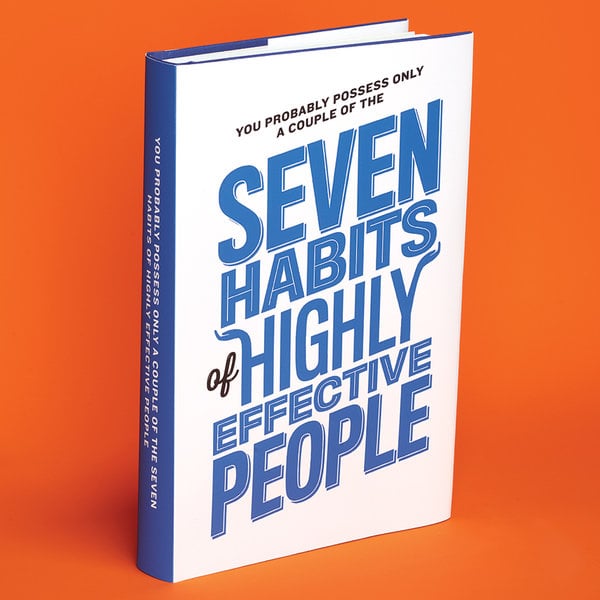
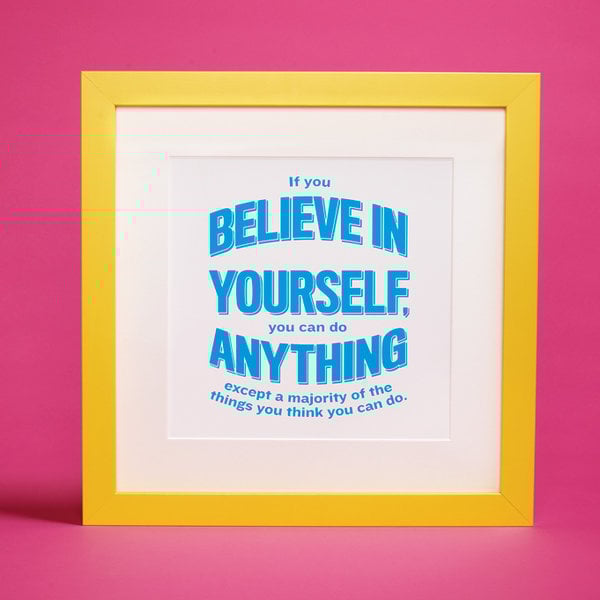
Jennifer Kahn’s The Happiness Code, an article about bringing rationality to self-improvement, is interesting in and of itself. But it’s Hannah Whitaker’s photo illustrations with lettering by Luke Lucas that really drew me in. I’m sure many of you despise pithy “wisdom quotes” as much as I do. So these are like smooth balm to a tortured soul.

Wisdom

Wisdom

Wisdom

Wisdom

You can see more of Hannah’s excellent work here. Luke’s personal website with some his great graphic design projects is here.

Quote: Patrick Rothfuss on the importance of travel

If you want to know the truth of who you are, walk until not a person knows your name. Travel is the great leveler, the great teacher, bitter as medicine, crueler than mirror-glass. A long stretch of road will teach you more about yourself than a hundred years of quiet introspection.

—Patrick Rothfuss, The Wise Man’s Fear.

The myth (and danger) of the 'perfect response'

Adam Sternbergh breaks down The Internet Fantasy of the ‘Perfect Response’, that mythical one-liner that puts someone in their place, makes them realize the error of their ways, and changes their minds in an instant:

But the Perfect Response you cheer for and re-post frantically also tends to be one that (a) confirms whatever you already believe and (b) sticks it to someone you already despise. The Perfect Response is, in essence, not a radical new perspective, but simply a person saying a thing you agree with to a person you disagree with. It’s a kind of linguistic record-scratch, a perfectly crafted gotcha that ostensibly stops trolls in their troll-tracks and forces them to deeply reconsider the sad wreckage of their wasted lives. Which means the Perfect Response is also largely a figment of the internet’s imagination.

The problem is that the idea of a ‘Perfect Response’ makes us think that changing hearts and minds isn’t hard work. And that’s simply not true:

The Perfect Response, while apparently so bountiful in theory, is actually appealing precisely because, in practice, it’s so rare as to be almost nonexistent. It’s just a fantasy we yearn for, and to which we happily subscribe, because the hurly burly of actual internet interaction can be so imperfect, and frustrating, and wearying, and hard. The give-and-take of real debate can be all of those things as well, but it also has the attractive by-product of potentially leading to change, something no Perfect Response has ever done. Which is how we ended up with the phenomenon of the Perfect Response in the first place—it’s an imperfect response to just how difficult real communication can be.