Menu

Posts tagged “writing”

Blogging with Pinboard

I’m a long-time Pinboard fan, and from the moment I became a paid user I couldn’t shake the feeling that it is one of the most underrated services out there. It’s basically the center of my personal internet. I have years of articles tagged and cached, and available immediately whenever I need to remember something. For me, it represents the best of what technology has to offer as an “external brain”1.

But it’s even more powerful than that. I recently started wondering if Pinboard could become more central in my blogging workflow as well. My flow when I find an article I want to write about used to be two steps: (1) save to Pinboard, and then (2) start a new text file (with an excerpt from the article) and start writing.

Since I don’t always have time to write immediately after I read something, the disjointedness of these two steps means that I forget to post articles sometimes — or that I can’t remember which part I want to write about. So I needed a way to save Pinboard links for later, in a way that lets me pick up writing whenever I have time.

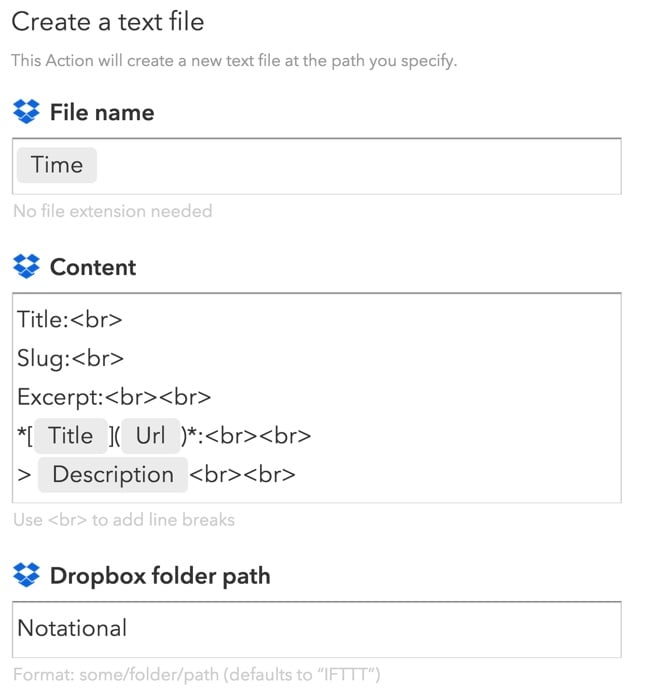
The solution I came up with isn’t rocket science, but it has made such a big difference to the way I write that I wanted to share it here. The key is a simple IFTTT recipe that takes any new link I save to Pinboard and creates a Markdown-formatted text file that I can use to start writing whenever I want to.

Here is a link to the IFTTT recipe: Post any new Pinboard link to a new text file in Dropbox.

And this is what it does:

Pinboard and IFTTT

I always put a pull quote in the “Description” field when I save a Pinboard link, so the recipe creates a text note with a Markdown-formatted URL, the pull quote, and space for me to add a title, slug, and excerpt once I’m ready to post to the site. Putting the note in a Dropbox folder means I can continue typing and editing on any device — I use Editorial on iOS and nvALT on Mac.

As for posting… I still haven’t found a mobile blogging platform that works for me, so even though I write many posts on my iPhone or iPad, I still post exclusively from MarsEdit. So I also went one step further and made a Keyboard Maestro macro (download here) that transfers the text from nvALT to MarsEdit as soon as I’m ready to post.

You know, the internet is pretty cool sometimes.


  1. Clive Thompson discusses the idea of external memory in detail in his excellent book Smarter Than You Think

A URL to call home

Robinson Meyer reflects on Medium and What Blogging Has Become:

And I too, a lowly twentysomething, pine for days of less centralization. As I wrote a few days ago, in a New Medium-style short post, “I still find the idea of a diverse blogosphere — arrayed across tens of thousands of URLs, with sites organized by author and shaped by distinctive interests — really, distinctively, unavoidably cool.”

But is there a place in the web ecosystem for this kind of writing anymore? And is the cost of using Medium, which will centralize writing and create a kind of publisher/publishee power inequality, worth the ease? What will happen when widespread abuse comes to Medium, the way it’s come to Twitter? And social media companies have proven tremendously malleable, product-wise, to the desires of other companies — will Medium be the same? What does a piece of advertising look like on Medium anyway, when the line between journalism and PR on it is already so thin?

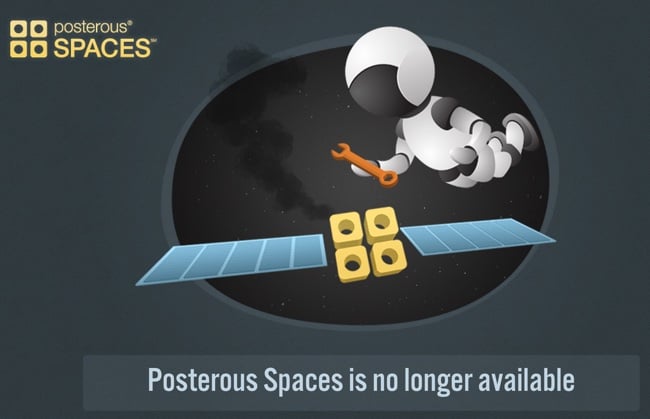
I’ve been around long enough for Blogger to rise (and fall), for MySpace to be the best (and then the worst) place to write your thoughts, and for Posterous and Windows Live Spaces to disappear (along with all my posts there). So I will stubbornly hold on to writing on this here, my very own URL.

Posterous

Are they users or people?

In Don’t Say ‘Cyclists,’ Say ‘People on Bikes’ Sarah Goodyear explains how some deliberate language changes turned a serious conflict in Seattle into a civil debate. Here’s what they did:

“Though the group made no secret of their biking advocacy, they didn’t brand themselves as biking advocates,” writes [PeopleForBikes blogger Michael Andersen]. “They branded themselves as neighborhood advocates.”

[Seattle Neighborhood Greenways] also developed a list of new ways to talk about their concerns and promoted it in handy chart form. Instead of “cyclists,” they suggest, use “people on bikes.” Instead of “drivers,” “people driving.” Instead of technical traffic-engineering terms such as “pedestrian/hybrid beacon,” say “safer ways to cross busy streets.” Replace “pedestrians” with “people walking.”

The result?

[Tom Fucoloro of Seattle Bike Blog] says that talking about streets in a way that emphasizes the common humanity of all users, rather than dividing them into tribes with warring interests, has made a real difference in the way Seattle’s planners discuss possible changes to streets with the community. As a result, he says, the discussion has become much more civil. And Seattle has been installing protected bike lanes (don’t say cycletracks!) at a steadily increasing pace.

I wonder if we need something similar in our industry. Instead of “users,” perhaps we should talk about “people who use websites.” After all, we’re supposed to be all about emphasizing humanity in our products.

Excuse me while I kiss the sky

Melissa Dahl talked to some people to find out Why You Keep Mishearing That Taylor Swift Lyric:

“There’s a piece of what we understand that comes from the sound that comes in our ear,” but another piece of our understanding comes from our minds — from our expectations, in other words. It’s easy to see how this explanation applies to many misheard lyrics, specifically the most-often cited one from Jimi Hendrix’s “Purple Haze,” which contains the lyrics “Excuse me while I kiss the sky”; people often mishear that line as “Excuse me while I kiss this guy.” It makes sense: People are more accustomed to hearing someone talking about kissing some guy, less so the entire sky.

My favorite indie web services

I recently realized that the web services I love and use the most are all run by indie developers or small companies. While I ponder what that means, I thought I’d do my little part to tell you about them in case you’re in the market for one of these things.

These are all services I’ve used for a while and have no intention of leaving. Unless they shut down. PLEASE SUPPORT THEM SO THEY DON’T SHUT DOWN.

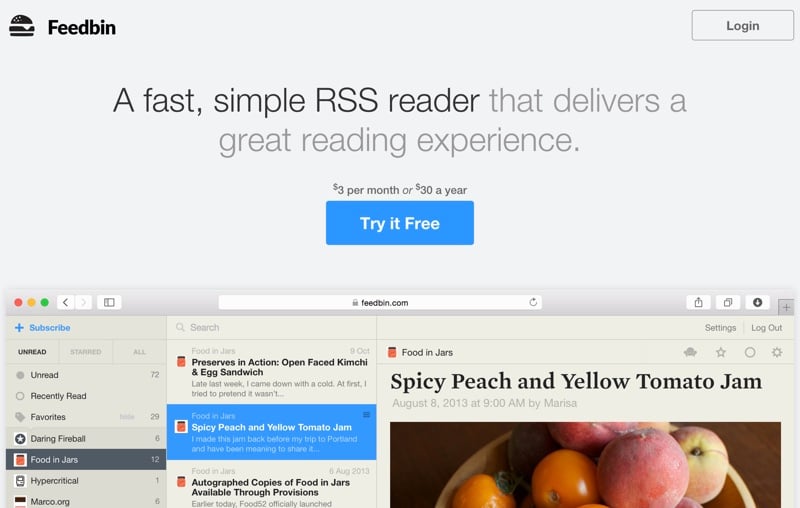
  • I use Feedbin as my back-end for RSS reading. It’s solid. It always updates fast, it never goes down, and it works with a pretty much any RSS reader you can think of. I tried Feedly, but it’s not for me. Too many gimmicks I don’t need.
  • Speaking of which, I use Reeder as my front end for RSS reading. Beautiful UI, great integration with services.
  • Anyone who’s paying attention knows that Feedburner is on its way out. So a while ago I moved my site’s RSS feed hosting to Feedblitz. It’s not worth linking to them — it was a terrible mistake. Shady “growth hacking” marketing techniques, impossible to work with on support issues, etc. Don’t do it. I have since switched to FeedPress and I’m really happy with it. I do think there’s still a gap in the market for a really good Feedburner replacement, but Feedpress does an admirable job for now.
  • Pinboard is still the backbone of everything I do online. It’s basically my external memory. I don’t know how I would internet without it.
  • Instapaper is not a one-person band any more, but it’s still my “read later” service of choice. I dabbled in Pocket for a while, but I keep coming back to Instapaper for the no-nonsense UI and focus on typography.
  • When it comes to writing, my favorite tools remain MarsEdit (blog writing and editing), nvALT (text editor), and Marked 2 (Markdown viewer).

I really hope these developers continue to make enough money to focus on these fantastic projects. I also hope they know how many people they’re helping every day with the things they dream up. Thank you, to all of you.

You're even righter than you think

Oh man, Some 2015 Predictions on The Awl is so good. It’s hard to pick a favorite, but if I have to:

No human, for the entirety of 2015, will be convinced of anything but his own rightness by any “explainer” site. They will become extremely popular, fully stocked with “Perfect Response” and “Reasons Why” posts that are first and foremost affirming to the reader, and secondarily intended to demonstrate the rightness and virtue of the sharer. One high-growth post-type in 2015: “You’re Right, But For Even Better Reasons Than You Think.”

How to Interview

Last year I accidentally became an expert on interviewing. I didn’t want to, but hey, we do what we need to do. I just published some things I learned in the process on A List Apart, in an article called How to Interview. Here’s one piece of advice on how to get companies to email you back…

Send separate, personal emails to each of the likely hiring managers you found. Make it really, really short. Don’t go on about how awesome you are—you’ll get a chance to do that later. Tell them you like their company, you like the role, you’re interested in talking. Link to stuff you’ve done: your LinkedIn profile, your portfolio, articles/books you’ve written, etc. Then ask them if they’d be willing to have a call, or forward your information on to the right person. The point is to not burden people. If they see a long email, the chances are high that they will delete it. But if they see a short email that’s respectful of their time and gives them the information they need to make a quick decision—that’s a different story.

Taking back the music

I wrote a story about jazz, coffee, and liner notes, and hopefully managed to turn it into something with a logical conclusion. But feel free to judge for yourself by reading Taking back the music:

We like things fast and disposable — I get that. I mean, no one even knew what the word “ephemeral” meant until Snapchat came along. But moving quickly from one thing to the next will just never be as satisfying as really spending time with something or someone, with no escape from the person or the artist’s intentions and successes and failures. We can all do with a little bit more of that.

The stories behind our passwords

There are some wonderful and surprising stories in Ian Urbina’s The Secret Life of Passwords:

SEVERAL YEARS AGO I began asking my friends and family to tell me their passwords. I had come to believe that these tiny personalized codes get a bum rap. Yes, I understand why passwords are universally despised: the strains they put on our memory, the endless demand to update them, their sheer number. I hate them, too. But there is more to passwords than their annoyance. In our authorship of them, in the fact that we construct them so that we (and only we) will remember them, they take on secret lives. Many of our passwords are suffused with pathos, mischief, sometimes even poetry. Often they have rich back stories. A motivational mantra, a swipe at the boss, a hidden shrine to a lost love, an inside joke with ourselves, a defining emotional scar — these keepsake passwords, as I came to call them, are like tchotchkes of our inner lives. They derive from anything: Scripture, horoscopes, nicknames, lyrics, book passages. Like a tattoo on a private part of the body, they tend to be intimate, compact and expressive.

I now use 1Password to create unique passwords for each service, but the article did take me back to the one password story I do have. Back in college, when it was time to select a password I could remember easily, I remember leaning back in my chair and giving it some serious thought.

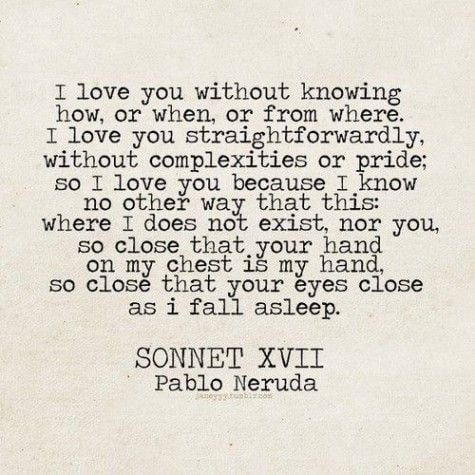
I had just seen Patch Adams and top of mind for me was part of a poem the character recited that really stuck with me (full version here):

Pablo Neruda

I know it’s ridiculously syrupy, but I apparently used to be a romantic. Huh.

Anyway, my default password became two words from the poem, smashed together. Even though I don’t use the password any more I just can’t get myself to tell you which words, though. I guess some of this story needs to remain mine alone.

Being

I’ve been thinking about being recently. Being online, being at home, being at work, being in public, being in private. This year my family and I made some gigantic changes in our lives that I won’t bore you with, except to say that constant change and discomfort gave me a renewed appreciation for human frailty. In fact, I’ll go so far as to say that, for the first time, I feel like I truly understand these words by Thomas Kempis:

A true understanding and humble estimate of oneself is the highest and most valuable of all lessons. To take no account of oneself, but always to think well and highly of others is the highest wisdom and perfection. Should you see another person openly doing evil, or carrying out a wicked purpose, do not on that account consider yourself better than him, for you cannot tell how long you will remain in a state of grace.

We are all frail; consider none more frail than yourself.

All of this helped me figure some things out about being that I haven’t been particularly certain about before. Things like who I want to be and what I want to do with my life. The answers to those questions are probably irrelevant for what I want to write about here, so I won’t dwell on that. What I will do is share a few things I’ve become fairly sure of over the last few months (while I remain open to data-driven mind-changing next year, like any decent designer would).

So here are some things I learned in 2014:

Smaller networks are better

During some of the darker months of the year I retracted from Facebook and found some solace in the 5 or so active friends I have on Path (go ahead, laugh it up…). On Twitter I doubled down on what I’ve always done: being a link monkey, there for your daily dose of UX and product management links. There’s certainly comfort in that ritual and the feedback that comes from it. But it does get pretty empty after a while.

When things started to improve I gave Facebook a try again. I once again expanded my network. And suddenly it just felt really really loud and crowded and filled with people like me who are just looking for positive reinforcement and I didn’t like the way that made me feel.

So I went back to small. I’m still active on Path. On Twitter I share more personal things in addition to links I really like. It pisses some people off, but it feels more real. I also started writing a newsletter and I’m really enjoying the personal nature of that medium.

All of this to say that we’ll do well to remember that the web is people all the way down. And that smaller networks mean more meaningful relationships.

Who we amplify is who we are

Every day we choose whose voices we amplify online, and those choices make us who we are. After Ferguson happened I felt like I didn’t have a right to say anything about it. But what I could do is amplify the voices of those who did have something important to say. So that’s what I did. I retweeted articles and calls for help. I eventually did write something, and I still feel uncomfortable about it, but in the end I felt like I had to.

The things we say are important. They make us. Not to get all preachy, but Matthew sums it up pretty well:

But the things that come out of a person’s mouth come from the heart.

So I’m not always getting this right, but I want to amplify good things and people who say important things. Who we amplify is who we are. So let’s choose wisely.

Learning and sharing is what makes us a community

After much reflection I realized that to become a better designer and be a good web citizen there are only a few basic things you have to do:

  1. Read about a new thing.
  2. Practice new thing until it works for you.
  3. Write about what you learned while practicing the new thing.
  4. Repeat ad infinitum.

That’s it. That’s what community is: learn from others, practice until you get it, and teach others the new things you learned. We should really do more of that.

Being a small fish in a big pond is ok

I don’t know how to write this without sounding weird so I’ll just go ahead and put it out there and hope it comes out right.

When I lived in South Africa I thought what I wanted was to become an author and conference speaker. It was a bit easier there because there aren’t as many UX people as there are elsewhere in the world. And when I decided to move back to the US several people didn’t understand. “You’ll be a small fish in a big pond,” they said. “I know,” I would answer, “isn’t that awesome?”

The fact is that where I am right now is a much better fit, and I recognize the importance of being content in the situation we’re in. I do a job I love at a company with an awesome culture. Every once in a while I share things. My book didn’t become a bestseller, but the people who read it seem to enjoy it, and that makes me happy. I spend time with my family, and I tweet some jokes and links every once in a while.

I don’t get invited to speak at conferences, and I don’t have a major book deal coming. But I still enjoy writing, and I enjoy being with the people I hang out with — online and in person. After the year I’ve had, that is all I could ever ask for.

It was hard, but I’m thankful for 2014 and the meaningful lessons that came out of it.

Now let’s get it behind us and move on, shall we?