Menu

Posts tagged “writing”

Norman, the boring anti-hero

Halfway through his day at work, Norman yawned.

“Oh no, don’t start doing that!” a coworker joked.

Norman chuckled. “Yeah, I know.”

“Rough night?”

“You could say that,” Norman lied.

Norman didn’t have a rough night. Norman had gotten eight hours of restful sleep. Norman was just always a little tired.

That’s a story from The Life of Norman, a reddit thread where thousands of people tell boring stories about the fictional Norman’s boring life. And it’s fascinating. From Michell Woo’s The Life of Norman (and the Rise of Boring):

Now, all day, every day, redditors construct the intricacies of the life of this unremarkable man, mostly in 500 words or less. Reading through the titles feels like watching paint dry. Norman goes into his office building. Norman makes a steak for dinner. Norman receives a text message. Norman does the laundry. Norman meets a friend and they talk about how they both used to enjoy opening Microsoft Paint, drawing some squiggles, and coloring in the spaces. Life of Norman is possibly the most action-deficient fanfiction series in existence—and that’s what makes it so compelling to its creators and audience.

Why are people drawn to this? One possible reason:

After writing 40 stories about Norman and following his journey so closely, [Cameron Crane, a moderator of the Life of Norman subreddit] believes he’s drawn to the character partly because he’s an example of what he doesn’t want for his life. Redditors will sometimes tell him that they’re grateful for Norman, sharing with him that they’ve been depressed and stuck in a rut and that Norman serves as a wake-up call.

That’s true for him, too. “At the heart of it, I think I’m just afraid, afraid of becoming Norman,” Crane says. “Norman isn’t a role model. It’s okay to be like Norman, but you shouldn’t accept it. He’s comfortable, and the only way to get ahead in life is to make yourself uncomfortable.”
An invitation to bring back your personal site

Buried somewhere in the middle of Will Oremus’s article about Twitter’s decision to increase the 140-character limit we find this important paragraph:

What’s really changing here, then, is not the length of the tweet. It’s where that link at the bottom takes you when you click on it—or, rather, where it doesn’t take you. Instead of funneling traffic to blogs, news sites, and other sites around the Web, the “read more” button will keep you playing in Twitter’s own garden.

I’m nowhere near up to date or involved enough in the Open Web movement, but I’ve been writing this site since 2009 and since 6 years is a lot of time to invest in something, I do have Opinions on the matter. Hence one of the first things I tweeted this year:

2015 was the year of Medium and Newsletters, but I feel like we should use 2016 to Make The Personal Blog Great Again™.

— Rian Van Der Merwe (@RianVDM) January 2, 2016

The tweet prompted some interesting discussion, including links to a couple of excellent articles about Medium: Matthew Butterick’s The billionaire’s typewriter and Mandy Brown’s Ferengi (thanks for sending those, Chris!). There’s no need for me to reiterate their arguments here, except to say that this move to proprietary platforms—from Medium to Instant Articles to now Twitter’s entry to long-form publishing—seems to be a dangerous threat to the Open Web.

There are the political arguments around access and inequality that are all very valid, but I want to focus on another aspect here: content platforms as shortcuts. One of the main reasons for writing on a platform like Medium or Twitter or Facebook, as opposed to your own site, is that it’s supposed to give you easier access to a huge audience. And this is no small thing, because building an audience on your own site is, as far as I know, statistically impossible.

Okay, maybe that’s being a bit dramatic. But I’ll tell you that after 6 years of trying to do it I was exhausted and had to take a bit of a break recently. Now, you could argue that the reason I don’t have a huge following on this site is simply that my writing sucks, and you probably won’t be too far off track there. Yet I’d like to think that there’s more to it than that. Building an audience is just really hard because people have to seek out your content, and the truth is that most of the time nobody wants to read your shit.

But I digress. The point is that publishing on Medium and Twitter and Facebook gives you an immediate shortcut to a huge audience, but of course those companies’ interests are in themselves, not in building your audience, so it’s very easy for them to change things around in a way that totally screws you over (remember Zynga? Yeah, me either).

All this to say that I think it’s time we bring blogging and personal sites back. Some of my favorite sites are the ones that give me a glimpse into everything a person is interested in (I think my current favorite is Josh Ginter’s understated and eclectic The Newsprint). It’s a way to get to know someone through their interests, and to learn a bunch of things along the way. So I invite you not just to follow along here as I expand into topics beyond design and technology1, but to start your own personal blog up again if you’ve been neglecting it for a while. I’m really interested in the things you are passionate about. I want to learn from you. But don’t just do it for me, do it for you. Because it turns out there is an immense power in avoiding shortcuts and instead doing things the long, hard, stupid way.


  1. Fair warning: I’m a little rusty… 

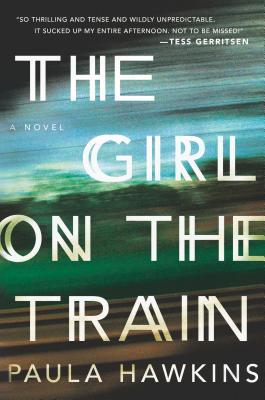
Book review: The Girl on the Train by Paula Hawkins

Living like this, the way I’m living at the moment, is harder in the summer when there is so much daylight, so little cover of darkness, when everyone is out and about, being flagrantly, aggressively happy. It’s exhausting, and it makes you feel bad if you’re not joining in.

— Paula Hawkins, The Girl on the Train

The first thing you should know about The Girl on the Train is that it is sad. Unrelentingly, never-lifts-out-of despair sad. So if that’s something that freaks you out, it’s probably best to stay away.

The second thing you should know about The Girl on the Train is that it is a bloody good mystery for about 80% of the book. It’s fast-paced, and not as badly written as many of these thrillers often are.

I guess the third thing you should know about The Girl on the Train is that it takes a really long time to wrap up once you figure out what’s going on.

The last thing you should know about The Girl on the Train is that it’s a great way to clean the palate between two more serious books. It’s a good mystery, the writing won’t annoy you (too much), and it’s a fast read. It’s exactly what I needed after the heaviness of The Mechanical (my review here).

Oh, one more thing. It’s really sad.

Hollowness: that I understand. I’m starting to believe that there isn’t anything you can do to fix it. That’s what I’ve taken from the therapy sessions: the holes in your life are permanent. You have to grow around them, like tree roots around concrete; you mould yourself through the gaps.

— Paula Hawkins, The Girl on the Train

The power of making things

Jon Kolko wrote a wonderful personal essay called Look, I Made a Thing: Confidence in Making:

If you stick with it, through the years of shitty ashtrays and embarrassing critiques and rejections, you start to learn that making things is powerful, mostly because on the way to making things, you build confidence. You can take on problems that are out of your league. You can become a teacher with no teaching experience. You can make money and provide value. You can lead a conversation, advance an idea, and drive specificity where there were only vague generalities.

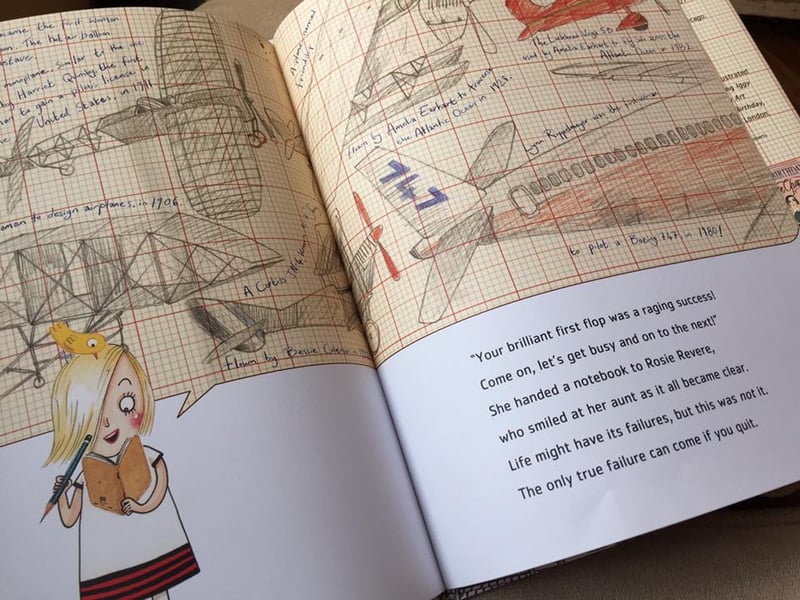
This idea—that just because you’re not good at something right now, it doesn’t mean you can’t become good at it—is something I try to instill in my daughters as well. And in doing that, I end up lecturing myself in the process too. One of my favorite books to read my daughters is Rosie Revere, Engineer by Andrea Beaty and David Roberts, because it explains this concept in language even I can understand…

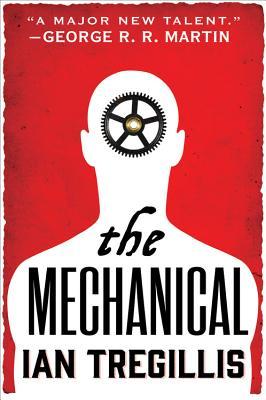
Book Review: The Mechanical by Ian Tregillis

For the creation of the mechanicals was a seismic event, an earth-rending convulsion that left nothing untouched: palaces, thrones, and empires, yes, but also the way men and women thought about themselves and their relationship to the world, to God, even their own bodies.

― Ian Tregillis, The Mechanical

The Mechanical wasn’t on my radar until a friend recommended it, but it jumped to the top of my reading queue as soon as I read the blurb. I’m not usually a fan of alternate history or steampunk, but this story about a mechanical creature that attains free will—and thereby freedom from his creators—felt too good to pass up. And I wasn’t disappointed.

The plot is a new twist on the story we’ve seen many times before in movies like The Terminator and I, Robot. Humans create a thing that becomes self-aware, and general chaos ensues. What makes this story interesting is the mid-1900s setting, an unbalanced war between the Dutch (who created the mechanicals) and the French (who struggle to find weapons that can compete), and the fascinating inner thoughts of Jax, our mechanical protagonist.

As with most good stories, this one is only about robots and war on the surface. Dig a little deeper and you find insightful reflections on free will from the perspective of someone who wasn’t born with it. Here is Jax, describing what it feels like to be free from the geis (the painful compulsion to serve his masters) he’s been under since his creation:

Freedom felt like… nothing. Free Will was a vacuum, a negative space. It was the absence of coercion, the absence of compulsion, the absence of agony. A gap in his consciousness where geasa had perpetually jostled for priority, demanding his obedience. It was the photographic negative of Jax’s existence during every minute of the 118 years since he’d been forged. It was overwhelming. Exhilarating. Terrifying.

And a little later in the story, his realization that free will comes with certain responsibilities:

But he’d given her his word. And Jax realized, to his own surprise and disappointment, he didn’t want that to be meaningless. What point in having the freedom to enter into promises of your own choosing, to forge bonds of your own design, if your only aim is to shatter them? No. That couldn’t be his legacy.

I’m not sure what genre to put this book in. It’s a bit of sci-fi and alternate history combined, but it has a distinct literary fiction feel to it with its beautiful prose and wonderful storytelling. I have a couple of small complaints—the story meanders a bit at times, and it stops rather suddenly (but that’s ok, because the second book in the trilogy just came out). It still gets a big thumbs up and recommendation, though. I really enjoyed it.

Buy The Mechanical on Amazon

Can software ever be done?

My latest column for A List Apart was published today. From The Analog Revolution:

So I wonder. I wonder what would happen if we felt the weight of responsibility a little more when we’re designing software. What if we go into a project as if the product we make might not only be done at some point, but might be something that lasts for a while? Would we make it fit into the web environment better, give it a timeless aesthetic, add fewer unnecessary features, and spend more time considering the consequences of our design decisions?

It’s not the best thing I’ve ever written, but I have to say, it’s one of my favorites. This is something I’ve been thinking about for a very long time, and to condense those thoughts into just over 1,000 words that include subtle references to The Hobbit and Zoolander feels pretty good.

Books on screens, and digital marginalia

Clive Thompson’s essay on the experience of reading War and Peace on his iPhone is just so, so good:

The phone’s extreme portability allowed me to fit Tolstoy’s book into my life, and thus to get swept up in it. And it was being swept up that, ironically, made the phone’s distractions melt away. Once you’re genuinely hankering to get back to a book, to delve into the folds of its plot and the clockwork machinations of its characters, you stop needing so much mindfulness to screen out digital diversions. The book becomes the diversion itself, the thing your brain is needling you to engage with. Stop checking your email and Twitter! You’ve got a book to read!

He seamlessly blends thoughts on the reading experience with impressions on the book and revelations on the differences between reading physical books vs. ebooks. (Spoiler: it turns out reading books on screens isn’t as bad as some might want us to believe…)

I especially liked this idea he mentions towards the end:

By the time I was done with War and Peace, I had amassed 12,322 words of highlights and marginalia. It was a terrific way to remind myself of the most resonant parts of Tolstoy. Indeed, I so enjoyed revisiting those notes that I wanted a paper copy of them. Using the Espresso print-on-demand machine at the McNally Jackson bookstore in New York, I had the notes printed up as a small 84-page paperback. It sits on my shelf, a little compilation of my reading and thinking — or, as I titled it, War in Pieces.

This is something I want to do for the books I read as well, so I took to Twitter to ask Clive how he did it.

In addition to his response (he exported text from Kindle Highlights into InDesign), the folks at Clippings.io chimed in to tell us about their service1. Clippings lets you import your Kindle highlights and notes, organize them, search them, and best of all: you can export to PDF if you want a nicely-printed version. I signed up immediately and I’m really liking it so far.


  1. This is one of the few times I’ve experienced a “brand” stepping into a conversation in a really helpful way. Social media people, take note! 

How to improve Enterprise UX

A couple of weeks ago I did a talk on Enterprise UX at UX Burlington. You can now read a written version of the talk on A List Apart. From Unsuck the Enterprise:

So if you’re someone who works in enterprise software, come a bit closer—I need to tell you something…

I know the work can be difficult. I know there are an infinite number of factors involved in getting product live, and sometimes what gets launched isn’t what you had in mind. I know there are sleepless nights about this sometimes. But don’t give up. Don’t think that enterprise design has to be boring or tasteless. With a little bit of effort and a lot of tenacity, it’s possible to create great enterprise product. We need you to make it happen, though. Who else is going to do it?

Or if you have 20 minutes to spare, the video for the talk is also now available on Vimeo:

Elezea Newsletter 31: Authenticity, grammar heroes, the web, streaming music, texting & driving

If you’d like to receive these updates in your email, you can subscribe to the newsletter here.

My friend Gio tells me he liked the tone of the last newsletter. Sure, it’s a sample of one, but I like writing how I talk, so I guess I’ll keep going—until I get a request to be a little more “corporate”, in which case I’ll start using words like “engagement” and “take it offline”. I refuse to use “ask” as a noun, though. One has to draw the line somewhere.


Anyway, the quote I can’t get out of my head this week is from Madeline Ashby’s No one cares about your jetpack — an article about the relative box office failure of the movie Tomorrowland. The whole thing is good, but this paragraph stands out:

In the end, the lacklustre performance of Tomorrowland at the box office has nothing to do with whether optimism is alive or dead. It has to do with changing demographics among moviegoers who know how to spot an Ayn Rand bedtime story when they see one. There are whole generations of moviegoers for whom jetpacks don’t mean shit, whose first memories of NASA are the Challenger disaster. And you know what? Those same generations believe in driverless cars, solar energy, smart cities, AR contacts, and vat-grown meat. They saw the election of America’s first black president, and they witnessed a wave of violence against young black men. They don’t want the depiction of an “optimistic” future. They want a future where their concerns are taken seriously and humanely, with compassion and intelligence and validation. And that’s way harder than optimism.

I’ve felt for a long time that what people (I agree with Rebecca Onion that we need to ditch generational labels) now crave the most is authenticity. We’ve learned how to see through most flavors of BS, and we are drawn to people situations that don’t try to dress things up to hide the truth. In short, we prefer “I made a mistake” to “Mistakes were made”.


I love What exactly are our rules comprised of?, a story in The Economist about a guy who believes his grammatical mission in life is to remove every Wikipedia instance of the phrase “comprised of” that he can find. And then there’s the guy who doesn’t believe in the past perfect tense. We should all have this much conviction about something in our lives.


In The Web of Alexandria (follow-up), Bret Victor continues a very interesting discussion about the role of the web to both preserve knowledge (the idea of a “common record”) and forget certain things (ephemeral discussions). He draws the following, well-argued conclusion:

[The web] currently has the property that it forgets what must be remembered, and remembers what must be forgotten. It manages to screw up both the sacredness of the common record and the sacredness of private interaction.


Mike Errico looks at the economics of music streaming, and those who try to game the system, in Everything in the Music Industry Has Changed Except the Song Itself. There’s a fascinating story about a band who made $20,000 by releasing an album of silent tracks and convinced their fans to stream it while they slept. It’s a weird new world in this industry.


Here’s an upside down thought. Clive Thompson asks us to consider that maybe when people text and drive, the most important of the two activities isn’t the driving, it’s the texting. So maybe we shouldn’t stop people from texting, but rather look for ways to get them to stop driving. Park the Car, Take the Bus is a very intriguing take on this topic.


And finally, in honor of Google I/O this week, I’ll leave you with this:

Let us know everything about you. We promise it’ll be worth your while. http://t.co/vJv4ucoZmt

— Josh Clark (@bigmediumjosh) May 29, 2015

Happy weekend, everyone!

Why do we work?

I’ve been thinking about the topic of my latest A List Apart column for a while, but I was just too scared to write it. I mean, what right do I have to talk about work and privilege? But I ran the idea by my amazing editor, and since she was really supportive and enthusiastic about it, I went for it.

So I wrote Why?:

Why we work—and what kind of work we do—is a function of our privilege and our history as much as it is a function of our choices and our dedication.

I hope you enjoy reading it, and take something from it. This one took a while to get right.