Menu

Posts tagged “writing”

Reading Well

I love the point Simon Sarris makes here about the importance of reading fiction, and how it’s useful for work purposes as well:

I also tend to stress fiction because I think, especially among my professional peers in the industry of software, that there is too great a fondness for non-fiction. I think this arises from a belief that superior knowledge of the world comes from non-fiction. This thought is attractive to people who build systems, but over-systematizing and seeing systems in everything can be a failure mode. Careful descriptions and summaries miss too much of the world. Hard distinctions make bad philosophy. Reading fiction helps you become an unsystematic thinker, something that is equally valuable but more elided by some engineers. It is easy to maintain an intellectual rigidity. It takes more care to maintain a loose poeticism of thought.

Building personal and organizational prestige

This is great post by Will Larson on the difference between personal (and organizational) “brand” vs. “prestige”—and why focusing on building the latter is way more important for your career than the former.

First, this reminder:

The majority of successful executives I’ve worked with don’t write online. They won’t post on Twitter or Mastodon. They haven’t written a book. They don’t speak at conferences. In your engineering leadership career, you will at times be immersed in the message that you need to be creating content to be successful, but there’s abundant evidence to the contrary. You absolutely don’t have to do this sort of thing.

And then, this definition of what he means by “prestige”:

Prestige is the passive-awareness counterpart to brand. Rather than being what someone actively knows about you, it’s what someone can easily discover about you if they look for it. Many interviewers won’t know anything about me, but a few minutes of research will find my writing, conference talks, and work history.

I agree with this. Make sure that if someone Googles you, they find your site where you can tell your story and showcase your work.

Meetings are a point of escalation, not the starting point of a conversation

Ben Balter has a solid post on remote and async work, in which he makes the point that meetings are a point of escalation, not the starting point of a conversation:

A few minutes of reading or a few comments on an issue or Google Doc can often replace waiting days for mutual availability and a dedicated 30-minute block of time. In this sense, you can think of meetings as a point of escalation based on complexity, not as the default starting point for a workstream, initiative, or conversation.

Also see his excellent list of benefits of working asynchronously. Also also see Sisi Wei’s excellent guide on asynchronous participation in brainstorming, including this really great idea:

After the meeting, redesign that shared doc to become a worksheet for people participating on their own time. […]

The document should now read like it was designed for asynchronous participation to begin with. Instructions you may have given verbally – even helpful tips you realized and delivered impromptu – should now be captured as written instructions in the document.

Link roundup for April 2, 2023

No image posts today, but it’s a blockbuster edition of the link roundup this week! I hope you find something interesting in here…

1 → LinkedIn power users are turning to ghostwriters (Vox)

LinkedIn remains a complete mystery to me.

“It’s cliché, but it’s true that people want to work with people, people buy from people, people want to see the human side of who you are before they decide to work with you,” says Tara Horstmeyer, an Atlanta-based ghostwriter who offers packages for 12 LinkedIn posts for anywhere between $2,000 and $3,000.

2 → How the Great Recession paved the way for the influencer industry (Vox)

It’s worth reading this fascinating interview with a curious mind. Especially if you, like me, are “of a certain age” and feel like you just don’t get it…

Influencers are neither ‘a flash in the pan’ nor ‘a bubble about to burst,’ but indicators of a paradigm shift in the way we think about each other and ourselves.

3 → On Place (Alica Kennedy)

This is a lovely, rich essay on the difference between “destination” and “place” when we travel, how digital nomadism displaces locals, the pursuit of a “decent meal” abroad, and more.

Continued economic dependence upon tourism leads inevitably to brain drain, when a labor force no longer wishes to work only service jobs. What does ‘local’ as an experience mean when it’s not in service to those who are literally local?

4 → The Life I Refused to Surrender (The Free Press)

This short essay from Amanda Knox packs a huge punch and really got to me. All we have is now…

No matter how small, cruel, sad, and unfair this life was, it was my life. Mine to make meaning out of, mine to live to the best of my ability. There was no more waiting. There was only now.

5 → The Streaming Market Is Fundamentally Broken. It’s Time To Fix It. (Public Knowledge)

There is just so much wrong with the music streaming industry.

Artists aren’t allowed to see the deals that set their streaming payment rates; indie labels aren’t allowed to see the deals distributors cut with labels on their behalf . And in many cases, artists aren’t even allowed to compare notes and talk about their own contracts.

6 → People Started Buying Crocs During the Pandemic. They Can’t Stop. (NYT Gift Article)

I have no pithy comment for this one.

“I roll into the gym with my Crocs on and everything, and people ask, ‘Aren’t you going to change shoes?’” Mr. Ndugga said. “No, this is how I’m going to live life for now.”

7 → Free Bird (Substack)

A top-to-bottom excellent post about Twitter from Ed Zitron. Read the whole thing!

Twitter can create an incredible sense of both intellectual invincibility and vulnerability that can drive someone quite mad.

8 → The Counterintuitive Thing About Trust That Explains Why So Many Teams Have Issues With It (LinkedIn)

This is an insightful post on the leader qualities that really build trust. In short, it’s about showing that you really, truly care.

Studies indicate that conveying benevolence is much more likely to earn you trust than conveying how competent you are. […] That’s why all things being equal, a person who is charismatic and kind will gain more trust than a person who is seen has having good ability.

9 → The Dangers Of Highly Centralized AI (Medium)

I agree with this take from Clive. It’s like we’ve learned nothing from social media.

The field of large language models is becoming dangerously centralized. A huge amount of power resides in the hands of a tiny number of firms.

This is a wonderful essay about the things that ensure happy and enduring families.

The bottom line: if you want a happier family, create, refine and retell the story of your family’s positive moments and your ability to bounce back from the difficult ones. That act alone may increase the odds that your family will thrive for many generations to come.

Podcast appearance: getting started in product management, empowered teams, and... kettles.

I recently had the opportunity to talk with Blake Thorne on The LaunchNotes Podcast. I think I’m a little rusty with the speaking thing, but I did have a lot of fun here. We covered a bunch of topics, including how people got into product management before Inspired was published, how to enable autonomy and ownership in product teams, the value of writing and publishing what you learn, and also somehow… my favorite kettle. Give it a listen if you’re into that sort of thing!

Link roundup for March 10, 2023

The World Nature Photography Awards 2022 winners have been announced.

What Does Workplace TikTok Look Like During Layoffs? It Gets Weird. Always Be Contenting, I guess. “It’s uncanny to watch clips of boisterous lunch buffets next to teary videos about being exiled from them—sometimes from the very same creators just months apart. You come to see how workday and layoff TikToks are mutually intelligible, odd sides of the same coin. No matter what happens, they say, workers will post through it. Work will be forged into content, no matter what.” (NYT gift link)

How to Take Back Control of What You Read on the Internet. Even The Atlantic is getting in on the RSS love! Could 2023 really, actually be the year? “But despite the syndication format’s cult following, most internet users have never heard of it. That’s unfortunate, because RSS provides everyday internet users with an easy way to organize all of their online-content consumption in one place, curated by the user, not an algorithm.”

I doubled-down on RSS. More RSS content! Here are a lot of words about the good and the bad of it. And some interesting observations too… “If you judge someone solely from the content they blog about, most folk will seem stodgy and humorless. I’m painfully aware that I’m no exception. The problem is that if you position yourself as irreverent, you’re likely to be dismissed.”

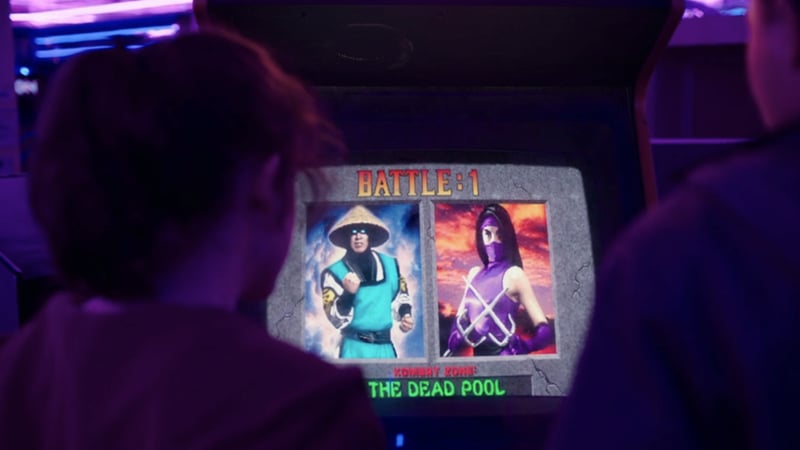
How The Last of Us re-created a 2003 arcade with the help of true enthusiasts. This article is so great. “We’re stupidly proud of this. All of it. We knew that anything less wouldn’t cut it and we’re nothing shy of grateful that HBO and the rest of the production encouraged us to go to these lengths.”

How the ring got good. A wonderful reflection on how Tolkien stumbled his way to what became Lord of the Rings. There’s some strong words of encouragement for all of us: “If Tolkien can find his way to the One Ring in the middle of the fifth draft, so can I, and so can you.”

De La Soul Is Streaming. A very important public service announcement on where you should start listening.

Link roundup for February 11, 2023

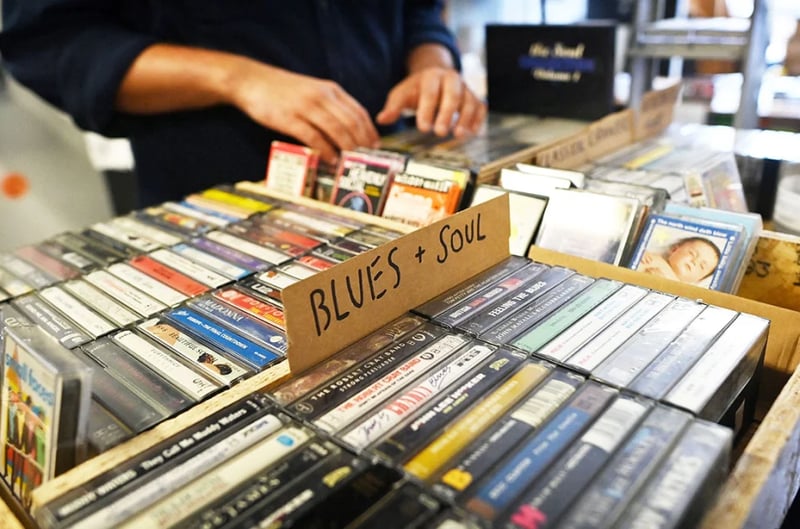
Cassettes Are Making a Comeback, But Can Production Keep Up? “After music cassettes died in the late ’90s, National Audio kept busy with cassettes for instructional materials, spoken-word bibles and Library of Congress work until indie bands and labels came calling as early as 2006. ‘Suddenly, we were back in business,’ Stepp says.” I love that story. [billboard.com]

Things I Do Not Like Hearing. I appreciate a well-written personal grievances post. This one—about phrases the author doesn’t like—is bound to become a classic of the genre. “I have never read the words ‘friendly reminder’ and not imagined that person seething, incandescent, smoke blowing out of their ears like a hot kettle, just absolutely furious. I simply don’t believe you. I do not think that you think we are friends or that this interaction is friendly. If you want to fight, we can fight.” [holapapi.substack.com]

Engagement, Attention, Shining a Light. This is a great writing goal: “My goal is for my writing to engage readers on a ‘shared inquiry’ level, where whatever I am saying is not viewed as a declaration that demands agreement, but an exploration attempting to illuminate the subject at hand in a way that encourages the reader to go exploring with a light of their own.” [biblioracle.substack.com]

A library of words. I bet you didn’t think you’d want to read about the real purpose of a Thesaurus today, but you’re going to have to trust me. This post is fantastic. “The purpose of an ordinary Dictionary is to simply explain the meaning of the words. After you look up the word, you are given the idea the word is supposed to convey. The Thesaurus is supposed to work in the opposite direction: you start with an idea, and then you find the words to express it. A dictionary turns words into ideas and a thesaurus turns ideas into words.” [austinkleon.substack.com]

SF’s Market Street Subway Is Running on Floppy Disks. This is quite something. “SFMTA is hardly unique in using them, however. As recently as 2020, British Airways was loading avionics software onto 747s via floppy disk.” I also love that they felt the need to include a photo of a floppy disk in the article. [sfstandard.com]

Latex, severed legs and fake erections: why is a whole new generation obsessed with DVD menus? This is a wonderful homage to the lost art of DVD menus. “Some turn-of-the-century landing pages were so imaginative they cut through into popular consciousness: 2003’s House of 1,000 Corpses featured a murderous clown directly addressing (and mocking) the viewer, while the Harry Potter DVD let viewers choose a wand, cast spells, and solve puzzles to access deleted scenes.” [theguardian.com]

An Imperfect List of Books Like “Tomorrow and Tomorrow and Tomorrow”. This is my favorite book I’ve read in a long time. Good list of others to try. [bookriot.com]

Don't build a personal brand, build a reputation

I love this post on the personal brand paradox by Debbie Millman:

But rather than manufacturing a personal brand, why not build a reputation? Why not develop our character? Imagine what we could learn from each other if we felt worthy as we are instead of who we project ourselves to be. Imagine if we could design a way to share who we are without shame or hubris.

Tracy Durnell builds on this:

I’m more interested in following people as people — while I might have been drawn to certain blogs in the past because of the topic, the reason I keep reading many of them is having gotten to know the writer.

Those two posts articulate why I’ve decided to relax a little bit on the blog this year. For too long I didn’t really post here any more because it was so hard to get over my own self-imposed “this is worthy of a post” line. But these days I’m so much less interested in “building a brand” than I am in just… having fun and, well, being a person. So I am sharing things I find interesting, I am publishing unfinished thoughts alongside the deeply-researched posts. And I am slowly getting comfortable with posting more personal things as well (like yesterday’s LotR post).

I know this is the year of saying “this is the year of the personal blog” so I’m sure you’re pretty tired of hearing it from yet another person. But seriously, consider it. Consider thinking out loud and sharing those thoughts on a place that you own. Plant that digital garden—it might just give you life.

There and back again: a tale of two book editions

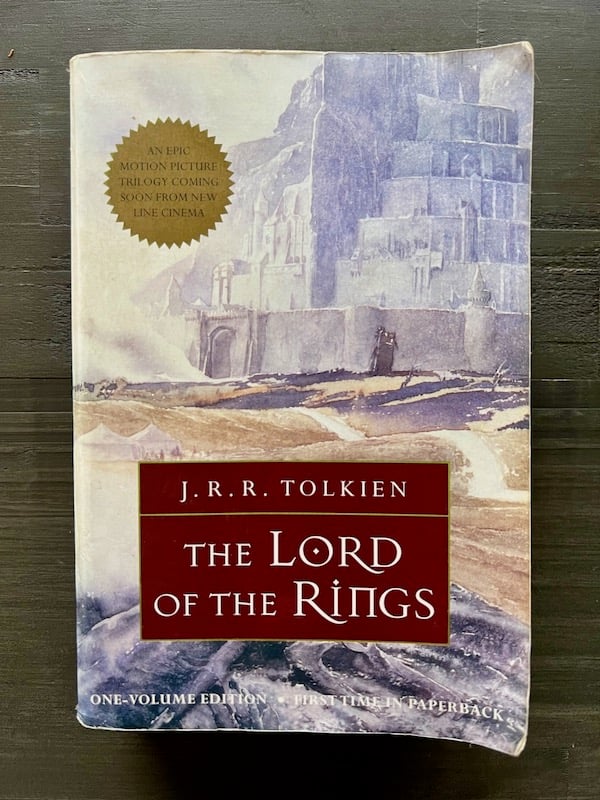
My first online purchase ever happened on September 5, 1999. I was in college at the University of Stellenbosch in South Africa, I really wanted to read Lord of the Rings, and after doing the math I realized that buying the book from this online bookseller in America called Amazon.com would be cheaper than buying it from a local bookstore—even when I took international shipping costs into account.

The book arrived a few weeks later, just in time for the summer holidays to start. I did very little that December that wasn’t reading Lord of the Rings. In fact, I distinctly remember missing the turn of the millennium because at 12:00am on January 1, 2000 I was deeply engrossed in the Entmoot proceedings to figure out whether or not the Ents should go to war against Saruman.

The book ended up traveling with me all over the world. To Australia where I lived for a few years, back to South Africa, all the way to the US, then back to South Africa again, and now here, in Portland, OR. It has served me well:

Robin Sloan has a new edition of his newsletter out. It’s called Crossing the Sunshine Skyway and it is wonderful, as always. Towards the end he links to Adam Roberts’s reflections on re-reading Lord of the Rings. It is long and it looks great so I saved it to read over the weekend. But then Robin says this:

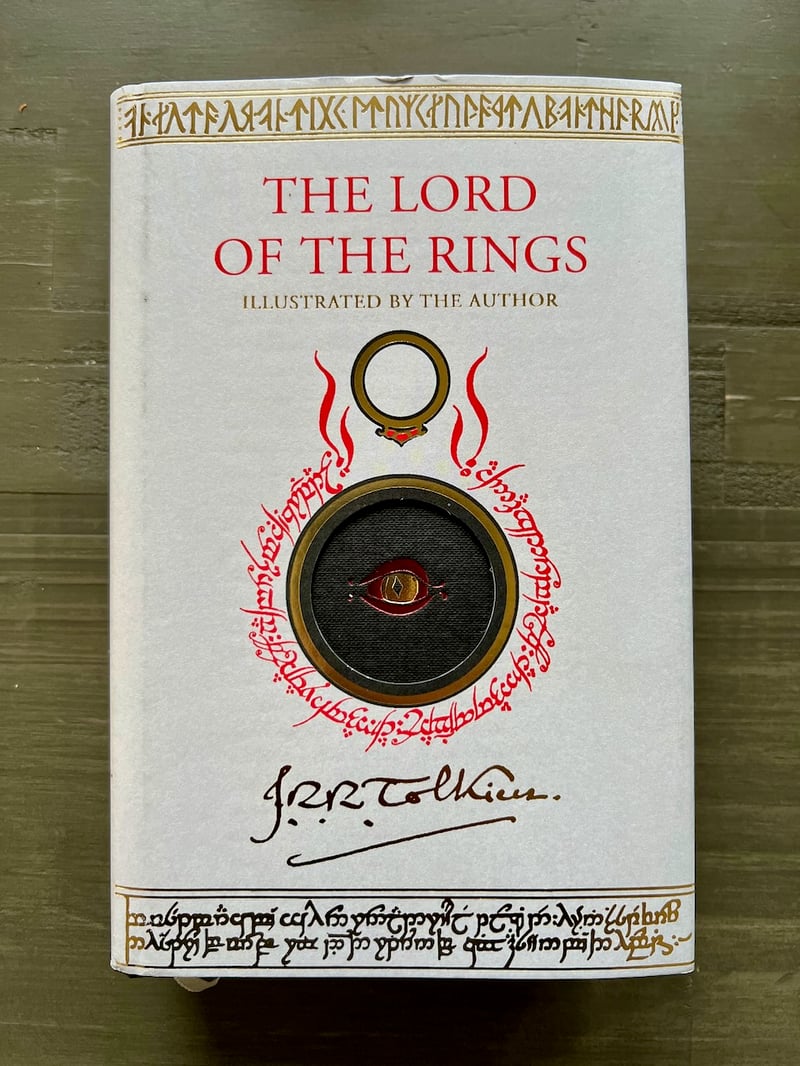
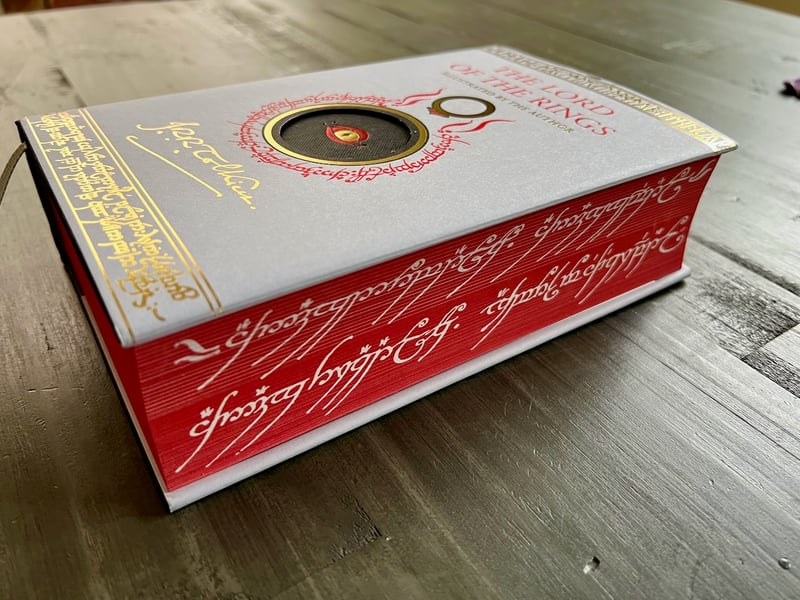
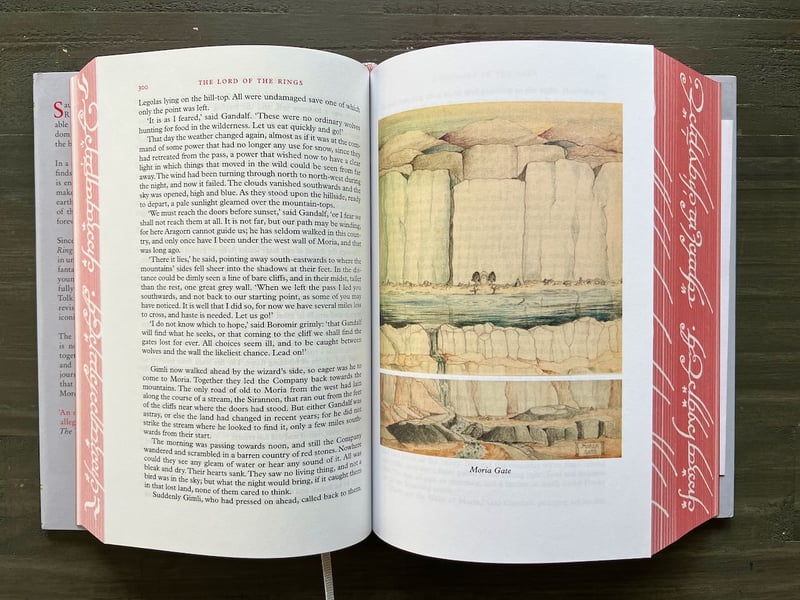
I’ve just completed a reread of LOTR myself: a beautiful one-volume edition with Tolkien’s own (slightly wonky) illustrations included, plus some lovely rubrication.

He posted a photo of the edition he purchased and I was immediately smitten. It looked beautiful, and the idea of seeing some of Tolkien’s own illustrations as part of the story? Heck yeah! I decided that it was time. 24 years after purchasing my first copy of Lord of the Rings—and after many years of resisting lots of wonderful editions because I didn’t want to “cheat” on my original—I purchased The Lord of the Rings Illustrated By The Author. Robin only posted one photo in his newsletter, which made for a bit of a surprise when I received the book. It is so much more beautiful than I had imagined.

I am excited to embark on my own re-read of Lord of the Rings this year, something I’ve been planning to do anyway. And I don’t feel so bad about cheating on my 24-year old copy any more. I mostly feel grateful for the internet and blogs and newsletters and how they can help us find our people and make meaningful connections that sometimes end with a beautiful piece of art in our hands that we wouldn’t have known about otherwise. Maybe, at least sometimes, we can have nice things.

Obsession, endless curiosity, and the joy of iterative projects

I love when people get obsessed with a topic and then turn that obsession into an “iterative project” where they do the same thing over and over until the topic has nothing left to give. An example: my friend Dave watches sci-fi movies hundreds of times and obsesses about the typography for his blog Typeset in the Future. I think his post on Alien is my favorite:

The opening credits for Alien are nothing short of a typographic masterpiece. You can watch them in their entirety on the Art Of The Title web site, but here’s the general gist: a slow, progressive disclosure of a disjointed, customized Futura reveals the movie’s central theme over 90 seconds of beautifully-spaced angular lettering.

Dave’s book is also amazing and you should buy it.

Clive Thompson wrote about this topic recently in his essay The Power of Indulging Your Weird, Offbeat Obsessions. His point about the value of following your obsessions is this:

It’s enormously valuable to simply follow your curiosity—and follow it for a really long time, even if it doesn’t seem to be leading anywhere in particular. Surprisingly big breakthrough ideas come when you bridge two seemingly unconnected areas.

A few other recent examples got me thinking about this again. Ander Monson watched Predator 146 times and wrote a book about it. From an interview with him:

In following every rabbit hole of his obsession with the film through to its end, Monson creates a book that is truly one-of-a-kind—not just a dose of nostalgia for movie buffs, but a revelatory investigation for anyone who’s ever really loved a singular piece of culture, enough that it got tangled inextricably in their identity and could never quite be excised. In Monson’s own words: “I believe that if you look long and hard enough at what you loved best at fourteen and how you lived then and what you saw in the world, it will reveal both the world and you.” As the pages turn, a question inevitably arises: What have you loved in the way that Monson loves Predator? And, for better or worse, how has it made you who you are?

A few weeks ago Monson published an essay about a similar project: Sean T. Collins’s “Pain Don’t Hurt”, an out-of-print book of 365 essays about the movie Road House (you can read every essay on his website). Monson starts off by calling this a “bad idea essay”, and if anyone is qualified to say that, it’s the guy who watched Predator 146 times. But he goes on to say this:

The reason I love bad idea essays is not because they seem dumb or bad but that they’re hard. Anyone can write a good idea essay. But only a real pro—or a real fool, and it’s hard to tell which you are when you start one, which is the entirety of the stakes of the bad idea essay—can write a bad idea to its exhaustion/completion. Only after exhausting yourself will you see if it was worth it.

But it’s these paragraphs that really get to the heart of the matter for me:

365 essays about Road House is an idiotic thing, and its idiocy is part of its appeal. I am often moved by iterative projects, because in repeating an action every day or every week or every year you make time a subject. […]

The reason I love iterative projects is that the plot is inevitably the movement of the mind (or the life or the body) through time. Every piece is a technical problem: oh shit, what am I going to do today? And the technical problem just gets harder as it goes deeper: How can I not bore myself on essay 241?


The reason obsessive projects like these—or what Monson calls iterative projects—are so appealing to me is two-fold. One, there is The Sad, Beautiful Fact That We’re All Going To Miss Almost Everything:

Surrender, on the other hand, is the realization that you do not have time for everything that would be worth the time you invested in it if you had the time, and that this fact doesn’t have to threaten your sense that you are well-read. Surrender is the moment when you say, “I bet every single one of those 1,000 books I’m supposed to read before I die is very, very good, but I cannot read them all, and they will have to go on the list of things I didn’t get to.”

Two, if we agree that we’re going to miss almost everything, there is a certain beauty in picking a small number of things you want to know everything about, and then sharing that with those around you. We know from the African philosophy of Ubuntu that “I am because you are”, or:

Humanity is not embedded in my person solely as an individual; my humanity is co-substantively bestowed upon the other and me. Humanity is a quality we owe to each other. We create each other and need to sustain this otherness creation. And if we belong to each other, we participate in our creations: we are because you are, and since you are, definitely I am.

One of the most tangible ways we can “owe humanity to each other” is by crawling deep into the corners of a specific topic and picking out the best pieces of it for the people around us. It’s saying, “I know we’re going to miss almost everything, but on this thing I got you. I’ll go deep so you don’t have to, and I’ll share what I learn so we can both enjoy what makes it special.”

There’s one more thing that really drove this point home for me recently. Substack has an interview up with Nicola Lamb, author of the Kitchen Projects newsletter. Nicola has built a very large following on Substack, and her answer to the question “What have your subscribers taught you?” summarizes this entire post so well. In essence, her audience taught her that we all want to hear about each other’s obsessions:

[My audience taught me] to be unashamedly obsessed with whatever you are into. To not shy away from details and to get deep into whatever it is that you love. Thank you for that.

So maybe this is something for all of us to ponder a bit more. What are you obsessed with that seems so niche that surely no one else would care? I’ll say this: if someone can write a fascinating book about watching Predator, I guarantee that your “bad idea essay” is probably actually a really good idea for an iterative project. I, for one, would love to read it.