Menu

Posts tagged “apple”

There and back again: my journey from iPhone to Galaxy S4 and back

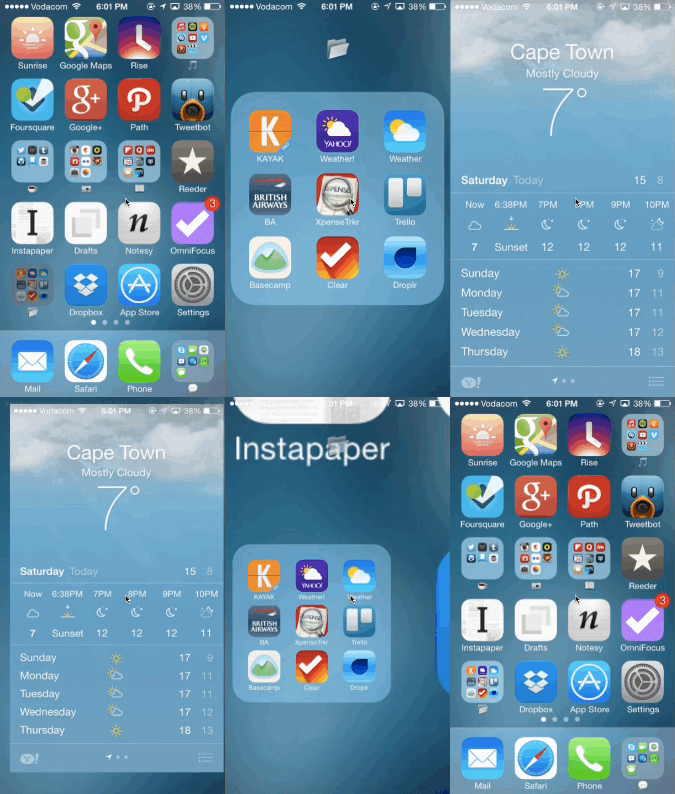
I just got back from an intense but amazing trip to Iran. Every morning when I woke up, this is the first thing I saw:

iPhone unlocked

On the way I home I started writing a post called “iPhone as travel companion”. It was going to be centered around that home screen animation, and how it makes me feel more connected to the people I care about the most while I’m away on business trips. But I was tired, so I only wrote a couple of sentences and then fell asleep (ok, I watched Man of Steel, but that’s kind of the same thing as falling asleep).

When I arrived back in Cape Town, the first SMS I received was from a Samsung PR company:

Hi Rian, this is [redacted] from [redacted]. Your friend [redacted] contacted us and suggested we give you a Samsung Galaxy S4 for a 2 week review to change your mind about how you feel about fruits. Please let me know when and where I can deliver the device to.

A part of me thought, maybe this is fate. Maybe my undying devotion to iPhone is misplaced and this is the universe telling me I should take a trip to a Galaxy far far away (ugh, sorry). So I responded that I’d be happy to try out the device. And I was serious, too. I vowed to try to make it my default device for 2 weeks, and I decided to put my iPhone post on ice until I’ve had a chance to make the Galaxy S4 part of my daily routine.

So I went where no Apple user has gone before (ok, I’ll stop with the awful space movie tie-ins now) and strapped the S4 to my person for a few days. At first, there were some things I liked:

  • Active widgets are great. Seeing a live weather/calendar/mail/etc. view means you don’t have to go into apps to get important information, and that’s really useful.
  • The Gmail app is SO much better on Android than on iPhone.
  • Ok, I guess that’s it.

However, after a while everything started to annoy me about the device:

  • Above all, the scrolling is enough to drive you insane. I opened several apps side by side on the iPhone and Galaxy S4 — Path, Instagram, Facebook, etc. — and flicked my finger on the screens at the same time. iPhone: smooth scrolling, graceful stop. S4: constant choppiness while scrolling (sudden stops and starts), and then it comes to a screeching halt as if someone suddenly slammed on the breaks. The physics of it just feels all wrong on the S4.
  • The screen is too big for one-handed usage. No matter how hard you try, your thumb can’t reach the top parts of the screen, which makes this a two-handed device (well, there’s the bizarre “tiny screen” mode, I guess…). That might be ok for some, but for me it just resulted in frustration and a sore hand.
  • I couldn’t find apps to replace the ones I rely on every day. Sure, the native Twitter, Instagram, and Path apps are fine. But once you go deeper than surface level, the quality apps just aren’t there. Even beyond niche apps I was looking for (like Day One, Notesy, and Reeder), I couldn’t even find a decent calendar app. Now, it might exist, but I just gave up after a while of endless paging in the Google Play store.

Every time I use an Android device it completely lives up to its name: it’s like interacting with a very smart robot. The problem is, that’s not what I want. I want something that connects a little bit more with who I am. And that’s what the iPhone gets right.

So, back to my trip (which you can read about here). My iPhone became my lifeline. I woke up with Rise. I spoke to my family on Skype. I kept up with close friends on Path. I stayed connected through Reeder and BBC News. And yes, I’m sure there are equivalent apps on Android that could replace the ones I use every day on my iPhone.

But here’s the thing.

I don’t want to change. iOS is comfortable. It’s familiar. It keeps improving without changing too much. It feels better — more personal. I know that’s subjective and not quantifiable, but look at that unlock motion effect above. It’s not about accessing a folder. It’s about opening a door to connection. It’s my favorite business travel companion, and you can pry it from my cold, dead hands.

P.S. Google, please make the Gmail iOS app as good as the Android version.

iOS 7 battery life woes

Dr. Drang did some iPhone battery calculations and concludes as follows in The small improvement in iPhone battery capacity:

It’s no secret that Apple has taken pains to make iPhones more and more stingy with power. What I didn’t appreciate until I put this table together was that the ability to still get a day of use out of an iPhone is due almost entirely to improvements in all the non-battery hardware and the software that drives it.

There have been a lot of complaints about battery life under iOS 7 — myself included:

7.0.1 please come soon to make my battery last past noon

— Rian van der Merwe (@RianVDM) September 22, 2013

There has also been a slew of articles on how to improve battery life under iOS 7, the most helpful being The Huffington Post with 9 Ways To Improve iOS 7’s Battery Life. Although some might argue that this advice from Yahoo! is the best solution:

iOS 7 battery life

That said, Dr. Drang’s points are interesting, and his article is well worth reading. It seems that improving software is an easier way to improve battery life than changing the actual hardware is. But I do hope we see some hardware improvements soon, too, because it’s really starting to cripple the phone. If you have to turn off essential features just to make it through the day, something is not right.

The 'gates of rejection' in corporate design

I don’t know when it happened, but it seems we’ve reached a tipping point where most tech articles now take their titles out of the BuzzFeed playbook. That said, Christopher Mims’ Everything you know about Steve Jobs and design is wrong, according to one man who should know is quite interesting. His review of Hartmut Esslinger’s book Keep It Simple quotes these astute observations about design and corporate culture:

I explained that to make design a core element of Apple’s corporate strategy, it would have to be seen as a leadership issue; world-class design can’t work its way up from the bottom, watered down by the motivations and egos of every layer of management it passes through. […]

Bottom-up design never succeeds, because even good efforts by departments within such systems remain insulated within the layers of the company’s organizational structure and everything really new, courageous and potentially game-changing is destroyed by its passage through ‘the gates of rejection.’

iOS 7 Parkour

iOS 7 parkour

I’m mesmerised by the animations in iOS 7, and none more so than the experience of opening and exiting an app within a folder. To me, it feels like you’re doing Parkour through your apps, deftly using your surroundings to propel yourself forward and maintain as much momentum as possible.

It’s also a great example of iOS 7’s depth, and proof that the design is not as flat as most people would have us believe. Justin Williams sums this up really well in his post Layer Cake:

iOS 7 is designed to be a backlit experience that has each view stacked on top of the previous one based on its z-axis. […]

You’re seeing a lot more focus on transparency and blurs so that you can continue to see the content underneath your front-most view. Modal view controllers are no longer primarily taking over the screen entirely allowing you to maintain a sense of where you came from.

Calling iOS 7 non-innovative seems really short-sighted to me. I think it’s the start of a new, much more understandable metaphor in software design, and I can’t wait to see where it ends up.

Why Apple introduced new processors in the iPhone 5s

Horace Dediu makes an interesting point about some of the new iPhone 5s features in M is for Mystery:

Perhaps this is why Apple chose to describe the iPhone 5s as “forward-thinking”. The M7 and the Touch ID are like research projects whose actual value will be realized at some future time, in probably different contexts.

Sisir Koppaka takes this idea further in The Most Forward-Thinking Apple Yet. On going 64-bit:

I don’t believe Apple added 64-bit support to iOS 7 and all their apps just to prepare for an eventual transition to 4GB+ memory capacities in future iPhones. I think this was to do with something more impending. Do we know any product category that Apple would be interested in, that would require the use of both iOS and an A-series chip that is 64-bit capable in order to address 4GB+ memory? Apple TV (the one that is yet to come, not the one that exists).

And on the M7 processor:

The new CoreMotion Framework for iOS 7 adds a step counter and a motion activity detector (stationary, walking, running, vehicle or unknown). We know that Apple has been hiring experts in noninvasive blood component measurements. We know they have a patent on a wrist watch. The iWatch must not be far away.

This is a pretty daring thing for Apple to do. Instead of focusing on what is hot now, they are releasing a product that reveals their vision for the future without it having the capabilities needed to deliver fully on that future. It’s a long game, it’s a gamble, it’s gutsy, and it’s probably going to work once developers start experimenting.

Apple and emerging markets

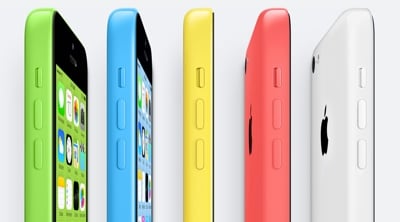
iPhone 5C

More than a few people seem to be confused about the pricing strategy for the iPhone 5C. There are probably only two articles you need to read about that: John Gruber’s Thoughts and Observations on Today’s iPhone 5C and 5S Introduction, and Ben Thompson’s The iPhone is Apple Doubling-Down On What It Does Best.

But even those articles don’t address a complaint that I’ve seen quite a bit of over the past couple of days: that Apple is trying (and failing) to expand into emerging markets. Here’s an example from a bizarre Memeburn article called Dear Apple, don’t try to be Nokia:

…the iPhone 5C — supposedly targeted at the emerging markets and presented as a low-cost device…

And tweets like this are everywhere:

@RianVDM @bokardo - and our customers can’t afford ( well the billion potential customers in emerging markets)

— Kirstin Horton (@KirstinHorton) September 11, 2013

It’s important to point out a few things here.

First, everything flows from the pricing strategy, and the only people calling the 5C a “cheap iPhone” are tech bloggers. It’s not a cheap iPhone. It’s an iPhone that replaces the previous strategy of selling last year’s model at a slightly cheaper price. As Gruber points out:

The prices of the iPhone tiers remain the same as last year. What changes with the 5C is that the middle tier is suddenly more appealing, and has a brand of its own that Apple can promote apart from the flagship 5S.

Second, the vast majority of mobile connections in emerging markets are pre-paid, not contract-based. For example, in Africa 96% of connections are pre-paid (source). This means that in emerging markets people buy phones that aren’t subsidized. The cheapest iPhone 5C costs $549 off-contract. This makes it a virtually unattainable phone in the pre-paid emerging market.

Here’s the thing though: does anyone think Apple doesn’t know this? Is the assumption that Apple is trying to break into the emerging market with a $549 phone? That would be insane, right? But that’s not what Apple is doing at all, and they never said that they are.

The iPhone 5C is not about expanding Apple’s share in emerging markets. It’s about increasing their share of the high-end phone market, while simultaneously increasing their profit margins on those phones because of cheaper manufacturing costs.

So, yes. The iPhone is still too expensive for most of the emerging market. But Apple doesn’t need the emerging market to be insanely successful. They just need to keep selling a ton of phones in subsidized markets at a healthy profit margin. And that’s exactly what the iPhone 5C will accomplish.

Why the Steampunk movement is important

I’ve long been fascinated by the Steampunk movement, and Nick Harkaway’s The Steampunk Movement Is Good And Important is another great essay on the topic. Nick starts by explaining why Steampunk appeals to people (“it is premised on a technology which is visible and pleasing to the naked eye, and whose moving parts are comprehensible on a human scale,” and “it is an ethos of design and creativity which acknowledges the humanly physical, that which we can understand with our fingers”). He then goes on to explain how different this is from modern technologies like cell phones:

The ethos admits of failure: Steampunk devices almost are not working properly if they don’t have leaks, if they don’t require maintenance and the occasional thump. That’s where they get character and animation, identities of their own which reflect their owners, while every iPhone can be seen as Apple’s endlessly replicated identity given passage into your every waking moment, a tiny and instantly replaceable cloned shopfront: what role is conferred or imposed by such a device on the person carrying it? It’s not that Jonathan Ive’s designs are poor, it’s that they are profoundly truthful: an iPhone is a vector, not an object, valued by its creator for its purpose and interchangeability, not individuality.

Steampunk, on the other hand, repurposes, scavenges, remakes and embellishes in an arena where embellishment is seen as decadence, never mind the inherent decadence of creating the sheer amount of computing power our society now possesses in order that most of it should sit idle or be used for email and occasional games of Plants vs Zombies.

Steampunk appeals to the idea of uniqueness, to the one-off item, while every mainstream consumer technology of recent years is about putting human beings into ever more granular, packageable and mass-produced identities so that they can be sold or sold to, perfectly mapped and understood.

[Sponsor] Tokens: a Mac app for managing App Store promo codes

Thanks to Tokens for sponsoring Elezea’s RSS feed this week.

Tokens is a Mac app for managing App Store promo codes

Tokens gets promo codes from iTunes Connect, creates shareable URLs for each code and notifies you once they’re redeemed.

The first step to getting your app noticed is inviting bloggers to try it. Promo codes let you give away free copies of your app, but unfortunately they’re laborious to create, awkward to redeem and impossible to track.

With Tokens you create a code with one click and bloggers can redeem it just as easily. By naming the token you can tell who has tried your app and follow up with them. You can also reuse any unredeemed codes before they expire.

Tokens is available now at usetokens.com/syndicate. Elezea readers get a special 20% discount until July using this link.

Tokens

Sponsorship by The Syndicate.

iOS 7: interface, not art

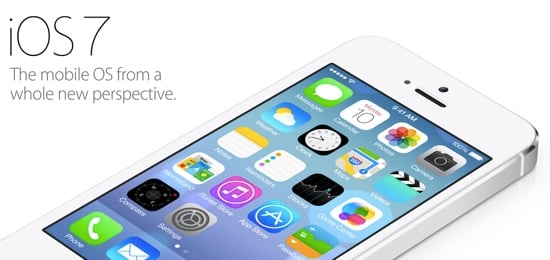
iOS 7

I’ve been watching the responses to iOS 7 with great interest. I’m most surprised (even though I shouldn’t be) by the extremely forceful and visceral negative reactions to the visual direction of the new OS. Most tweets about about it sound something like this:

First reaction: everything about iOS 7 feels… wrong.The typeface is hard to read, controls are totally inconsistent, and it’s flatly ugly.

— dustin curtis (@dcurtis) June 11, 2013

First, please let’s remember to give it five minutes before dismissing an entire operating system. iOS is an interface, not art. You can’t judge it without using it. You might think it’s ugly, and that’s fine. But you can’t go around quoting Steve Jobs’s “Design is how it works, not what it looks like” quote to everyone, and then get all worked up when Apple uses some colors and typography that you don’t like. If you truly believe that design is how it works, then you have to use iOS 7 to determine whether or not it works.

Also, why is it ok for startups to launch something unpolished, but when Apple redesigns their entire mobile operating system everything has to be perfect? Cap Watkins put it well in iOS 7. Unpolished By Design.:

And now we’re complaining that this completely revamped, new, version one interface isn’t perfect. Isn’t polished. Isn’t honed. We asked for a revolution and were delivered one which, all complexities considered, amounts to more than any one of our best first launches.

And then there are those who are calling this a copy of Windows Phone 8, and/or lamenting the fact that the design is flat as a board. No, it’s not. The icons might be flat, but as a design system, as John Gruber notes:

There is a profound reduction in the use of faux-3D visual effects and textures, but iOS 7 is anything but flat. It is three dimensional not just visually but logically. […] There’s a sense of place, depth, and spatiality in iOS 7 that makes it feel like hardware. A real thing, not pixels rendered on glass.

Finally, I agree with Jim Dalrymple’s assessment in Apple’s confidence:

One thing that became very clear to me early on in today’s keynote is that Apple was having fun again. They were really enjoying themselves.

And that’s a good thing. They’re finding their feet in the post-Jobs environment. So instead of tearing our clothes in despair, let’s celebrate the fact that Apple is moving forward with iOS, and that this new OS is a great new baseline for future improvements. Let’s give it five minutes.

[Sponsor] Radium: a new way to listen to internet radio

Radium is a new way to listen to internet radio. It sits in your menu bar and stays out of your way. And it just works.

With its clean user interface and album cover display, you’re always just a click away from beautiful sounds. Add your favorite tracks to the wish list and check them out later on the iTunes Store. Take the sounds with you using Radium’s built-in AirPlay streaming support. It’s all there.

With the proliferation of services like Spotify and Pandora, why choose Radium? Because with Radium, you don’t have to build up playlists, constantly answer questions about your music preferences, or navigate a cumbersome user interface. Radium is all about the sounds. And these sounds come from over 6000 free stations, maintained and curated by real people like you.

Available for $10 on the Mac App Store. Check it out.

Radium

Sponsorship by The Syndicate.