Menu

Posts tagged “social media”

Social media and our insatiable desire for approval

Jon Ronson looks into online shaming (and the lives it destroys) in a brilliant piece of journalism called How One Stupid Tweet Blew Up Justine Sacco’s Life:

Eventually I started to wonder about the recipients of our shamings, the real humans who were the virtual targets of these campaigns. So for the past two years, I’ve been interviewing individuals like Justine Sacco: everyday people pilloried brutally, most often for posting some poorly considered joke on social media. Whenever possible, I have met them in person, to truly grasp the emotional toll at the other end of our screens. The people I met were mostly unemployed, fired for their transgressions, and they seemed broken somehow — deeply confused and traumatized.

The conclusion is worth pausing over and pondering:

But perhaps [Sacco] had now come to understand that her shaming wasn’t really about her at all. Social media is so perfectly designed to manipulate our desire for approval, and that is what led to her undoing. Her tormentors were instantly congratulated as they took Sacco down, bit by bit, and so they continued to do so. Their motivation was much the same as Sacco’s own — a bid for the attention of strangers — as she milled about Heathrow, hoping to amuse people she couldn’t see.

We really are terrible at giving people grace — and the benefit of the doubt.

Facebook: not all or nothing

Photographer Tanja Hollander wanted to find out what online friendships are really about, so she set out to visit all 626 of her Facebook “friends” at their homes to take formal portraits of them. The first part of How Real Are Facebook Friendships? describes the project, and then it goes into some other research about social media and friendship:

In fact, the distinction between online and offline may be less relevant than it seems. Thinking about social media as a kind of place you go, divorced from physical reality, is a forced demarcation. Facetiming and meeting a friend for coffee certainly aren’t the same experiences, but as Nathan Jurgenson, a contributing editor at The New Inquiry and a researcher at Snapchat, points out, “the self is fluid.” Facebook messaging one friend and writing in pencil to another, as Hollander did that New Year’s Eve, may be more equivalent ways of communicating and expressing herself than she thought. A video chat is physically intimate, Jurgenson argues. And what he calls “digital dualism,” the separation of online interactions from “real life,” doesn’t capture relationship dynamics in the 21st century.

I think this is the most important sentence in the article (and maybe of 2015):

[Jessica Vitak, a professor in the College of Information Studies at the University of Maryland] cautioned against an all-or-nothing divide—that Facebook is either “a waste of time” or “the most important social development in history.”

Imagine that. It’s not universally awesome, or evil. It’s just a tool, and how we use it makes all the difference.

Expanding our technology worldviews

A couple of weeks ago Andrew Watts published A Teenager’s View on Social Media, and the post got a lot of attention. Most of the tech world linked to it. Today, danah boyd (whose work researching teen use of social media I highly admire) published a response called An Old Fogey’s Analysis of a Teenager’s View on Social Media. She makes some excellent points about how the story was reported, particularly the narrative that was built around one person’s experiences:

I don’t for a second fault Andrew for not having a perspective beyond his peer group. But I do fault both the tech elite and journalists for not thinking critically through what he posted and presuming that a single person’s experience can speak on behalf of an entire generation. There’s a reason why researchers and organizations like Pew Research are doing the work that they do — they do so to make sure that we don’t forget about the populations that aren’t already in our networks. The fact that professionals prefer anecdotes from people like us over concerted efforts to understand a demographic as a whole is shameful. More importantly, it’s downright dangerous. It shapes what the tech industry builds and invests in, what gets promoted by journalists, and what gets legitimized by institutions of power. This is precisely why and how the tech industry is complicit in the increasing structural inequality that is plaguing our society.

Our church is doing a series on social justice at the moment, leading up to MLK day. Yesterday the amazing Michelle Jones read a section of Maya Angelou’s eulogy to Coretta Scott King, and those words seem to fit well with danah’s piece and the conversations we’ve been having in the US recently:

Many times on those late evenings she would say to me, “Sister, it shouldn’t be an ‘either-or’, should it? Peace and justice should belong to all people, everywhere, all the time. Isn’t that right?” And I said then and I say now, “Coretta Scott King, you’re absolutely right. I do believe that peace and justice should belong to every person, everywhere, all the time.”

And those of us who gather here, principalities, presidents, senators, those of us who run great companies, who know something about being parents, who know something about being preachers and teachers — those of us, we owe something from this minute on; so that this gathering is not just another footnote on the pages of history. We owe something.

I pledge to you, my sister, I will never cease.

I mean to say I want to see a better world.

I mean to say I want to see some peace somewhere.

I mean to say I want to see some honesty, some fair play.

I want to see kindness and justice. This is what I want to see and I want to see it through my eyes and through your eyes, Coretta Scott King.

If we’re going to see justice, honesty, and fair play, we’re going to have to step out of what we know and what we’re comfortable with, and speak up (and do up) to do our parts to bring others along with us. And that means, at the very least, to change our perceptions of the tech world and the people who use the things we make. I’ve written before about the digital usability divide (what danah calls “increasing structural inequality”), and I only see it getting worse unless we — who make the web — get a better understanding of all demographics.

You're even righter than you think

Oh man, Some 2015 Predictions on The Awl is so good. It’s hard to pick a favorite, but if I have to:

No human, for the entirety of 2015, will be convinced of anything but his own rightness by any “explainer” site. They will become extremely popular, fully stocked with “Perfect Response” and “Reasons Why” posts that are first and foremost affirming to the reader, and secondarily intended to demonstrate the rightness and virtue of the sharer. One high-growth post-type in 2015: “You’re Right, But For Even Better Reasons Than You Think.”

What makes online collaboration successful

Smarther Than You Think

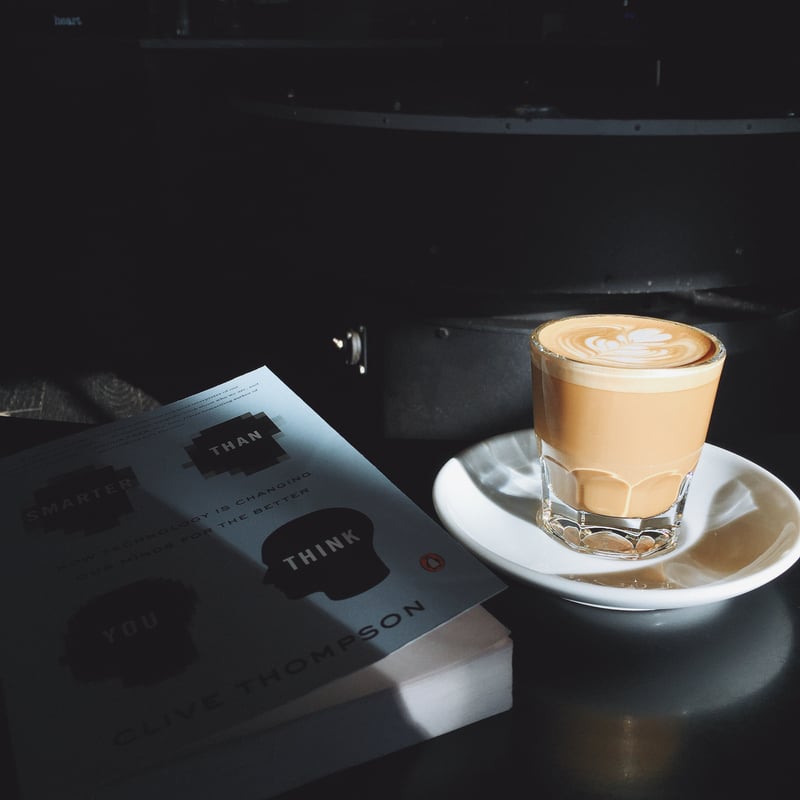
I just finished Clive Thompson’s Smarter Than You Think: How Technology Is Changing Our Minds for the Better and really enjoyed it. So much of what we read about technology these days is doom and gloom that I wanted to spend time on something a little more positive. And turns out, there’s much to be positive about.

There are many stand-out moments in the book. One is the exploration of ambient awareness — how social media often makes our in-person connections stronger because we know so much about each other’s minutia that we can skip the small talk and jump straight to the important stuff when we see each other. But the part I want to elaborate on a little bit here is what historical events tell us about the important criteria to meet for collective thinking to be successful.

Clive points out four important aspects of successful online collaboration:

  1. Collective thinking requires a focused problem to solve. One disastrous story Clive tells is when the LA Times create a wiki page on the Iraq War and encouraged people to edit it. No focused outcome = a rapid decline into the bottom half of the internet. But give people a common problem to solve — like “Which tent hospitals in Cairo need help, and what do they need?”, and people start to shine together.
  2. Collective problem solving requires a mix of contributors. Specifically, it needs to have really big central contributors, and then a lot of people making small contributions to push the solution forward. As Clive puts it, “these hard-core and lightweight contributors form a symbiotic whole,” coming up with the best solution in the fastest possible way.
  3. Collective thinking requires a culture of “good faith collaboration”. Contributors need to struggle constantly to remain polite to each other. And it is a struggle, but a necessary one. As Anil Dash once said, if your website’s full of assholes, it’s your fault.
  4. To be really smart an online group can’t have too much contact with each other. This sounds counterintuitive, but the evidence supporting the point is pretty overwhelming. Clive goes over a few examples that shows that “traditional brainstorming simply doesn’t work as well as thinking alone, then pooling results.” This also explains why Design Studio is such an effective way to solve design problems. So one of the secrets of online collaboration is that it “inherently fits the model of people working together intimately but remotely,” as Clive puts it.

There’s much more to say about the book, but I think I’ll stop here and just encourage you again to read it. You’ll agree with a lot of it, disagree with some of it, and think about all of it for days after finishing it. That’s all we could ever ask of a book.

Design and angry mobs

Paul Ford knocks it out of the park again in What I learned about hatred from my tiny daughter, an essay about collective anger on the internet:

When you aggregate enough people and get them to talk about design they become, basically, a single giant toddler.

Being

I’ve been thinking about being recently. Being online, being at home, being at work, being in public, being in private. This year my family and I made some gigantic changes in our lives that I won’t bore you with, except to say that constant change and discomfort gave me a renewed appreciation for human frailty. In fact, I’ll go so far as to say that, for the first time, I feel like I truly understand these words by Thomas Kempis:

A true understanding and humble estimate of oneself is the highest and most valuable of all lessons. To take no account of oneself, but always to think well and highly of others is the highest wisdom and perfection. Should you see another person openly doing evil, or carrying out a wicked purpose, do not on that account consider yourself better than him, for you cannot tell how long you will remain in a state of grace.

We are all frail; consider none more frail than yourself.

All of this helped me figure some things out about being that I haven’t been particularly certain about before. Things like who I want to be and what I want to do with my life. The answers to those questions are probably irrelevant for what I want to write about here, so I won’t dwell on that. What I will do is share a few things I’ve become fairly sure of over the last few months (while I remain open to data-driven mind-changing next year, like any decent designer would).

So here are some things I learned in 2014:

Smaller networks are better

During some of the darker months of the year I retracted from Facebook and found some solace in the 5 or so active friends I have on Path (go ahead, laugh it up…). On Twitter I doubled down on what I’ve always done: being a link monkey, there for your daily dose of UX and product management links. There’s certainly comfort in that ritual and the feedback that comes from it. But it does get pretty empty after a while.

When things started to improve I gave Facebook a try again. I once again expanded my network. And suddenly it just felt really really loud and crowded and filled with people like me who are just looking for positive reinforcement and I didn’t like the way that made me feel.

So I went back to small. I’m still active on Path. On Twitter I share more personal things in addition to links I really like. It pisses some people off, but it feels more real. I also started writing a newsletter and I’m really enjoying the personal nature of that medium.

All of this to say that we’ll do well to remember that the web is people all the way down. And that smaller networks mean more meaningful relationships.

Who we amplify is who we are

Every day we choose whose voices we amplify online, and those choices make us who we are. After Ferguson happened I felt like I didn’t have a right to say anything about it. But what I could do is amplify the voices of those who did have something important to say. So that’s what I did. I retweeted articles and calls for help. I eventually did write something, and I still feel uncomfortable about it, but in the end I felt like I had to.

The things we say are important. They make us. Not to get all preachy, but Matthew sums it up pretty well:

But the things that come out of a person’s mouth come from the heart.

So I’m not always getting this right, but I want to amplify good things and people who say important things. Who we amplify is who we are. So let’s choose wisely.

Learning and sharing is what makes us a community

After much reflection I realized that to become a better designer and be a good web citizen there are only a few basic things you have to do:

  1. Read about a new thing.
  2. Practice new thing until it works for you.
  3. Write about what you learned while practicing the new thing.
  4. Repeat ad infinitum.

That’s it. That’s what community is: learn from others, practice until you get it, and teach others the new things you learned. We should really do more of that.

Being a small fish in a big pond is ok

I don’t know how to write this without sounding weird so I’ll just go ahead and put it out there and hope it comes out right.

When I lived in South Africa I thought what I wanted was to become an author and conference speaker. It was a bit easier there because there aren’t as many UX people as there are elsewhere in the world. And when I decided to move back to the US several people didn’t understand. “You’ll be a small fish in a big pond,” they said. “I know,” I would answer, “isn’t that awesome?”

The fact is that where I am right now is a much better fit, and I recognize the importance of being content in the situation we’re in. I do a job I love at a company with an awesome culture. Every once in a while I share things. My book didn’t become a bestseller, but the people who read it seem to enjoy it, and that makes me happy. I spend time with my family, and I tweet some jokes and links every once in a while.

I don’t get invited to speak at conferences, and I don’t have a major book deal coming. But I still enjoy writing, and I enjoy being with the people I hang out with — online and in person. After the year I’ve had, that is all I could ever ask for.

It was hard, but I’m thankful for 2014 and the meaningful lessons that came out of it.

Now let’s get it behind us and move on, shall we?

The new obsession: daily news apps

Daily

Apps that provide daily news summaries are the current rage. It appears that we’ve moved on from our Weather app and Messaging app obsessions. It’s a worthy goal, though. We’ve created so much noise on the Internet, we owe it to people to build tools to help them navigate all the noise we made. It’s the only viable solution.

Cynicism aside, though, I download all these apps and try them out. Sometimes they rotate on to my home screen for a while. Yahoo News Digest lasted a while. Everyone loves Circa so I tried that for a while, but it was still too much for me. The problem with the news is that it never ends — there are no edges — which is the reason these apps exist in the first place.

The one that I keep coming back to is NYT Now. I really, really love this app. The morning and afternoon briefings are succinct, and give me the sense that I got the day’s most important news. And I can dig deeper if I want to. It’s on my home screen and will probably stay there.

The latest entry to this market is Flipboard’s The Daily Edition. I use Flipboard every day (hey, you should subscribe to my Flipboard Magazine!), so it’s a natural extension and one less app to follow. My only problem with it so far is that I can’t remove sections I’m not interested in (Sports, ugh).

Anyway, the reason I write about this is that there’s something I don’t understand about this space. All these apps were built from the ground up to do some kind of human curation and give people a sense of the most important news of the day. But the two companies that have all the data in the world to make this happen — Facebook and Twitter — haven’t jumped in. I guess you could argue that Paper is Facebook’s attempt at this, but not really because they hedged their bets by making it a full-featured Facebook client anyway.

I don’t know if this is Innovator’s Dilllemma or what, but it seems like these two companies could make kick-ass daily news apps with data they already have at their disposal. Why haven’t they done this?

The trough of social media disillusionment

As usual, Frank Chimero manages to capture what a lot of people in our neck of the woods are thinking in From the Porch to the Street. It’s an interesting, considered lament about how Twitter has changed, but it’s this part in particular that caught my attention:

Have you heard of evaporative social cooling? It says the people who provide the most value to a social group or organization eventually burn out and leave, undermining the stability and progress of the group. Most of my internet friends have been on Twitter since 2008, so they probably fall into this group. How much more is there left to say?

The linked post is Xianhang Zhang’s The Evaporative Cooling Effect, a broad article from 2010 that covers the design flaws in most social platforms. It’s definitely worth reading the whole thing — I’ll just quote this interesting way to classify different online communities:

There are two fundamental patterns of social organization which I term “plaza” and “warrens”. In the plaza design, there is a central plaza which is one contiguous space and every person’s interaction is seen by every other person. In the warren design, the space is broken up into a series of smaller warrens and you can only see the warren you are currently in. There is the possibility of moving into adjacent warrens but it’s difficult to explore far outside of your zone. Plazas grow by becoming larger, warrens grow by adding more warrens.

It feels like Twitter started as a warren and morphed into a plaza, which is where most of the current discontent is coming from — “This isn’t what we signed up for!”

Going even further down the rabbit hole, Zhang links to Eliezer Yudkowsky’s 2007 piece Evaporative Cooling of Group Beliefs, which has some further interesting thoughts on how to create healthy online communities:

My own theory of Internet moderation is that you have to be willing to exclude trolls and spam to get a conversation going. You must even be willing to exclude kindly but technically uninformed folks from technical mailing lists if you want to get any work done. A genuinely open conversation on the Internet degenerates fast.

It’s the articulate trolls that you should be wary of ejecting, on this theory—they serve the hidden function of legitimizing less extreme disagreements. But you should not have so many articulate trolls that they begin arguing with each other, or begin to dominate conversations. If you have one person around who is the famous Guy Who Disagrees With Everything, anyone with a more reasonable, more moderate disagreement won’t look like the sole nail sticking out. This theory of Internet moderation may not have served me too well in practice, so take it with a grain of salt.

On Twitter there is no way to exclude trolls — there are just too many of them. So there is this huge problem that inevitably appears once a community grows sufficiently large:

  1. Conversation moves from small warrens to large plazas.
  2. Many people loiter in the plaza and are only there to make trouble and ruin it for the rest of the community, and since it’s a public space there’s no way to chase them away.
  3. The people who created the original culture of the community leaves, and before long the broken windows theory kicks in and the plaza falls into disrepair.

All this to say that designing effective online communities is much more difficult than it might have appeared at first. We couldn’t see into the future when Twitter became a thing, so who knew what would happen once the growth monster grew too big? It reminds me of Gartner’s 2014 Hype Cycle for Emerging Technologies:

Hype Cycle

I think we’re firmly in the trough of disillusionment with social platforms like Facebook and Twitter. I think we’ll get through it, but it feels like we’re all waking up right now going, “Wait, that’s what this has become?” We can — and will — do better. But it’s going to take time.

Love on Facebook

Claire Evans discusses how much more awkward break-ups have become in the age of social media. From Luddite love:

It’s time to end it online. I’m not just talking about the pedantic tick-box of Facebook ‘relationship status’: there are images to untag, emails to delete, an ‘unfriending’ to coordinate. There is the careful unravelling of the social web.

In a sense, every relationship now exists on two levels. The moments we spend in one another’s company, the neurochemical buzz of proximity, and the communion of shared silence: these are real. But just as physical places now have their geolocated overlays, every relationship, too, throws a digital shadow — and depending on the individuals involved, it can loom larger than the people who cast it. As we increasingly live our social lives in public, in a medium that retains the traces of our social noodling, the record and the relationship itself can approach a point of indistinguishability.