Menu

Posts tagged “mobile”

Instagram's pivot into complexity

One of the reasons why Twitter works so well is its high information density, enforced by the 140 character limit. All the information is immediately visible in your stream. There is no need to read a subject line and then click through to the content, as with email. In fact, there’s very little clicking required at all — only scrolling. Sure, you can click on a link or a photo if you’re motivated to do so, but only if you believe what you’ll find at the other end of the link is going to be interesting to you. Otherwise, all you have to do is just keep scrolling.

Instagram’s core strength relied on a similar principle. It was just photos you could scroll through. Nothing more, nothing less. You could open Instagram for 10 seconds and check what’s new, or for 10 minutes and get lost in the universe of people’s lives. And you always knew what you were going to get: an endless stream of photos. Just keep scrolling.

Well, not any more. This week, co-founder Kevin Systrom introduced the addition of video content on Instagram, saying:

Some moments, however, need more than a static image to come to life. Until now these stories have been missing from Instagram.

Just like that, Instagram gave up their biggest strength: the simple consistency of giving users exactly what they expect every time they open the app. Now there’s no way to tell if you’re going to see a photo or a video. When you do happen upon a video, you have to stop scrolling and wait for it to load. And if you happen to check Instagram during a meeting and forget to turn the sound off… well, awkward.

This is such a change in direction from the company Kevin Systrom described in 2010 in an answer to the question What is the genesis of Instagram? (my emphasis added):

We decided that if we were going to build a company, we wanted to focus on being really good at one thing. We saw mobile photos as an awesome opportunity to try out some new ideas. We spent 1 week prototyping a version that focused solely on photos. It was pretty awful. So we went back to creating a native version of Burbn. We actually got an entire version of Burbn done as an iPhone app, but it felt cluttered, and overrun with features. It was really difficult to decide to start from scratch, but we went out on a limb, and basically cut everything in the Burbn app except for its photo, comment, and like capabilities. What remained was Instagram.

They wanted to be really good at one thing… The first version was cluttered and overrun with features… They basically cut everything, and what remained was Instagram… Until this week. Suddenly, the app is cluttered and overrun with features again.

The introduction of video on Instagram is clearly a move to compete with Vine, the 6-second video service from Twitter. What’s ironic is that chasing after competitor features is exactly how the photo service Hipstamatic lost their own battle against Instagram. From No Filter: How Instagram Caused Hipstamatic To Lose Focus And Gamble On Social:

For a startup that prides itself on the originality and creativity of its users, Hipstamatic spent much of 2012 chasing many other companies’ ideas. “I can honestly say that there was a lot of talk about Instagram, Path, and social,” [Hipstamatic CEO Lucas] Buick says of his company’s internal discussions. “Ultimately, that’s what shifted our focus away from who we really are.”

Only time will tell if Instagram’s introduction of video represents a similar mistake. But it’s worth noting that they have now introduced a significant amount of what Kris Gale calls complexity cost:

Complexity cost is the debt you accrue by complicating features or technology in order to solve problems. An application that does twenty things is more difficult to refactor than an application that does one thing, so changes to its code will take longer. Sometimes complexity is a necessary cost, but only organizations that fully internalize the concept can hope to prevent runaway spending in this area.

I still love Instagram, but I worry that it’s just the latest example of our obsession to add as many features as possible to products out of fear of losing traction. Instead of lateral shifts into additional functionality, I’d like to see more companies double down on the features they already have, and continuously improve the experience around those features.
User research without reports

Jay Cassano did an excellent interview with Nate Bolt, who is in charge of design research at Facebook. My favorite part from Secrets From Facebook’s Mobile UX Testing Team:

We try to never deliver any reports ever, if possible. Reports can’t attend meetings and they can’t argue in favor of their findings. They die in the wastebasket immediately. So we’ll bring up some data in a session, we brainstorm on a whiteboard, absorb some of the human patterns of the people that are using this stuff, and then incorporate that in our next build. That’s the goal.

Since I’m currently on the client side of design, reports are still very much a part of what we do. We often have to convince many more people than just the immediate project team about the changes we’re recommending. However, whenever possible we discuss our findings in a workshop environment with clients first, so that we’re all aligned on what the main usability issues are. This approach sometimes negates the need for a report entirely, which is a great outcome — everyone just does what needs to be done to make the product better.

"I want an open, accessible, usable, free web"

I love this paragraph from Dave Rupert’s latest post on images in responsive design:

If the web cannot keep pace with a native experience in speed (rendering in under 1000ms), we’re all going to be out of a job. An uptick in native app usage means budget dollars would follow the trend and be poured into native apps. Meanwhile public facing websites will be left to rot because no one cared and we littered the web with bullshit. Native wins, the web dies, Zeldman hangs up his beanie, and Sir Tim Berners-Lee cries a single tear. That’s not the future I desire. I want an open, accessible, usable, free web available to anyone no matter the creed of their device.

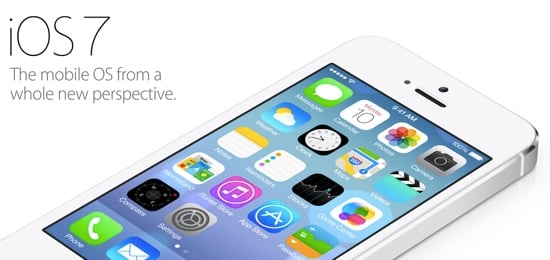
iOS 7: interface, not art

iOS 7

I’ve been watching the responses to iOS 7 with great interest. I’m most surprised (even though I shouldn’t be) by the extremely forceful and visceral negative reactions to the visual direction of the new OS. Most tweets about about it sound something like this:

First reaction: everything about iOS 7 feels… wrong.The typeface is hard to read, controls are totally inconsistent, and it’s flatly ugly.

— dustin curtis (@dcurtis) June 11, 2013

First, please let’s remember to give it five minutes before dismissing an entire operating system. iOS is an interface, not art. You can’t judge it without using it. You might think it’s ugly, and that’s fine. But you can’t go around quoting Steve Jobs’s “Design is how it works, not what it looks like” quote to everyone, and then get all worked up when Apple uses some colors and typography that you don’t like. If you truly believe that design is how it works, then you have to use iOS 7 to determine whether or not it works.

Also, why is it ok for startups to launch something unpolished, but when Apple redesigns their entire mobile operating system everything has to be perfect? Cap Watkins put it well in iOS 7. Unpolished By Design.:

And now we’re complaining that this completely revamped, new, version one interface isn’t perfect. Isn’t polished. Isn’t honed. We asked for a revolution and were delivered one which, all complexities considered, amounts to more than any one of our best first launches.

And then there are those who are calling this a copy of Windows Phone 8, and/or lamenting the fact that the design is flat as a board. No, it’s not. The icons might be flat, but as a design system, as John Gruber notes:

There is a profound reduction in the use of faux-3D visual effects and textures, but iOS 7 is anything but flat. It is three dimensional not just visually but logically. […] There’s a sense of place, depth, and spatiality in iOS 7 that makes it feel like hardware. A real thing, not pixels rendered on glass.

Finally, I agree with Jim Dalrymple’s assessment in Apple’s confidence:

One thing that became very clear to me early on in today’s keynote is that Apple was having fun again. They were really enjoying themselves.

And that’s a good thing. They’re finding their feet in the post-Jobs environment. So instead of tearing our clothes in despair, let’s celebrate the fact that Apple is moving forward with iOS, and that this new OS is a great new baseline for future improvements. Let’s give it five minutes.

Why you shouldn't use introductory tours in apps

Luke Wroblewski explains why those overlay introductory “tour” screens you often see in apps is such a bad idea in Designing for real world mobile use:

These issues stem from the fact that introductory tours show up before you ever get a chance to use an application. Most people are eager to jump right in and as a result, they skip reading the manual. The ones that do read haven’t seen the interface yet so they don’t have any sense of where and how the tips they’re learning will apply.

I completely agree, and have written about this before in Best practices for user onboarding on mobile touchscreen applications, where I give three guidelines for app onboarding:

  • Make sure that users have familiarized themselves enough with your app to have the correct mental model before you start teaching them how to use it.
  • Show users only the information they need to take the immediate next step(s) for using the application.
  • Make sure users have a clear link between the information you give them and how to access/use that information in their everyday use of the app.

[Sponsor] Radium: a new way to listen to internet radio

Radium is a new way to listen to internet radio. It sits in your menu bar and stays out of your way. And it just works.

With its clean user interface and album cover display, you’re always just a click away from beautiful sounds. Add your favorite tracks to the wish list and check them out later on the iTunes Store. Take the sounds with you using Radium’s built-in AirPlay streaming support. It’s all there.

With the proliferation of services like Spotify and Pandora, why choose Radium? Because with Radium, you don’t have to build up playlists, constantly answer questions about your music preferences, or navigate a cumbersome user interface. Radium is all about the sounds. And these sounds come from over 6000 free stations, maintained and curated by real people like you.

Available for $10 on the Mac App Store. Check it out.

Radium

Sponsorship by The Syndicate.

For teens, Facebook is boring. Or a prison. Or something.

Cliff Watson in Teens aren’t abandoning “social.” They’re just using the word correctly:

What is Facebook to most people over the age of 25? It’s a never-ending class reunion mixed with an eternal late-night dorm room gossip session mixed with a nightly check-in on what coworkers are doing after leaving the office. In other words, it’s a place where you go to keep tabs on your friends and acquaintances.

You know what kids call that? School. For kids who still go to school, Facebook is boring. If one of their friends does something amazing or amazingly dumb, they’ll find out within five minutes. If they’re not friends with that person, it will take 15 minutes.

That’s interesting, but very different from the sentiment in two other recent articles on how teens use Facebook. First, from the fascinating and scary What Really Happens On A Teen Girl’s iPhone, in which a teenage girl describes Facebook more like a prison than anything else:

“I’ll wake up in the morning and go on Facebook just … because,” Casey says. “It’s not like I want to or I don’t. I just go on it. I’m, like, forced to. I don’t know why. I need to. Facebook takes up my whole life.” […]

“If you don’t get 100 ‘likes,’ you make other people share it so you get 100,” she explains. “Or else you just get upset. Everyone wants to get the most ‘likes.’ It’s like a popularity contest.”

And then from Slate’s Teenagers Hate Facebook, but They’re Not Logging Off, an article on a recent Pew study on social media usage among teens1:

“I think Facebook can be fun, but also it’s drama central,” one 14-year-old girl said. “On Facebook, people imply things and say things, even just by a ‘like,’ that they wouldn’t say in real life.” Said another, “It’s so competitive to get the most likes [on a Facebook picture]. It’s like your social position.” Ninety-four percent of American teenagers maintain a Facebook profile, but that doesn’t mean they have to like it. “Honestly,” one 15-year-old girl told Pew, “I’m on it constantly but I hate it so much.”

Whether Facebook is boring, a prison, or some bizarre combination of both, it seems that reports of its decline among teens have been a little premature. I don’t think “a trap you can’t escape” is a good way to ensure continued user growth and satisfaction, but that seems to be the position Facebook finds itself in at the moment.

I half-joked this morning (on Facebook, of course) that I’d like to start RealLifeBook, a site where you don’t leave out the ugly pictures and difficult parts of your life. I wonder if that’s part of the problem that makes Facebook feel like a place you hate but can’t leave — it looks like everyone else is always happy, so you can’t be yourself, and you get caught up in this endless cycle of trying to out-happy your friends to get the most likes.

Damn, do we have to rethink a few things about how the web works…


  1. danah boyd also posted some thoughts on the Pew report, and as always it’s very insightful. 

It's too early to write off Google Glass

Charles Miller starts his post On Google Glass with a story about the history of cell phones, and then makes a keen observation:

I’m pretty bad at predicting the success or failure of new technologies, but I just think it’s a little too early to write off something as potentially game-changing as Google Glass based on how it looks today, what it costs today, or based on the fact that we’re currently entrusting one of society’s most socially tone-deaf groups (nerds) with the question of when it’s appropriate to wear them.

My mom was one of the first people in our neighborhood to have a cell phone, but she was so embarrassed by the thing that she ran into a bathroom every time she received a call. So, yes, Google Glass sounds pretty creepy (now), and they look pretty silly (now), but it might not be like that 2 years from now.

[Sponsor] Mad Mimi Email Marketing

Mad Mimi is a design-oriented email newsletter service founded in 2008. Developed to provide a mobile-app-like feel, and with a drag-and-drop email composer, Mad Mimi offers a simple, elegant user experience that helps customers create, send, and track beautiful html email campaigns.

Mad Mimi also offers robust APIs, integrations, and add-on features. This makes it a perfect fit for today’s visionaries, artists, and entrepreneurs, including great digital brands like Fancy and StumbleUpon, who use Mad Mimi to communicate with their customers.

Best yet, Mad Mimi is free for up to 2,500 contacts. We hope you’ll give us a try or email us with questions.

Mad Mimi

Sponsorship by The Syndicate.

Africa isn't really rising

Jumoke Balogun wrote a hard-hitting piece on uneven economic development in Africa Is Rising. Africans Are Not. The conclusion:

I understand that it is much easier to delight in articles and documentaries about a “rising Africa” than to examine personal class privilege. Economic inequality tasks those who have to consider the legitimacy of their wealth; it is an encompassing problem that we cannot donate, aid, or volunteer away. […]

We must all first admit that most Africans are not rising with Africa, and that wealth disparity is a major obstacle to overall development. Not doing so, and choosing to remain intentionally oblivious to the hardships of the majority of Africans who are losers in this new economic landscape is inane, and just downright cruel.

It’s quite chilling to read that article and then read Josh Ellis’s speech at Inspire Las Vegas a couple of months ago:

We call ourselves problem-solvers, but the evidence suggests the problems we want to solve are what are usually referred to as “First World” problems. […]

We are some of the smartest, most empowered humans who have ever lived. We have so much. Can we use our minds, our skills, our resources to make the world a better place for people who never had the opportunities we have? It would cost us so little, and we can accomplish so much.

This kind of thinking has become much more prevalent over the past couple of years, as smartphones and the app economy are reaching some level of maturity. As to why we tend to focus on solving “First World problems”, I like Paul Graham’s concept of “Schlep Blindness” — the inability to identify hard problems to solve:

The most dangerous thing about our dislike of schleps is that much of it is unconscious. Your unconscious won’t even let you see ideas that involve painful schleps. That’s schlep blindness.

But there is much value in identifying and solving the hard problems:

That scariness makes ambitious ideas doubly valuable. In addition to their intrinsic value, they’re like undervalued stocks in the sense that there’s less demand for them among founders. If you pick an ambitious idea, you’ll have less competition, because everyone else will have been frightened off by the challenges involved.

We don’t all have to stop what we’re doing and become social entrepreneurs. But if nothing else, these articles should nudge us to think about how we can move beyond the obvious problems. Instead of building another weather app, how about using weather information to send text messages to people when their area is in danger of flooding? Instead of focusing on providing people with nicer-looking information, what ways are there to help them do something with that information?

One organization that’s doing great work in this space is Praekelt Foundation. For example, TxtAlert sends automated, personalized SMS reminders to patients on chronic medication. MAMA uses mobile technologies to improve the health and lives of mothers in developing nations. Those are the kinds of solutions we need more of.