Menu

Posts tagged “creativity”

Manipulated photography from 1840 to Instagram

The Metropolitan Museum of Art currently has a great exhibition of 200 photographs from the 1840s to early 1990s called Faking It: Manipulated Photography Before Photoshop. From the description:

The urge to modify camera images is as old as photography itself—only the methods have changed. Nearly every type of manipulation we now associate with digital photography was also part of the medium’s pre-digital repertoire: smoothing away wrinkles, slimming waistlines, adding people to a scene (or removing them)—even fabricating events that never took place.

Here’s an example, with more at the bottom of this post:
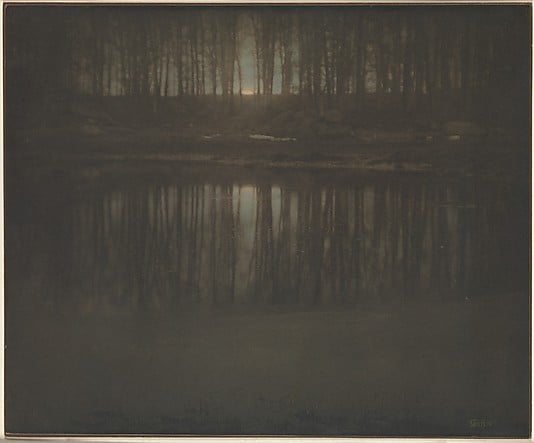
The Pond

The Pond - Moonrise (technique: multiple printing)

The exhibition is split up into different themes, and I was particularly interested in the section they call Artifice In the Name of Art:

The tradition of fine-art photography continued with Pictorialism, a movement that began in Europe in the 1880s and soon took hold in the United States. The Pictorialists sought to intensify photography’s expressive potential through the use of soft-focus lenses, textured printing papers, and processes that allowed the surface of the print to be modified by hand. In many cases, photographers composed their pictures from two or more negatives. Other artists, swept up in the currents of mysticism that captivated bohemian circles around the turn of the twentieth century, relied on staging and multiple exposure to reconcile the camera’s clear-eyed factuality with the ethereal realm of myths, dreams, and visions.

Soft-focus lenses… Textured printing papers… And we thought Instagram is a new idea. The outcome is the same — the difference is that the effects that we now get with the tap of a filter button used to take a very long time to do and was, in fact, part of a rebellion against the masses who took up photography as a hobby. The essay Pictorialism in America goes into more detail on this:

As an army of weekend “snapshooters” invaded the photographic realm, a small but persistent group of photographers staked their medium’s claim to membership among the fine arts. They rejected the point-and-shoot approach to photography and embraced labor-intensive processes such as gum bichromate printing, which involved hand-coating artist papers with homemade emulsions and pigments, or they made platinum prints, which yielded rich, tonally subtle images. Such photographs emphasized the role of the photographer as craftsman and countered the argument that photography was an entirely mechanical medium.

I find it fascinating how history repeats itself all jumbled up sometimes. As photography became popular in the 1880s, “real photographers” turned to labor-intensive manual methods for adding filters and effects to their photos to show that they are artists and craftspeople. Now that it’s easy to add those effects, the “real photographers” are rebelling again. Here’s Jaap Grolleman in Why I hate Instagram and why you should too:

I can understand people are trying to be cute but just because it looks ‘vintage’ and ‘antique’ it doesn’t mean a picture of your cat is cool. Pictures of clear-blue skies, light poles, bus stations, office chairs and even paving stones, they all look ‘aaamaazing’. Suddenly it’s all fashionable and presumingly ‘artsy’. I often see good photos being ruined by this ridiculous filter. There’s nothing artsy about it. Applying Instagram’s filters is just ‘clever-clever’, a bad attempt to fake authenticity.

And here is Rebecca Greenfield in Rich Kids of Instagram Epitomize Everything Wrong with Instagram:

The very basis of Instagram is not just to show off, but to feign talent we don’t have, starting with the filters themselves. The reason we associate the look with “cool” in the first place is that many of these pretty hazes originated from processes coveted either for their artistic or unique merits, as photographer and blogger Ming Thein explains: “Originally, these styles were either conscious artistic decisions, or the consequences of not enough money and using expired film. They were chosen precisely because they looked unique-either because it was a difficult thing to execute well (using tilt-shift lenses, for instance) or because nobody else did it (cross-processing),” he writes. Instagram, however, has made such techniques easy and available, taking away that original value.

If history is indeed a sign of things to come, the obvious question is: how will professional photographers rebel against Instagram’s easy filter manipulation? Will they go back to historical techniques? Invent some new, more difficult ways to manipulate photos? Or perhaps (gasp!) just take a photo and not retouch it at all? My money is on the rebellion spurring on some new innovation in art photography, and I look forward to seeing what comes out of it.

Anyway, now that the tangent is out of the way, below are some of my favorite photos from the exhibition. You can view the full collection here. These photos were all manipulated in some physical way — usually part of a very painstaking process.

Untitled

Untitled (technique: combination printing)
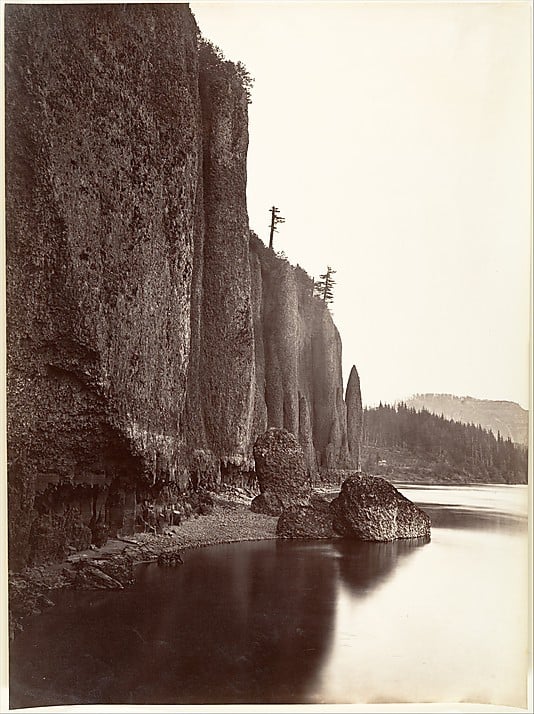
Cape Horn

Cape Horn, Columbia River, Oregon (technique: wet plate negative process)
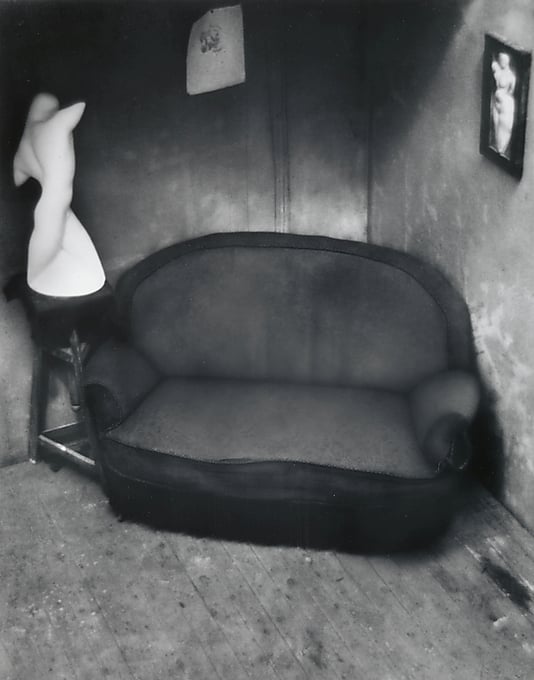
Cape Horn

The Other Series (After Kertész) (technique: altering with bleach, dyes, and airbrush)
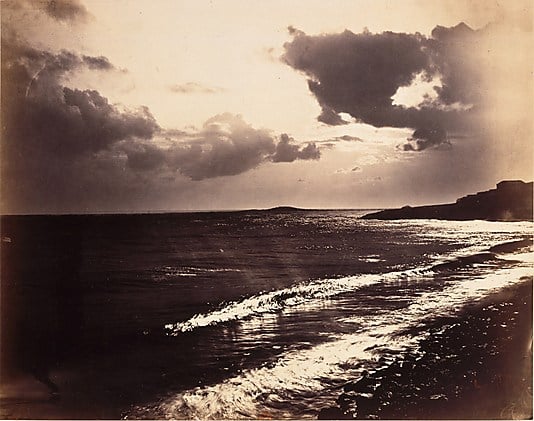
Cape Horn

Étude de nuages, clair-obscur (technique: multiple printing)
Cape Horn

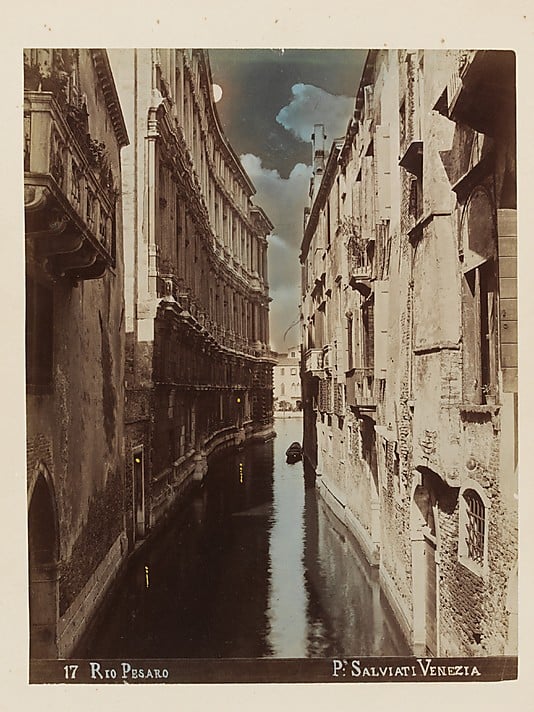
17 Rio Pesaro, Venice (technique: cerulean wash)
Passion takes practice

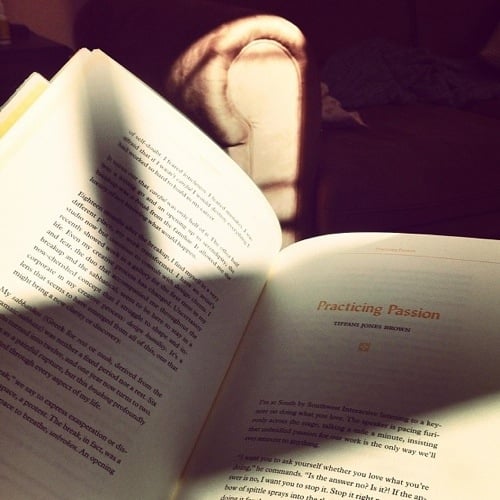
I’m slowly making my way through Issue #3 of The Manual. If you haven’t read these books, I highly recommend it — they’re wonderful essay collections. This morning I read Practicing Passion by Tiffani Jones Brown, in which she dissects the whole idea of following your passion and doing what you love. She starts with this observation:

Sure, I’d been excited to start my own business. And sure, I’d loved the idea of writing for a living. Yet banal and frustrating tasks — the kind you approach with a groan, not a fist-pump — make up much of my job. So do I feel over-the-moon about my work? I truly like it. I feel good when I get better at it. Passion overstates the point.

She then goes on to recommend a more tempered approach to the passion thing:

Instead of asking “what will make me feel passion?” we should ask, “how can I make passion happen?” The answer is to cultivate a way of living and working that makes passion more likely. Passion takes practice.

But the point that really resonated with me is the part where she talks about flow:

You can get into flow doing almost any activity, no matter how good you are at it, no matter how mundane the task. Only two things are required: the activity has to have a clear goal and a challenge. You need to be really plugged in and focused; what you’re doing must stretch your body or mind. You won’t achieve flow while multitasking or surfing the internet but you might, odd as it seems, while doing a content audit or cleaning up comps.

Those are good words to remember. Sometimes we do what we want to do. The rest of the time we do what we need to do to get the job done and get better at what we do. Anyway, I guess the point is, buy The Manual. It’s such a treat.

Practicing Passion

How to be less boring

Scott Simpson tells us something I think we all desperately need to hear in his article in Issue 4 of The Magazine:

You are boring. So, so boring.

Don’t take it too hard. We’re all boring. At best, we’re recovering bores. Each day offers a hundred ways for us to bore the crap out of the folks with whom we live, work, and drink. And on the Internet, you’re able to bore thousands of people at once. […]

The Big Bore lurks inside us all. It’s dying to be set loose to lecture on Quentin Tarantino or what makes good ice cream. Fight it! Fight the urge to speak without listening, to tell a bad story, to stay inside your comfortable nest of back-patting pals. As you move away from boring, you will never be bored.

This relates really well to a recent post by Able Parris called Focus Means Ignoring:

We need to spend less time looking to others for interesting things, and start spending more time doing the things that make us interesting. […]

Similarly, and I am saying this more for myself, it’s easy to give time and attention to the things you enjoy or are easy, but true character comes when you give focus to the things that are difficult but must be done. This means you have to ignore everything else, and know that you will be better because of it.

Just imagine the virtuous cycle this could set off… As people post fewer boring things like Foursquare checkins and retweets of how awesome they are, and we all take the conscious decision to read fewer boring things and instead spend that time listening, learning, and doing new things, we could slowly and collectively pull the current state of the social web out of that cesspool of boringness. Well, that’s a pipe dream, of course. And to be fair — there’s nothing wrong with clicking on a good animated gif every once in a while.

Anyway, back to Scott’s article. One of his recommendations for fighting the descent into becoming boring is what he calls “Expanding your circles”:

When you expand your social and intellectual range, you become more interesting. You’re able to make connections that others don’t see. You’re like a hunter, bringing a fresh supply of ideas and stories back to share with your friends.

This is very much related to Mark Granovetter’s 1973 theory of weak ties1. The theory states that because a person with strong ties in a network more or less knows what the other people in the network know, the effective spread of information relies on the weak ties between people in separate networks.

In other words, to get more interesting information out of Twitter or any other social network, you need to follow people who give you access to additional knowledge clusters. If you see too many tweets about the same thing in your timeline, or if your RSS reader shows 5 consecutive links to the same tech article, you may have too many strong ties.2

Go and and find those weak ties at the edges of your interests, and strengthen them. Otherwise we’ll just continue to talk about the same stuff over and over and over again. And that’s boring.


  1. “The Strength of Weak Ties”, Mark Granovetter, 1973. PDF link

  2. I wrote about this extensively in How to get more out of Twitter

Two legacies to strive for

The Great Discontent just published another great interview, this time with Cameron Moll. The final two paragraphs, where he speaks about the kind of legacy he’d like to leave, really spoke to me. First, on a personal level:

I think the legacy I hope to leave for my family is that they, of all people, knew me in the most intimate way and regardless of how the public saw me, I hope they will be appreciative and thankful for who I was in their presence.

Or to quote CJ Chilvers:

As noble as you may believe your pursuit of excellence is, it means nothing if you go home at night to people who do not recognize you or want you around.

I’ve been thinking about family a lot lately, since the birth of our 2nd daughter 6 weeks ago. The first child is mostly a physical adjustment — the long, hard process of getting used to very little sleep, very little time, and no room for selfishness. The second child is more of an emotional adjustment. Suddenly you’re a family of four. Suddenly you’ve become your parents. Suddenly the people close to you can be scattered in many different places, and your heart somehow needs to stay in your body and not freak out because of all the evils in the world that can possibly hurt them. From physical exhaustion to emotional exhaustion — that’s the move from one to two kids.

But for me it is also a move to a better understanding of what it means to be a family, to be bound together through thick and thin, to care more for these people than I ever thought would be possible. And with that comes the realisation that I don’t want to be that guy. That Dad at the park who’s always on his iPhone. The one who’s never home in time for bath time. So I obsess over these things — it pretty much takes an act of God for me not to be home to give my 3-year old a bath. And when I fail, I fall hard, and sometimes stumble rather slowly back on my feet.

So anyway, I’ve been thinking about family a lot lately. And as much as I love my work and my side projects, I cannot allow that to become more important than my family is. So I identify with Cameron and CJ’s words. I feel like I often fail at building towards that legacy, but I’m going to steal a buzz phrase from startup parlance and say that I think I at least “fail forward”. I hope.

And then, on a professional level, Cameron says this:

I don’t have it all figured out; I’ve made so many mistakes, but I hope that through some of the work I’ve produced or the efforts I’ve championed, people feel inspired to try harder and be better.

These things seem like pretty good legacy goals to strive for. Sign me up.

The tyranny of endless musical choice

Mike Spies wrote a wonderful ode to the lost art of CD buying in Spotify and the Problem of Endless Musical Choice:

We seem to have created an environment in which wonderful music, newly discovered, is difficult to treasure. For treasures, as the fugitive salesman in the flea market was implying, are hard to come by—you have to work to find them. And the function of fugitive salesmen is to slow the endless deluge, drawing our attention to one album at a time, creating demand not for what we need to survive but for what we yearn for. Because how else can you form a relationship with a record when you’re cursed with the knowledge that, just an easy click away, there might be something better, something crucial and cataclysmic? The tyranny of selection is the opposite of freedom. And the more you click, the more you enhance the disposability of your endeavor.

I’m sure we all have stories like this, but I have such fond memories of my early music buying experiences. The endless hours spent in music stores, listening to 10, 20, sometimes 30 different albums before finally making a choice what to spend my very limited cash on. Then the relief of the decision, immediately followed by anxiousness during the drive home — the fear that maybe this isn’t the right choice, that maybe you’re going to hate it after one or two listens. And finally, the joy of discovery as you put the CD on repeat and immerse yourself in every little detail of the liner notes.

I miss the almost obsessive nature of that first few days with a new album, when you’re unable to focus on any conversation because your mind is filled to the brim with lyrics and melodies. It’s too easy (and too cheap) to get music these days. There is so much music at our fingertips that we grab a new album, devour it, and then move on quickly like the digital gluttons we’ve become. I try to keep up my vinyl habit, and I still love the experience of hunting for records, but it’s becoming a very small part of my life.

I don’t think digital music is a bad thing. But I think that as abundance increases, our ability to treasure what we have decreases. And that’s not good.

(link via Rob Boone)

Failure fosters humility*

David Lee in Pride Before The Fall:

If success without failure breeds pride, then failure can foster humility, drive, and true self-confidence.

There is so much truth in this statement, and I almost tweeted it without comment when I read it, but I realised that it’s not that simple.

The concept of “Humble Design” is a recurring theme on this site. I first wrote about it here, and then again here, and also here. The thread through all those posts is my belief that to be a good designer (or just a good human being), we need to be able to admit our mistakes and failures, and possess the fortitude to fix whatever went wrong.

The problem comes when we’re unwilling to admit that we’re anything less than perfect, or worse, when we lack the curiosity to seek out and recognise those instances when we’re wrong. So, with that said, I’d like to put an asterisk next to that David Lee quote. Terms and conditions apply. Failure only fosters humility, drive, and true self-confidence when one is willing and able to recognise and fix them.

(link via @mobivangelist)

Pinterest as the only outward-focused social network

Back in March I wrote about Pinterest, and how I believe it gives people the illusion that they’re creating something without the effort of actually doing the hard work. Now Clive Thompson makes a strong argument In Defense of Pinterest. He talks about the power of images to communicate emotion, and the one big way Pinterest is different from other social networks:

Indeed, part of the value of Pinterest is that it brings you out of yourself and into the world of things. As the Huffington Post writer Bianca Bosker argued, Facebook and Twitter are inwardly focused (“Look at me!”) while Pinterest is outwardly focused (“Look at this!”). It’s the world as seen through not your eyes but your imagination. “In such a self-obsessed society, this is a place where people are focusing attention on something other than themselves,” says Courtney Brennan, an avid Pinterest user.

These opposite sides of the argument aren’t mutually exclusive, of course. The critique that Pinterest is for people who “will do anything to avoid having to read” remains, but the examples cited by Clive convinced me that there is a great deal of value on the site — if you know where to look.

Jason Santa Maria on design and community

One of my favorite sites, The Great Discontent, has a great interview with designer Jason Santa Maria:

The default posture of the Internet is that you put work out and hope that someone connects with it, learns from it, and builds upon it. That isn’t unique to the web community, but it’s one of our community’s greatest traits—everyone shares what they do and we all learn from one another.

From the beginning, whenever I was in a position to tutor or mentor someone, I was always up for it. I want to leave a mark in a way that helps other people to be better and if I have knowledge that can do that, I think I have to share it. By doing so, it sets an example for others to do the same. It pays it forward and helps foster a better community.

I’m not generally a fan of interview posts but this site does them really well, and Jason’s story is inspiring.

To be creative, your most important tool is utter concentration

Mark Helprin offers up some great advice to writers in Skip the Paris Cafés And Get a Good Pen, but it’s advice that works just as well for all creative pursuits:

Your most important tools will be your honesty, labor, courage, practice, luck and utter concentration. […] More valuable than speed or being struck by what you think is lightning (and others usually do not) is concentration. When asked how he managed to come up with the calculus, surely one of the greatest achievements possible for the mortal mind, Newton replied, “I thought of nothing else.”

I love the writing style in this piece. For example, while expanding on his advice not to try to be Hemingway by writing in cafés all over Europe:

Literary skill, much less greatness, cannot be had with a pose, and exhibitionism extorts the price of failure. Also, have pity on the weary Parisians who have wanted only a citron pressé but have been unable to find a café where every single seat is not occupied by an American publicly carrying on a torrid affair with his moleskin.

When I grow up, I want to write like that.

Quote: Thomas Kempis on considering ourselves better designers than others (ca. 1420s)

Thomas Kempis in The Inner Life:

A true understanding and humble estimate of oneself is the highest and most valuable of all lessons. Should you see another person openly doing evil, or carrying out a wicked purpose, [or launch a really bad website/app], do not on that account consider yourself better than him, for you cannot tell how long you will remain in a state of grace. We are all frail; consider none more frail than yourself.