Menu

Posts tagged “creativity”

The similarities between making coffee and developing software

I know I just wrote about coffee, but this one is too good not to link to. In Coffee and the Art of Customer Happiness Mathias Meyer writes about the similarities between making coffee and developing software:

Baristas are geeks, just like we are. They love talking about the latest toys, about which espresso machine is better than the other, they compare paper filters with cloth, and they take detailed notes on the different aromas of coffee when they’re cupping it.

The craft of coffee making is quite fascinating, both from the perspective of precision and customer care.

Mathias discusses familiar topics like metrics, continuous delivery, and custom vs. off-the-shelf software, and what the art of coffee can teach us about each. Great article.

(link via @bb)

The impact of technology on kids and their development

I desperately wanted to dismiss Sherry Turkle’s answer to the question What should we be worried about? as alarmist, but she makes a terribly convincing argument about the impact that technology has on kids and their development. After discussing the issues in detail, she concludes:

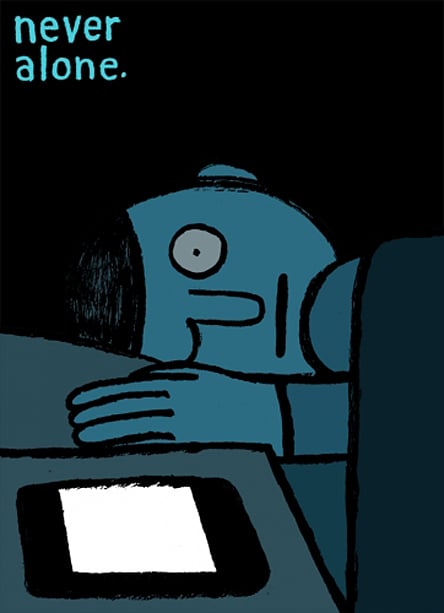
Thus my worry for kindergarten-tech: the shiny objects of the digital world encourage a sensibility of constant connection, constant distraction, and never-aloneness. And if you give them to the youngest children, they will encourage that sensibility from the earliest days. This is a way of thinking that goes counter to what we currently believe is good for children: a capacity for independent play, the importance of cultivating the imagination, essentially, developing a love of solitude because it will nurture creativity and relationship.

The essay echoes Nicholas Carr’s thoughts:

We don’t like being bored because boredom is the absence of engaging stimulus, but boredom is valuable because it requires us to fill that absence out of our own resources, which is process of discovery, of doors opening. The pain of boredom is a spur to action, but because it’s pain we’re happy to avoid it. Gadgetry means never having to feel that pain, or that spur. The web expands to fill all boredom. That’s dangerous for everyone, but particularly so for kids, who, without boredom’s spur, may never discover what in themselves or in their surroundings is most deeply engaging to them.

But perhaps Stephen Hacket said it best — and most succinctly — in Why I Don’t Play Games on my iPhone:

Boredom isn’t a bad thing. But strangling it with Angry Birds probably is.

Coffee, design, and the nature of craft

I’ve lost count of the number of people who sent me Julian Baggini’s excellent essay The art of coffee last week (I guess my Instagram feed makes my feelings about coffee pretty clear). It’s a truly great article, going far beyond coffee to the essence of craftsmanship, and the things we value. Here’s Julian on the “perfection” of Nespresso capsules that is hard to match consistently by human baristas:

Surely we appreciate the handmade in part because it is handmade. An object or a meal has different meaning and significance if we know it to be the product of a human being working skilfully with tools rather than a machine stamping out another clone. Even if in some ways a mass-produced object is superior in its physical properties, we have good reasons for preferring a less perfect, handcrafted one.

And further on:

There is plenty that we should happily allow to be mechanised, for the obvious benefits that brings. But there is plenty else we will continue to prefer to be handmade, because what matters is not just the result, but the process by which you get there. Humans are imperfect, and so a world of perfection that denies the human element can never be truly perfect after all.

The article got me thinking once more about the concept op craft as it relates to design and related fields. In 2008 Alan Cooper brought the discussion about craft in design to the forefront with his IxDA keynote An Insurgance of Quality1. He argues as follows for the value of craft in Interaction Design:

Best to market, particularly in high tech, comes about only through craftsmanship. And craftsmanship is all about quality. The goal of craftsmanship is to get it right, not to get it fast. The ultimate measurement of craft is not speed. It’s quality. How good is it. It’s a pure measurement. And a delightful measurement. Craftspeople do it over and over, until they get it correct. And in their training, in their apprenticeship, they build things over and over, learning how to do things correctly, so they can bring enormous expertise to create successful products, and thus the training of craftsman is a long and drawn out personal process.

In Craft in Interaction and Service Design Peter Merholz uses Instapaper as an example of an app that practices this kind of dedication to quality:

Instapaper shows the power of approaching experience design as a craft, as opposed to some kind of massive organizational process. As Marco hones his craft, he is able to evolve the experience over time. Too often companies launch something and then move on to whatever’s next. Instapaper shows what happens when you go deeper and deeper and deeper into something. Unlike Microsoft or Adobe, who simply tack on features with every new release, Marco, instead, refines the design, honing it, polishing it, like his app is some jewel. I’d love to see companies approach service design the way Marco has. It would require a fundamental shift in how they work, but the results could be quite beautiful.

Unfortunately, we live in an environment where most software isn’t designed in this way. In The Thread Dmitry Fadeyev discusses what usually happens in design projects:

The designer’s creative instinct often tries to express itself outside of this frame [of focusing only on conversions] and just as often gets shot down by project managers and marketers who disregard all aesthetic value apart from that which drives higher conversions. Three things are killed in the process. […] The second is the pleasure that people receive from coming into contact with beautifully crafted goods, especially works that infect the viewer with an emotion that the maker wanted to communicate.

It becomes clear from these articles that one of the essential elements for developing one’s craft is time. Time to do things over and over, to make mistakes, to learn, to fail, to try again, to get frustrated, and to become exceptional through small victories. But as I wrote in Who has time for that?, that’s just not how business works these days. Most companies work more the way DHH advises against in Your life’s work:

Working people to death to ship any one feature or product is a poor strategy, as it reduces the capacity to ship the next feature or product (burn out, build-up of bad rush practices). It’s far more important to have a system for shipping that improves over the long term than one that heroically manages one monster push.

So how can we change this, and convince both our fellow designers as well as clients (internal and external) of the value of craft in design? We’ll have to start with design schools, of course. In Craftsmanship Jon Kolko notices a dangerous trend he sees in most schools:

Based on my experience reviewing portfolios from recent business school graduates, I would argue that one of the most fundamental failings of “design thinking” education is the lack of craftsmanship. Students don’t appear to learn a honed, tacit, and careful “innate” sensibility for making, and simultaneously, they don’t appear to have developed an intimate understanding of the medium they are responsible for shaping. Instead, they are equipped with a toolkit of methods.

But we also have to be convinced ourselves that craft is important — that it has real business value because of the way it connects with people. We have to be convinced that it matters when a designer’s personality and care shine through in their work. We have to believe that people buy things not just because of the way they work, but also because of the way they were created. To drive this point home, I love Frank Chimero’s call for us to care more in his essay The Particle:

We should care more about our craft because we’re granted an opportunity to contribute to the world. We should care more about our audiences because they are the ones who give our work value. We might think that design work is about you or about me or anyone else who makes it, or maybe about the things that we make and the artifacts we produce, but don’t let this way of thinking fool you. The things we make are all just excuses to speak with one another and to help one another. We are all linked, and the things that we make for each other strengthen the invisible threads that tie us all together.

There is a part of me that will always design for the joy of making it, but I now understand that the point of it all is not for me to enjoy myself, but for the ones using whatever I make to have some sort of wonder when doing so. We are in service to those that use what we make, to the ones that listen to what we say.

This is a difficult task. We live in an age of data-driven design. Our challenge is to listen to the data and automate improvements as much as possible, but without losing the human element that we all crave so much. Let’s train ourselves to be design baristas, not just machine button-pushers who produce the same perfect, boring comps on every single project.

I’ve created a Readlist of all the articles mentioned in this post. You can send the articles to your Kindle or your mobile phone, or download an eBook. If there’s interest in this kind of thing I’ll start doing it more often, so please let me know with a quick tweet if you like this idea.


  1. It looks like the video for the keynote isn’t available any more, but here is a pretty good summary by Beau Smith

Another benefit of sketching in UI design

There’s a benefit of sketching and paper prototyping that I haven’t thought of before. Joshua Porter recently wrote an article called What Jerry Seinfeld can teach us about interaction design, and this is one of his points:

Works in low fidelity. Jerry writes his jokes on a yellow pad with a blue pen, and authored every episode of Seinfeld in long-hand in this way. This is like the sketching stage of UI design.

Why write/sketch instead of type/wireframe? Well, there might be a clue in the way Jason Snell talks about writing on the iPad:

Using the iPad slowed me down and got me to think about what I was writing in a way that using my trusty MacBook Air never would.

He likens it to the difference between writing with a pen vs. writing with a keyboard:

Writing with pen and paper felt appreciably different from typing. My mind would try to race ahead, but my pen could only go so fast. I ended up considering every sentence, every word choice, with greater care simply because I couldn’t dash it out and move ahead.

So maybe that’s why there’s so much value in sketching with pen and paper as well. Lines are imperfect. You can only go so fast. Making a mistake can be costly if it means you have to do it all over again, so you take your time to consider design options.

I’ve slowly started moving away from wireframes, and instead now prefer a workflow that includes several rounds of sketching, followed by prototyping in Axure. I think I get better results that way, and maybe the reason is that sketching slows down the mind just enough to do better work.

Worthy aspirations for content makers

There are two articles I read in 2012 that will hopefully shape my writing here in the coming year. The first, and possibly the only post any aspiring writer needs to read before getting started, is The Most Important Writing Lesson I Ever Learned:

Nobody wants to read your shit.

When you understand that nobody wants to read your shit, your mind becomes powerfully concentrated. You begin to understand that writing/reading is, above all, a transaction. The reader donates his time and attention, which are supremely valuable commodities. In return, you the writer, must give him something worthy of his gift to you.

This ties in very well with Paul Ford’s plea in one of my favorite essays of 2012, 10 Timeframes:

If we are going to ask people, in the form of our products, in the form of the things we make, to spend their heartbeats on us, on our ideas, how can we be sure, far more sure than we are now, that they spend those heartbeats wisely?

So when we tweet, write, post, or whatever we call it when we create content, the first question we should ask ourselves is: “Is this thing I’m sharing worthy of attention?” If it’s a Foursquare checkin or a vaguebook update, it’s probably best left unsaid.

The second article that I hope will shape my writing more is this Steinbeck quote:

It is the duty of the writer to lift up, to extend, to encourage. If the written word has contributed anything at all to our developing species and our half developed culture, it is this: Great writing has been a staff to lean on, a mother to consult, a wisdom to pick up stumbling folly, a strength in weakness and a courage to support sick cowardice. And how any negative or despairing approach can pretend to be literature I do not know. It is true that we are weak and sick and ugly and quarrelsome but if that is all we ever were, we would milleniums ago have disappeared from the face of the earth, and a few remnants of fossilized jaw bones, a few teeth in strata of limestone would be the only mark our species would have left on the earth.

That is certainly an almost impossible standard to live up to. Consistently writing “wisdom to pick up stumbling folly” is something only the most talented writers can do — and even then there are stumbles along the way. Similarly, the Internet makes the thought of staying away from a “negative or despairing approach” sound ludicrous. What will be left of the Internet if we take away angry rants and YouTube comments?

And yet, as unreachable as they appear to be, I think these are good aspirations for anyone who publishes content on the Internet today:

  • Only share that which is worthy of your audience’s attention.
  • Strive to uplift and encourage, not to break down and destroy.

With that in mind, I’ll probably move away from straight-up link-blogging a little bit this year, and rather focus more on trying to connect dots where I think seemingly unrelated things on the web can come together to tell a good story. That’s what excites me, so it’s probably what Obsession Times Voice means for me1.

This isn’t a year-in-review post, but I’d still like to thank you for reading, for tweeting me your feedback, for emailing me. For correcting my spelling errors, for telling me when I’m full of crap, and for encouraging me when I feel like this is too much work for too little return.

I’d like to say a special thanks to those who subscribe to the site via RSS. When I subscribe to a feed, it feels like I’m inviting someone in from the porch to come have a seat inside and have a cup of coffee together. I know RSS space is limited, and that it’s a pretty big commitment to subscribe to someone’s feed. So please know that I take that seriously, and that you are a big part of the reason I aspire to become better at this.

Onward.


  1. For examples of what I mean by this, see The future of online publishing, The fetishization of the offline, and a new definition of real, and The unnecessary fear of digital perfection

The unnecessary fear of digital perfection

I’ve recently noticed a recurring theme in many articles that cover technology’s impact on our lives. It’s the idea that the move to digital technologies has taken away an essential part of being human: the accidental discovery of new things by getting lost. The fear is that what we might call “digital perfection” is removing the natural wayfinding mistakes that are essential for serendipitous discovery — like getting lost in a new city and then finding that perfect coffee shop. I’ll share a few examples first, and then comment on why I think this fear is unnecessary.

The example that’s cited most often is how Google search is enveloping each of us in the Internet’s “filter bubble” where we only find what we’re looking for, and nothing more. Here’s Maria Popova in Are We Becoming Cyborgs?:

The Web by and large is really well designed to help people find more of what they already know they’re looking for, and really poorly designed to help us discover that which we don’t yet know will interest us and hopefully even change the way we understand the world.

There are several industry-specific examples, like the lament that we don’t browse record stores just for the fun of it any more. From Spotify and the Problem of Endless Musical Choice:

We seem to have created an environment in which wonderful music, newly discovered, is difficult to treasure. For treasures, as the fugitive salesman in the flea market was implying, are hard to come by—you have to work to find them. And the function of fugitive salesmen is to slow the endless deluge, drawing our attention to one album at a time, creating demand not for what we need to survive but for what we yearn for. Because how else can you form a relationship with a record when you’re cursed with the knowledge that, just an easy click away, there might be something better, something crucial and cataclysmic? The tyranny of selection is the opposite of freedom. And the more you click, the more you enhance the disposability of your endeavor.

And then there is The End of the Map, a fascinating article about the history of cartographic errors, which includes this statement:

The uncertainty that was once an unavoidable part or our relationship with maps has been replaced by a false sense of Wi-Fi-enabled omnipotence. Digital maps are the enemies of wonder. They suppress our urge to experiment and (usually) steer us from error—but what could be more irrepressibly human than those very things?

This idea is echoed in No one likes a city that’s too smart:

A great deal of research during the last decade, in cities as different as Mumbai and Chicago, suggests that once basic services are in place people don’t value efficiency above all; they want quality of life. A hand-held GPS device won’t, for instance, provide a sense of community. More, the prospect of an orderly city has not been a lure for voluntary migration, neither to European cities in the past nor today to the sprawling cities of South America and Asia. If they have a choice, people want a more open, indeterminate city in which to make their way; this is how they can come to take ownership over their lives.

Now, I’ll admit that I largely agree with the consequences that are pointed out in these articles. I’ll even admit to feeling the same sense of loss that these authors do. But I don’t agree that accidental discovery is a thing of the past. I believe that digital perfection opens up amazing possibilities, and combined with the fact that humans will always be explorers and flâneur no matter what technology we use, we’re starting to see some great products to help us replace what we’ve lost in the analog world.

Here are some examples of the types of discovery products and services we now have access to.

  • Stellar.io collects tweets, articles, photos, and videos that the people you follow have favorited, and presents that in an aggregated stream. I always find something interesting and surprising in my Stellar feed, because it’s based not on explicit recommendations from the people I follow (i.e., what they think their followers might like), but on the things they really like themselves, without the social media personal brand/engagement filter.
  • This is my Jam has become my favorite way to discover new music. You choose one song that you really like, and this song becomes your “jam”. It then shows up in your followers’ streams. By only allowing users to choose one favorite song at a time the service doesn’t become overwhelming. I suspect we’re going to see many new social networks like this — sites that are focused on a specific vertical, that build on the trust we place in people we know in real life, and that are designed for quality of content, not quantity.
  • While the big guys are fighting over photo filters and who shouldn’t show up in whose stream, Foursquare is adding some amazing features with every release. We really shouldn’t underestimate this company’s potential. Foursquare has become an incredibly good way to discover not just new cities, but one’s own city as well. As users continue to add tips, lists, ratings, and photos of their favorite (and not so favorite) places, Foursquare will slowly resurface some of the “getting lost” moments that have been buried by digitally perfect maps.

My point is simply this. Sure, there are things we used to do in an analog era that we don’t do any more. We don’t get lost in encyclopedias, record stores, and cities any more. And that has some negative consequences. But we shouldn’t grieve about it too much.

Our insatiable spirit to discover new things haven’t gone away just because we’ve moved to a digital world. We just need to meet those needs in different ways — ways that better utilize the benefits of digital media. In fact, it’s not that we won’t get lost any more. It’s just that we need to invent ways to get lost differently.

How steampunk culture offers clues to building a better future

Being More Human is a fascinating article written by Brian David Johnson, Intel’s resident futurist. He explains how steampunk culture offers clues to building a better future:

Steampunk has emotion and passion; it has an opinion and a point of view. It is sassy and thoughtful and optimistic about what could be built. It is convinced we can build a better future by envisioning a different past. Steampunk shows us that people want the devices and the technology in their lives to have a sense of humor, history, and humanity. This desire has radical implications for the type of future we could build.

He then discusses how steampunk reveals three relationships that people want with their technology, and concludes as follows:

When I tell people I’m a futurist and an optimist, they seem surprised and amused. People expect all futurists to be pessimistic prophets of doom. I’m not like that. The future is going to be awesome because we are going to build it. The future is not some fixed point on the horizon that we are all helplessly hurtling toward. Quite the opposite: the future is made every day by people’s actions. We all, on some level, create the future. From the family we raise, to the community we live in, to the business we do, we build the future. We all need to be active participants in imagining the future: the one we want and the one we want to avoid. Then we need to do something about it.

I try hard to stay away from the word “must-read” in these posts, but I’m going to relax my guard on this one, being holiday and all. So, really — read it!

Giving your voice a chance to be heard

Craig Mod just published the first issue of his Roden Explorers Mailing List, and it’s great. He talks a bit about disconnecting from the Internet — a topic that, let’s be honest, we’re all thinking about at this time of year:

It’s REALLY fascinating to watch the language and texture of the world around you change when you disconnect. It’s also a bit sad, I guess, or hilarious, I suppose, to fetishize disconnection. But that’s the world we live in these days.

He proceeds to discuss author Susan Sontag’s book Under the Sign of Saturn, and one of the rules she made for her apartment in the 1970s:

“[It is] in this tiny room where books are forbidden, where I try better to hear my own voice and discover what I really think and really feel.”

Books! The enemy! Excise them to go: Offline!

This is such a great description of why one needs an internet diet every now and then: to better hear your own voice and discover what you really think and really feel.

We grab frantically at social network signals, news, podcasts — whatever — during all moments of downtime. Nevermind the last time we heard our voice, when’s the last time we gave our voice a chance to be heard?

The whole letter is great, so I definitely recommend subscribing to Roden Explorers.

Looper, UI design, and capability vs style

I know I’m late to the party, but I finally saw Looper last night. It is, of course, as brilliant as everyone says it is. After watching the movie I went back to all my Instapaper’d articles about it, and my favorite so far is an interview with the director called Noir to near-future: ‘Looper’ director Rian Johnson talks sci-fi, Twitter, and the fate of film. This answer, in particular, jumped out at me (my emphasis added):

The minute you say “science fiction,” the question of world creation comes up. Was that something you were thinking about when you were writing?

No, that was the production designer. When I was writing I was really just disciplining myself to focus on getting the narrative as tight as possible. To tighten the screws on everything, and to make sure that it ticked and that it ran from start to finish and that it had a solid spine.

And so I was focused on that and I wasn’t even thinking about the world-building elements at all. Which I think was good because it meant the designers and I just worked together. Every design decision, it wasn’t preconceived, it came out of the needs of the story. And so making the world seem like such a desperate place was a way of accentuating that feeling of “you better hold on to your slice of the pie, or else it’s destitution,” you know?

I love that approach, and I think we need more of it in web design as well. Start with the story — the core functionality of the product. Then look at that functionality, and only add the “production value” (styling) that will help tell that story. Nothing more.

It reminds me of a point Ryan Singer makes in his article UI and Capability. In the excerpt below, think of story as “capability”, and production design as “style”:

Affording a capability and styling it are both important. But it’s essential to know which one you are doing at a given time. Style is a matter of taste. Capability and clarity are not. They are more objective. That person standing at the edge of the chasm cares more about accomplishing their task than the details of the decor.

It’s worth reminding ourselves that, just as we’ll forgive a movie’s shoddy special effects if the story is great, users will forgive a style they don’t love if a product helps them to accomplish a goal effectively.

Follow people rather than topics

Callum J Hackett gives some good advice in Reading the Unexpected:

This is why I prefer to follow people rather than topics. I’m able to get a good sense of their character and interests, and while I know what kind of wonderful links and commentary to expect 90% of the time — all part of the initial attraction — I also look forward to that remaining 10% which I’d never have predicted or sought out myself, but which I still enjoy reading.

We need that kind of spontaneous discovery. We need to be exposed to the unfamiliar and the unexpected, even if it’s only truly interesting one time out of a hundred. If all our interesting content is redirected from individuals to subject-specific sources, we will inevitably place subtle, unnoticed restrictions on the things that we see, and we will continue to reinforce our prejudiced ideas and interests without thinking.

This ties in well with a very interesting discussion between Susan Greenfield, Maria Popova, and Evgeny Morozov with the New York Times, weirdly titled Are We Becoming Cyborgs? Here’s Maria Popova:

The Web by and large is really well designed to help people find more of what they already know they’re looking for, and really poorly designed to help us discover that which we don’t yet know will interest us and hopefully even change the way we understand the world. […]

When you think about so-called social curation — algorithms that recommend what to read based on what your friends are reading — there’s an obvious danger. Eli Pariser called it “The Filter Bubble” of information, and it’s not really broadening your horizons.

I think the role of whatever we want to call these people, information filters or curators or editors or something else, is to broaden the horizons of the human mind. The algorithmic Web can’t do that, because an algorithm can only work with existing data. It can only tell you what you might like, based on what you have liked.