Menu

Posts tagged “writing”

Whose basket is it?

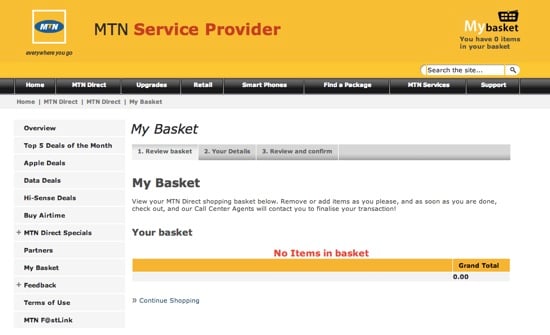
In Yours vs. Mine Dustin Curtis explains his preference to use “Your stuff” as opposed to “My stuff” in interfaces. It might sound trivial, but whether we use “My” or “Your” reveals something about how we view technology:

After thinking about this stuff for a very long time, I’ve settled pretty firmly in the camp of thinking that interfaces should mimic social creatures, that they should have personalities, and that I should be communicating with the interface rather than the interface being an extension of myself. Tools have almost always been physical objects that are manipulated tactually. Interfaces are much more abstract, and much more intelligent; they far more closely resemble social interactions than physical tools.

The answer for me, then, is that you’re having a conversation with the interface. It’s “Your stuff.”

This echoes Yahoo!‘s recommendations:

Labeling stuff with “Your” instead reinforces the conversational dialogue. It is how another human being might address you when talking about your stuff. Even with MySpace1, people say things like “I saw what you put on your MySpace.”

So MTN at least got one out of four right on this page:

MTN account


  1. I guess they haven’t updated this pattern in a while. 

What I learned about design in 2012

One of my favorite articles of 2011 was What I Learned About the Web in 2011 on A List Apart. In particular, Erin Kissane’s call to respect complexity stayed with me all through 2012:

If a single idea has followed me around this year, from politics to art and work to friendships, it’s been this one: “it’s more complicated than that.”

It’s centrally important to seek simplicity, and especially to avoid making things hard to use or understand. But if we want to make things that are usefully simple without being truncated or simplistic, we have to recognize and respect complexity—both in the design problems we address, and in the way we do our work.

So it was with a sense of great surprise and gratitude that I responded to a request to participate in the 2012 version of that article, What We Learned in 2012. The section I wrote is entitled “Confidence versus humility”, and in a sense, it’s a continuation of Erin’s plea in 2012:

The biggest thing I learned last year is that the two most important characteristics of a good designer are ones that, at first, appear to contradict one another.

I won’t quote the section in full, because I’d love for you to check out the whole article. There are some real gems in there from a bunch of designers and writers I really admire.

Another benefit of sketching in UI design

There’s a benefit of sketching and paper prototyping that I haven’t thought of before. Joshua Porter recently wrote an article called What Jerry Seinfeld can teach us about interaction design, and this is one of his points:

Works in low fidelity. Jerry writes his jokes on a yellow pad with a blue pen, and authored every episode of Seinfeld in long-hand in this way. This is like the sketching stage of UI design.

Why write/sketch instead of type/wireframe? Well, there might be a clue in the way Jason Snell talks about writing on the iPad:

Using the iPad slowed me down and got me to think about what I was writing in a way that using my trusty MacBook Air never would.

He likens it to the difference between writing with a pen vs. writing with a keyboard:

Writing with pen and paper felt appreciably different from typing. My mind would try to race ahead, but my pen could only go so fast. I ended up considering every sentence, every word choice, with greater care simply because I couldn’t dash it out and move ahead.

So maybe that’s why there’s so much value in sketching with pen and paper as well. Lines are imperfect. You can only go so fast. Making a mistake can be costly if it means you have to do it all over again, so you take your time to consider design options.

I’ve slowly started moving away from wireframes, and instead now prefer a workflow that includes several rounds of sketching, followed by prototyping in Axure. I think I get better results that way, and maybe the reason is that sketching slows down the mind just enough to do better work.

Worthy aspirations for content makers

There are two articles I read in 2012 that will hopefully shape my writing here in the coming year. The first, and possibly the only post any aspiring writer needs to read before getting started, is The Most Important Writing Lesson I Ever Learned:

Nobody wants to read your shit.

When you understand that nobody wants to read your shit, your mind becomes powerfully concentrated. You begin to understand that writing/reading is, above all, a transaction. The reader donates his time and attention, which are supremely valuable commodities. In return, you the writer, must give him something worthy of his gift to you.

This ties in very well with Paul Ford’s plea in one of my favorite essays of 2012, 10 Timeframes:

If we are going to ask people, in the form of our products, in the form of the things we make, to spend their heartbeats on us, on our ideas, how can we be sure, far more sure than we are now, that they spend those heartbeats wisely?

So when we tweet, write, post, or whatever we call it when we create content, the first question we should ask ourselves is: “Is this thing I’m sharing worthy of attention?” If it’s a Foursquare checkin or a vaguebook update, it’s probably best left unsaid.

The second article that I hope will shape my writing more is this Steinbeck quote:

It is the duty of the writer to lift up, to extend, to encourage. If the written word has contributed anything at all to our developing species and our half developed culture, it is this: Great writing has been a staff to lean on, a mother to consult, a wisdom to pick up stumbling folly, a strength in weakness and a courage to support sick cowardice. And how any negative or despairing approach can pretend to be literature I do not know. It is true that we are weak and sick and ugly and quarrelsome but if that is all we ever were, we would milleniums ago have disappeared from the face of the earth, and a few remnants of fossilized jaw bones, a few teeth in strata of limestone would be the only mark our species would have left on the earth.

That is certainly an almost impossible standard to live up to. Consistently writing “wisdom to pick up stumbling folly” is something only the most talented writers can do — and even then there are stumbles along the way. Similarly, the Internet makes the thought of staying away from a “negative or despairing approach” sound ludicrous. What will be left of the Internet if we take away angry rants and YouTube comments?

And yet, as unreachable as they appear to be, I think these are good aspirations for anyone who publishes content on the Internet today:

  • Only share that which is worthy of your audience’s attention.
  • Strive to uplift and encourage, not to break down and destroy.

With that in mind, I’ll probably move away from straight-up link-blogging a little bit this year, and rather focus more on trying to connect dots where I think seemingly unrelated things on the web can come together to tell a good story. That’s what excites me, so it’s probably what Obsession Times Voice means for me1.

This isn’t a year-in-review post, but I’d still like to thank you for reading, for tweeting me your feedback, for emailing me. For correcting my spelling errors, for telling me when I’m full of crap, and for encouraging me when I feel like this is too much work for too little return.

I’d like to say a special thanks to those who subscribe to the site via RSS. When I subscribe to a feed, it feels like I’m inviting someone in from the porch to come have a seat inside and have a cup of coffee together. I know RSS space is limited, and that it’s a pretty big commitment to subscribe to someone’s feed. So please know that I take that seriously, and that you are a big part of the reason I aspire to become better at this.

Onward.


  1. For examples of what I mean by this, see The future of online publishing, The fetishization of the offline, and a new definition of real, and The unnecessary fear of digital perfection

Hashtag: a worthy choice for word of the year 2012

In its 23rd annual Words of the Year vote, the American Dialect Society voted “hashtag” as the word of the year for 2012. So in honour of our newly crowned word of the year, let’s take a quick look at some recent commentary on the use of hashtags.

In his post On “Hashtag” and Remembering the Internet is Awkward, Drew Breunig comments as follows on the word of the year vote:

Computers don’t understand us. They’re getting better, but this last mile is turning out to be a doozy. Siri garbles every third word and struggles with accents, Google trips on words, and Facebook and iPhoto facial recognition systems see faces where there aren’t any. People are messy and the real world isn’t clean. It’s hard for computers to understand us.

The hashtag is us giving them a hand, providing a clue to our intentions they can easily parse. Hashtags are us talking loud and slow in a foreign land. They’re awkward, which is precisely why they’re important to note.

This is true, but it’s only half the story. The hashtag has become so much more than a way to organise information — it can be a device for humour, activism, spam, and everything in between. The New York Times explains it well in an article full of great examples, called In Praise of the Hashtag:

But the hashtag, for the dexterous user, is a versatile tool — one that can be deployed in a host of linguistically complex ways. In addition to serving as metadata (#whatthetweetisabout), the hashtag gives the writer the opportunity to comment on his own emotional state, to sarcastically undercut his own tweet, to construct an extra layer of irony, to offer a flash of evocative imagery or to deliver metaphors with striking economy. It’s a device that allows the best writers to operate in multiple registers at once, in a compressed space. It’s the Tuvan throat singing of the Internet.

Not all hashtag usage is good, though. Apart from the fact that most hashtag jokes aren’t very funny — it takes some real talent to use it well — it can also be harmful in several ways. For example, in Fear the hashtags of rage, Watts Martin critiques the use of hashtags as activism, saying it has become a way to feel like we’re doing something positive to support a cause — and effectively to absolve ourselves from doing any real work to affect the change we seek:

There’s also an ugly [side to the hashtag of rage]: “it’s somebody else’s responsibility to take the hits for what we want.” We want to write our protest signs and have somebody else march with them. By God, our service providers should stand up for what we believe in, secure in the knowledge that if they lose business, get shut down or even face jail time, we’ll write the angriest blog posts ever about that. Maybe not under our real name, you understand. Can’t be too careful.

And then there’s also the absurd side of things. Luckily I haven’t experienced this myself, but in Twitterish John McWhorter tells us that the hashtag is even becoming a thing in the spoken word:

The new thing, however, is using the word “hashtag” in conversation. Especially if you are under a certain age, you may be catching people saying things like, “I ran into that guy I met—hashtag happy!” or, in response to someone complaining, “My flashlight app isn’t working,” perhaps you have heard the retort, “Hashtag First World problems!” A college student not long ago reported a favourite witticism to be appending observations with: “Hashtag did that just happen?”

Hashtag yikes1.

It’s interesting to see something that was created for taxonomy purposes transformed into such a ubiquitous and diverse linguistic tool. For that reason, I think “hashtag” is a worthy choice for word of the year.


  1. Sorry. It’s a terrible joke. I don’t know why I didn’t delete it the second I wrote it. 

The future of the amateur web

Robin Sloan laments that because there are so many different browsers and devices to support these days, it’s no fun to make personal websites any more. He proceeds to make the case that maybe we don’t need to do it ourselves, and that it’s more practical to rely instead on near-perfect “machines” created by professionals (such as Medium, Svbtle, etc.). From The end of history and the last website:

Today, I don’t think—and I’m almost afraid to write this, because it’s like the tolling of some great bell—today I don’t think the amateur’s best effort is good enough. We as internet users have less patience and less charity for janky, half-broken experiences. (Which is quite an evolution, because the whole internet used to be a janky, half-broken experience.) That’s unfortunate for me, and other amateurs of my approximate skill level, because that’s really the only kind we can muster. […]

Don’t get me wrong; the amateur web isn’t going anywhere. It’s just that, if it used to be the internet’s Main Street, it’s starting to feel more like the forest on the edge of town. I don’t mean that in a bad way. Sure, it’s a little spooky out there, but it’s also where all the adventures start, obviously. You know, like: I hear there’s an old guy out there who makes robots out of car parts. Let’s go find him. The amateur web will always have that: the old guy, the robots, the car parts.

I get what he’s saying, and it’s a logical argument to make. But personal websites are rarely based on logic, they’re based on a fairly impractical but passionate desire to “own your corner of the web.” This site might not render perfectly on all devices, and having your own domain is a very difficult way to build an audience these days. But damn, it’s gratifying to play around in a sandpit of your own.

Giving your voice a chance to be heard

Craig Mod just published the first issue of his Roden Explorers Mailing List, and it’s great. He talks a bit about disconnecting from the Internet — a topic that, let’s be honest, we’re all thinking about at this time of year:

It’s REALLY fascinating to watch the language and texture of the world around you change when you disconnect. It’s also a bit sad, I guess, or hilarious, I suppose, to fetishize disconnection. But that’s the world we live in these days.

He proceeds to discuss author Susan Sontag’s book Under the Sign of Saturn, and one of the rules she made for her apartment in the 1970s:

“[It is] in this tiny room where books are forbidden, where I try better to hear my own voice and discover what I really think and really feel.”

Books! The enemy! Excise them to go: Offline!

This is such a great description of why one needs an internet diet every now and then: to better hear your own voice and discover what you really think and really feel.

We grab frantically at social network signals, news, podcasts — whatever — during all moments of downtime. Nevermind the last time we heard our voice, when’s the last time we gave our voice a chance to be heard?

The whole letter is great, so I definitely recommend subscribing to Roden Explorers.

The perfect espresso

I loved Marco Tabini’s essay in The Magazine about his experiences growing up in his Mother’s coffee shop in Italy. From Majestic Espresso:

A professional espresso machine — in my mind, always the Machine — is intimidating in function and involved to use. I used to liken the Machine to the star beast of a mythical circus of the kind you would find in the pages of a fantasy book by Hickman and Weis. Manhandled, it would defend itself by spewing dangerously hot liquid, billowing clouds of steam rising from it like smoke from the mouth of a fire-breathing dragon; but it could also be capable of extreme gentleness, pushing out a shot of espresso one drop at a time while growling quietly in the background.

This bit about Starbucks made me laugh out loud:

A good espresso blend has been processed to a medium roast; the beans should have the color of bittersweet chocolate, with a slight sheen of essential oils on their surface. Dark-roasted beans produce a bitter taste because of the excessive caramelization of the sugars in them; contrary to popular opinion, a dark coffee doesn’t produce a “stronger” espresso, but only one that tastes like burnt earth. As my mom once exclaimed after trying Starbucks for the first time, you might as well grab a handful of dirt from your garden, drop it in a cup of hot water, and save some money.

The Magazine just gets better and better with every issue. And since you’re probably looking for some quality holiday reading this week, now is a great time to subscribe.

How to deal with grief online

Leah Reich wrote a beautiful, gut-wrenching essay on grief, and how to deal with it online. It expands on ideas I touched on in And then there were four, about what type of information is appropriate to share online. But Leah’s Disconnect goes much deeper on the topic, and it is so well-written:

But sometimes, even now, I think about public mourning rituals. I think about how the Victorians treated grief, how publicly they wore it, how they wore rings made from the hair of their beloved deceased. I recall telling myself I could say something, I could document my grief. It was okay to make it public, even if it felt like a very wrong, obnoxious, and strange thing to do. I remember thinking I needed someone to do something, but I didn’t know what it was and I didn’t know how to ask.

That’s the rub, isn’t it? Under even the most ordinary circumstances, how difficult it is to tell people we feel awful, to ask for a little extra patience, to ask for comfort. So to reach through the emotional distance when the stakes are so much higher, when the cost of rejection is risking further isolation at a time when you are already floating on what seems like the last splinter of wood from the great wreck of your life — well, you know, maybe throwing a thing or two at the internet and seeing what sticks doesn’t seem so crazy.

Read Disconnect by Leah Reich.

Stop telling us how much everything sucks

Last night Cennydd Bowles tweeted something that really resonated with me:

Never ascribe to stupidity that which is adequately explained by complexity.

— Cennydd Bowles (@Cennydd) December 3, 2012

It reminded me of Erin Kissane’s contribution to the A List Apart article What I Learned About the Web in 2011:

If a single idea has followed me around this year, from politics to art and work to friendships, it’s been this one: “it’s more complicated than that.”

It’s centrally important to seek simplicity, and especially to avoid making things hard to use or understand. But if we want to make things that are usefully simple without being truncated or simplistic, we have to recognize and respect complexity—both in the design problems we address, and in the way we do our work.

I don’t know the flow of events that led Cennydd and Erin to their respective statements, but I know why it struck a chord with me. It feels like the number of tweets and blog posts that are written to ridicule and obliterate new products/apps/redesigns are on the rise. It’s like people don’t like anything any more — unless their friends made it. I think we can do better.

It’s easy to write a few paragraphs about how much something sucks. You know what’s difficult? Recognizing and respecting complexity. Giving people the benefit of the doubt and trying to understand why they made the decisions they made — whether it’s related to business, design, development, or anything else.

What’s really difficult is starting your argument from an assumption that other people are deliberate and thoughtful, and then working through each of your criticisms methodically. You’ll either realize that they made the right decisions, or arrive at the conclusion that they made some mistakes. Even if they did make mistakes — and we all have — by starting from a different baseline you’ll end up with a solid (and respectful) critique that the person can use to do things better.

For a creative person, the difference between reading “You suck!” and reading “Here’s where I think you made some wrong decisions” is the difference between being shamed into crawling under the covers and never putting their work out there ever again, and being encouraged to make their product better. We should always, always aim to do the latter.