Menu

Posts tagged “social media”

Google Circles and Path 2.0: How good UI design cannot fix a broken solution

When Google+ first came out there was plenty of praise for its UI design[1], particularly the “un-Google like” design of the Circles feature. Oliver Reichenstein wrote:

Every interaction seems to have been thought through and designed until its last little bits (and those matter as much as the big bits). It even has room for some warmth (like the circle rolling away when you delete it) which is rare for Google’s cold UID approach.

We’re seeing the same thing with last week’s release of Path 2.0. I agree with the entire Internet on this: the design is gorgeous with lots of small delightful details. Here’s Geoff Teehan in Going down the right Path:

It feels familiar, but they’ve made some smart decisions that break away from the norm without wandering off into obtuse interactions or under/over-designed visuals. The decisions they’ve made not only make things better, they add personality and delight ”“ something that is crucial, and often overlooked when designing something functional.

Here’s the thing. Google Circles aims to solve a real problem with social networks, but the solution is tedious. Path has a beautiful interface, but I can’t figure out what user need it’s trying to solve. And those issues are problematic if you want to get to product/market fit.

Google Circles

There are inherent problems with binary social networks. The idea that someone is either full-on in your life (and therefore has access to everything about you) or not at all is not how it works offline. You tend to share certain information only with certain groups of people. Only some people will be interested in photos of your new puppy, whereas those same people will probably not be interested in blog posts about your work.

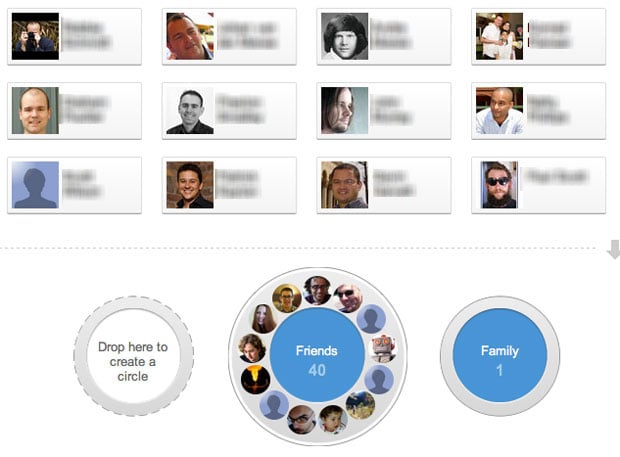
Google Circles aims to solve these problems by allowing you to drag and drop people into distinct buckets, and letting you only share what you want with each circle. And yes, the UI makes it really easy to do this. It’s great design.

google circles

The problem is that it’s just too much work. I’ve long since given up trying to maintain my Circles, and I’m pretty sure I’m not alone. Circles also lost its core utility for me. After I put about 100 people into different buckets I couldn’t remember who I put where, and what I was supposed to share with which Circle. So I just gave up and started sharing everything publicly.

It doesn’t matter how great and fun an experience is, good UI design cannot fix a broken solution.

Path 2.0

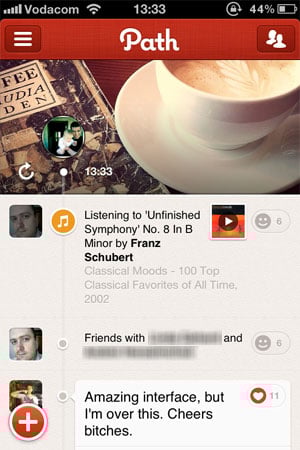
I get the same feeling when I play around with Path. Let me be clear: I love this app. I wish I could dump Facebook and use Path all the time. Sometimes I go in and scroll up and down just to see the clock animation. When I open the app in the morning I tell it that I’m awake just so I can see what the weather is going to be like today. Fantastic design.

path user interface

There’s a problem, though. I don’t know what I’m supposed to be doing with this app. Yes, I know it’s still early and not a lot of people are on the network yet (even though it’s now starting to gain some real traction). But here’s one reason the app might not have enough staying power to grow out of its initial “Hey, that’s cool!” phase: what unmet user need does it solve? Is it doing anything that’s not already being addressed by a number of general and niche social networks? I don’t think so.

Once again: it doesn’t matter how great and fun an experience is, good UI design cannot fix a broken solution. Good design can effectively differentiate a good solution, and bad design can completely ruin a good solution. But good design simply cannot make up for a solution that doesn’t address a core user need really well. As a recent post on ZURBlog proclaimed, people don’t buy products - they buy the benefit.

I’m afraid that in the case of both Google Circles and Path 2.0, they might just be flawed solutions wrapped in a layer of beautiful UI design. It’s fun to play with for a while, but when it inevitably becomes tedious you eventually just forget to use it. Forever.


  1. When I talk about UI design in the context of this article, I mean specifically Interaction Design and Visual Design. I don’t mean to imply that Design = Making Things Pretty, or that UX is only about those elements. I use this term in the interest of simplicity since this is not an article about the elements of a User-Centered Design process. ↩

Update: Luke Bornheimer pointed me to his answer on Quora where he argues that Path’s biggest differentiator is how it easily enables private/public sharing.

Conditioning and the addictive nature of social media feeds

When presenting someone with a stimulus results in some kind of reflexive behavior we call it classical conditioning. The most famous example of this is Ivan Pavlov’s experiment where dogs started salivating whenever they heard a bell that indicated that food was on the way.

Compare that to operant conditioning, which happens when someone deliberately alters their behavior because of a stimulus they receive as a result of that behavior. We all know about positive reinforcement[1] - that’s one of the ways to affect operant conditioning in someone. The classic example here is the experiment where rats can be taught to press a lever to get sugar solution delivered down their feeding tubes.

In Unpredictable Rewards, Kevin Purdy applies the theory of operant conditioning to activity streams on Twitter and Facebook. He explains why some people[2] can’t stop looking at their feeds:

Eyal Ophir, primary researcher at the Stanford Multitasking study, believes ticker-style updates are effective in a way familiar to researchers of operant conditioning.

“Unpredictable rewards keep us guessing, so we’ll keep checking long after we’re no longer getting rewarded, because ‘you never know,’” Ophir wrote in an email. “So if there’s one or two exciting tweets, or a rewarding social experience in the Facebook Ticker, and we can never tell when something like that will come again, that’s going to be a good motivator for us to just keep checking. And that’s going to drive up the perceived value of interrupting whatever we’re doing (work, family, etc.) to go and check.”

It’s scary to think about our social media activities in this way, especially if you keep going down the path of operant conditioning. One of the key predictive factors is deprivation: “the effectiveness of a consequence will increase as the individual becomes deprived of that stimulus”. So, the less frequently you see something valuable in your stream, the more motivated you become to keep checking until you find that one valuable piece of information.

It might be time for us to step back and accurately assess the size of the benefit: “If the size, or amount, of the consequence is large enough to be worth the effort, the consequence will be more effective upon the behavior.” How valuable is the number of likes on that one status really? And is it worth checking our phones every 5 minutes in the hope of seeing a change?


  1. When a behavior (response) is followed by a stimulus that is appetitive or rewarding, increasing the frequency of that behavior (via Wikipedia) ↩
  2. I’m going to say “some people”, not “I” or “we”. I like living in denial like that. ↩

Solving information overload: the role of manual content curation

There’s an information overload just on articles about information overload, so you might be reluctant to spend time reading another one. However, Accessibility vs. access: How the rhetoric of “rare” is changing in the age of information abundance by Maria Popova is the best commentary I’ve seen on the topic in a long time.

The article starts off by explaining the root cause for the problem we find ourselves in: the concept of “rare” largely goes away if all information is available digitally:

W’re in the habit of associating value with scarcity, but the digital world unlinks them. You can be the sole owner of a Jackson Pollock or a Blue Mauritius but not of a piece of information ”” not for long, anyway. Nor is obscurity a virtue. A hidden parchment page enters the light when it molts into a digital simulacrum. It was never the parchment that mattered.

The consequence is that it’s now so much harder to know what pieces of information are worth our time. Just because something is accessible doesn’t mean we should access it. Maria goes on to explain why editors (or content curators) are so crucial if we want to solve this problem:

The primary purpose of an editor [is] to extend the horizon of what people are interested in and what people know. Giving people what they think they want is easy, but it’s also not very satisfying: the same stuff, over and over again. Great editors are like great matchmakers: they introduce people to whole new ways of thinking, and they fall in love.

Information curators are that necessary cross-pollinator between accessibility and access, between availability and actionability, guiding people to smart, interesting, culturally relevant content that “rots away” in some digital archive, just like its analog versions used to in basement of some library or museum or university.

I do want to add a thought on the idea of “automated curation” - what sites like paper.li are trying to do (you know, those tweets proclaiming that “The [clever name] Daily is Out!”). I simply don’t think effective automated curation will ever be possible. I agree with Angie King on paper.li:

My experience with Paper.li just proves the importance of curation over aggregation. Without an editorial eye overseeing the publication of my Paper.li page, the content loses value. I actually prefer just paging through my Twitter stream over trying to make sense of the no-context, automatically generated list of junk that displays on my Paper.li page.

In a great piece called The language of data: fear + words, Randall Snare explains why automated curation is so difficult:

Emails ”“ and other written things ”“ aren’t just filled with semantic meaning, but with subtext. Algorithms treat words like the basic components of language, while the actual basic components are often hidden ”“ elements like association, nuance, emotion and humour.

Which brings us back to the need for humans - call them editors, call them people who read a lot, call them whatever you want - to help guide us to the information that might interest us. I’d go so far as to say that our ability to grow and learn depends on it.

Frictionless content sharing and the shifting burden of understanding

Frank Chimero reflecting on Facebook’s advances in “frictionless sharing” of content:

Any physicist knows that it’s impossible to exist in a frictionless universe, and that friction hasn’t been diminished with Facebook’s sharing model so much as transferred the work of making sense of things from the one sharing to the audience.

I recently mentioned that reducing the effort needed to share and communicate with others might be inching us closer to a post-literate society. Frank’s remark adds another consideration: the reduced effort required to share information places the burden of understanding much more on the audience than on the person sharing.

“Frictionless” sharing of what song you are currently listening to sounds interesting at first, and then it just starts to sound creepy. But even if you can get beyond the creepiness factor you’re faced with the fact that it becomes the audience’s responsibility to make sense of that information. How interesting is knowing what song I’m listening to without an explanation why I’m listening to it and what it means to me?

At what point will all this lazy sharing result in lazy audiences who can’t be bothered to go hunting for the meaning in the information? At what point does the audience become mere “consumers” of content in the true sense of the word - “to destroy or expend by use” - and end up in a similar situation as the obese passengers on the Axiom?

Facebook Open Graph and the post-literate society

Here’s Mashable in an article with a title that sounds like it was created in a random buzzword generator: Facebook Open Graph Seeks to Deliver Real-Time Serendipity:

Facebook felt constrained by the Like button because it was an implicit endorsement of content. Facebook wants users to share everything they are doing, whether it’s watching a show or hiking a trail, so it decided to create a way to “express lightweight activity.”

So in essence they’re saying that clicking the Like button is too much of a commitment; the action is too heavy. We need something a little more indifferent and “lightweight”.

With the Like button you already didn’t have to use words. With Facebook Open Graph you grant permission to an app once, and then it silently and passively starts broadcasting what you’re doing. No thinking required.

By continuing to reduce the effort needed to share and communicate with others we seem to inch ever closer to a post-literate society.  In his essay Like, the Post-Literate Society, James Shelly discusses this phenomenon and quotes Bruce W. Power:

What happens to thinking, resistance, and dissent when the ground becomes wordless?

He goes on to say this:

Thus I ponder: do we become a post-literate society at the moment we manifest an incapacity to discuss our own potential status as such? If so, are we already there?

These are good questions on a day like today.

Embracing boredom

In Alone Together: Why We Expect More from Technology and Less from Each Other Sherry Turkle tells a story about having dinner in Paris with her daughter, Rebecca. While they are eating, Rebecca gets a call from a friend in Boston, asking if sh’s available for lunch. Rebecca simply answers that it won’t be possible, but that Friday could work. She doesn’t even tell her friend that sh’s currently in Paris. Sherry has mixed feelings about this:

I was wistful, worried that Rebecca was missing an experience I cherished in my youth: an undiluted Paris. My Paris came with the thrill of disconnection from everything I knew. My daughter’s Paris did not include this displacement.

I told me wife this story later that evening, and we started talking about our own tumultuous 30-day backpacking trip through Europe at a time when our relationship was”¦ well, let’s just say it was on less stable ground than it is now (remind me to tell you how we broke up on top of the Eiffel tower and got back together in Venice).

We talked about the truth in Sherry’s words - how being so utterly disconnected from the rest of the world played a big role in our ability to immerse ourselves in the newness and strangeness of the culture around us. We were only able to check email about once every 3-4 days. I can’t even imagine how I’d be able to go that long without email now, but back then it wasn’t a big deal. Less email = more time for walking through the streets of a new city.

Fast forward to today, and I am incredibly fortunate to travel for business reasonably often, but I must admit that it doesn’t fill me with the same excitement as that Europe backbacking trip did. And I think that’s partly because the constant connection means that I’m not really immersed in another culture, I’m just working from a different office.

Shelly comes to the following conclusion after her trip to Paris with her daughter:

Adolescents have always balanced connection and disconnection; we need to acknowledge the familiarity of our needs and the novelty of our circumstances. The Internet is more than old wine in new bottles; now we can always be elsewhere.

And that is perhaps the real issue here. If the Internet lets us be elsewhere any time we want, what point is there in physically moving ourselves across the world any more? Especially if we use the Internet to bring ourselves back to where we came from the minute we get there?

Alain de Botton recently tweeted:

The problem with the net: it prevents us from boredom and all its many advantages.

One of those advantages is the ability to sit in a restaurant in Paris and truly take it in without wondering what everyone else is up to. Even just sitting in your own back yard without wondering what everyone else is up to would probably already be a huge step in the right direction. Oh, the thinks you could think.

Her’s to being bored.

Deluge of Content on the Web Swamps Yahoo (and puts content creators in a tough spot)

The Wall Street Journal in Deluge of Content on the Web Swamps Yahoo:

As Web traffic explodes, Internet companies are struggling to profit off ads shown next to the articles, videos and other content offered to viewers.

It’s a simple rule of any market. The more information that is created, the more the value is reduced. And despite attempts to woo spending with bigger, bolder and more targeted ads, services that help consumers navigate that content, namely search, remain the big money makers online.

As I (and many others) have written before, it doesn’t look like display advertising is a sustainable business model for media sites going forward (and I think we can agree that it makes for a pretty bad user experience). This puts content creators in quite a predicament: how do you make money from producing content? The WSJ piece points to the central problem here:

“People tell me that content is king, but that is not true at all,” says Rishad Tobaccowala, chief strategy and innovation officer at Vivaki, the digital-media unit of Publicis Groupe SA. “Most people make money pointing to content, not creating, curating or collecting content.”

Although the value of pointing to content is indisputable, we need a better way than display ads for content creators and curators to make a living. And I don’t think we quite know what that looks like yet.

In defense of RSS

There was plenty of chatter about RSS over the weekend, mainly because of this “you’re doing it wrong” article on Ars Technica.

Most of the responses I’ve seen are strong defenses of RSS, and I’m happy about that. There has been so much talk about Twitter replacing RSS that I’ve been wondering if anyone else still uses it as much as I do. In fact, because of the iPad and apps like Reeder, my RSS usage is at an all-time high.

Marco Arment argues for a combined Twitter/RSS setup:

I can follow tons of low-traffic sites and keep my reading list more diverse than if I relied only on social links, but other people ensure that I never miss anything great on the high-volume sites.

Ben Brooks has a different use case (more similar to mine) - he subscribes to lots of feeds, but he doesn’t allow the unread count to bother him. He makes a good point about not blaming RSS if you feel overwhelmed:

A tool is a tool. Should I get mad at my car because there are thousands of miles of road I haven’t driven yet to drive? No. If you don’t like RSS don’t use it. If you want to use it but don’t want to have thousands of items, then use it like Marco does. Or use it like I do and check the feeds more often.

But of course, no discussion on RSS is complete until its creator weighs in. Dave Winer blames feed readers (like Google Reader) and their insistence on showing you how many unread items you have, and asks us to separate that from the technology itself:

If you miss five days of reading the news because you were on vacation (good for you!) the newspaper you read the first day back isn’t five times as thick as the normal day’s paper. And it doesn’t have your name on the cover saying “Joe you haven’t read 1,942,279 articles since this paper started.” It doesn’t put you on the hook for reading everything anyone has ever written. The paper doesn’t care, so why does your RSS reader?

These guys all make a very good case for RSS so I’m not going to say too much more about it. I do want to add something I haven’t seen mentioned before though: using folders in your RSS reader to help manage the deluge of information. Here is a screenshot of my folder structure in Reeder:

RSS folders

I have a certain set of blogs that I tag as favorites, and those are the ones I read first. If ther’s time I move on to the others.

Note that I have a folder called “Large tech blogs”. The usual suspects are in there: TechCrunch, Mashable, Ars Technica, Wired… These blogs post a lot, so when the unread numbers get out of control I typically just scan some headlines and then mark all as read. With the big blogs I know that if something is really important, Twitter will tell me.

RSS will remain an important part of my workflow, and since I turn dock unread badges off, I don’t feel like my app of choice is silently judging me.

Setting up folders and actively managing your RSS feeds is hard work. But the payoff is huge for me - I can quickly get a broad overview of what’s going on in the industry without having to rely on the fleeting nature of a tweet coming across my timeline.

I’m a die-hard fan.

(By the way, if you’re interested in following my shared items, you can do so here)

New Rules for Effective Customer Service

A couple of weeks ago our 2-year old daughter threw my wife’s phone in the swimming pool. The resulting journey through the Vodacom customer service labyrinth to replace the phone was frustrating, but it also gave me a new level of understanding and empathy for the immense challenges of providing customer service to hundreds of thousands of people.

This is an article about social media, customer support channels, and the principles every company should establish in their culture to serve their customers better. And (spoiler alert!) I do manage to get a new phone for my wife.

”Umm, So, Our Daughter Threw My Phone In The Pool”

What’s most surprising about getting a call about my wife’s phone suddenly finding itself at the bottom of our pool is how completely nonplussed I was about the whole thing. When you become a parent the kinds of things that upset you change significantly. I think I’ve discovered a pattern: if there is no blood involved, there’s really no reason to get upset. So after establishing that there was no blood involved, I proceeded to the next step - trying to replace the phone.

My wife had an LG Generic (or whatever it was called) on one of Vodacom’s cheapest plans, and the thing has been driving her nuts. She’s had her eye on my iPhone for a long time, so I decided to try to upgrade her. The problem is that I’m not eligible for an upgrade until the end of December. And that’s where this journey starts.

My first step was to walk into a Vodacom store to ask for assistance. This is pretty much the extent of the conversation that took place with the support representative:

Me: “Hi. My daughter threw my wife’s phone in the pool, so I’d like to get her an iPhone please.” Rep: “Your contract isn’t due for an upgrade until the end of December.” Me: “I understand that. I’m saying that my wife’s phone is now wet and doesn’t work any more, so I would like to give you more money by going onto a more expensive plan.” Rep: “It’s against policy to do an early upgrade. That’s why you should insure your phone.”

Imagine that conversation with a “Sucks to be you!” look on the representative’s face, and you’d have a really good idea of how it went down.

Having failed with the first point of contact, I took to Twitter:

Vodacom Support

The response was very quick, asking me to DM my number so that someone could call me. I sent my number, and a representative called me the next morning. I thought this was getting somewhere, and I was already starting to write this post in my head. My headline (“Social media works!”) needed some work, but it was going to be great.

But not so fast”¦ I told my story to the representative, who looked up the account and told me the same story: “Sorry, it’s against policy.” (At least this time someone was sorry about it). I threw out what would become my standard line throughout this process: “You realize I’m trying to give you more money, right?” But no luck. The conversation ended when the rep told me, “I will ask the upgrades department if there is anything we can do.” Translation: “You’ll never hear from us, ever again.”

After not hearing from the “upgrades department” I sent another DM, and got a call from another rep. Same story. Against policy. “You realize I’m trying to give you more money, right?” Sorry, against policy. I then took it to the next level and told the rep that I will be taking my business to MTN, convinced that this statement would trigger some script alarm somewhere and get me a free ticket to a ride up the “escalation path”. Not so much.

Rep: “Oh. Well that’s not good.” Me: “No, it’s not. Anything you want to do about that?” Rep: “Well, this is our policy. Can’t be changed.” Me: “You don’t want to tell someone that I’m about to take my business elsewhere?” Rep: “I’ll make a note in the system.”

At that point I gave up and decided to wait until I am eligible for an upgrade. That decision lasted about 3 days. I decided to give it one last shot, and tweeted Vodacom’s CEO:

Vodacom Support CEO

And this is where the story gets boring, in a good way. Pieter Uys tweeted me back (in my first language, which means he looked at my profile and thought before responding). 4 hours later I got a call to say we can do the upgrade. End of story. No questions, no statements about policy. I can do the upgrade = happy customer + more money for Vodacom.

Your Call Is Not That Important To Us

Before moving on to the main point of this article I want to tell another quick story. I’ve been banking with ABSA all my life. I’ve also been unhappy with ABSA all my life, but that’s a story for another day. I recently mentioned ABSA on Twitter and linked to this post. The post got retweeted a few times, and then I got this:

FNB

That really interested me. Here is a bank (FNB) that monitors what people are saying about their competitors, and joins the conversation in relevant ways. Notice that he wasn’t pushy, he was merely getting in on the joke. I tweeted back:

FNB

I said this would be a short story, so I’ll just say this. One week later someone from FNB was sitting with me, filling out forms to transfer all my accounts from ABSA to FNB. They took care of the whole thing, I didn’t have to fill out a single form. All because of a tweet. And I’m pretty sure ABSA doesn’t even know (or care) that they lost another customer.

It’s All About The People

All customer support revolves around people, processes, and tools.

CRM and community tools like Salesforce, Get Satisfaction, and Twitter give support reps the means to communicate with customers. Processes set guidelines for what those interactions should be like. But all of that is useless unless the people doing the support understand and live out the culture of the organization. The ease of establishing that culture also depends a great deal on the support channel used.

Synchronous, 1:1 support like in-store interactions and phone support is expensive and extremely difficult to manage. Unless you’re Zappos and call yourself “a support company that happens to sell shoes”, most companies don’t have a deeply ingrained support culture. So it’s very hard to filter the right processes and culture through to the 1:1 support channels, since they are generally pretty far removed from “management”. They are therefore very rarely empowered to make decisions that might not follow policy, but would be the best thing for the customer (and the company).

I would argue that my early upgrade situation is a good example of this. That representative in the store should have been empowered to ignore policy and upgrade me on the spot. It’s not her fault that she’s not allowed to do that, it’s just the way it is.

On the other hand, asynchronous, 1:many support like live chat, online forums, and social media platforms are much cheaper, and I would argue also easier to manage from a support culture perspective. You’re able to set appropriate guidelines (more on that later), and in general the people who manage those channels have a much more direct path to different resolution scenarios (and therefore more decision-making power).

All this to say that I am not upset any more about my bad experiences in the store and initially on the phone. Because I recognize how incredibly difficult it is to nurture a true culture of customer-centric support. And to find that balance between empowering everyone in the company to break policy when they feel it’s needed, while still having enough process in place so you don’t give away control of your short-term and long-term business strategy.

I don’t have an immediate solution for this, but I want to write about it because I believe it’s a very real problem that a lot of companies are struggling with. Especially now that social media support channels are getting so much adoption.

Lessons In Customer Service

Even though I don’t have the perfect answer, I do want to spend a little time discussing some recommendations I have for better customer service, based on my recent experiences with FNB and Vodacom.

1. Understand what engagement really means

There is no substitute for authenticity. When Pick n Pay asks what I’m going to be doing today, it doesn’t feel like real engagement. Why would I want to tell a supermarket that? When Vodacom sends me the scripted answer “I heard about the problem you experienced”, that tells me they didn’t really take the time to think about the response when sending it (“Well, of course you heard about it, I sent you a tweet!”).

When FNB joins a conversation in a natural way, or when the CEO of Vodacom responds to me by name - that’s engagement. It’s such a simple rule: read, think, respond like a human.

2. Web governance is essential

Web governance “defines decision-making processes for the web, and sets policies and standards for web content, design, and technology””in a way that respects subject-matter expertise” (from Web Governance: Become An Agent of Change). Defining user-centered standards for every touch point with an organization is enormously important to those who want to succeed, and it’s not getting enough attention at all.

One part of web governance that needs more attention in particular is content strategy, which “plans for the creation, publication, and governance of useful, usable content” (see The Discipline of Content Strategy for more). Among other things it defines the tone and language and underlying principles for talking to customers. Every company should do this before they open their Twitter account or create a Facebook page. (Btw, if you’re in South Africa and need help with stuff like this, talk to Kerry-Anne)

How you talk to your customers makes a huge difference to their experience, and if you don’t define a strategy for it, your community will define you and you’ll have no control over it. That’s not a good place to be.

3. Empower support representatives

I want to come back to this. As mentioned earlier, I recognize how difficult it is to walk the line between empowerment and total loss of control. But I think there are ways to test this out as a strategy without giving the whole house away.

Start with one specific department, call center, or representative. Allow them to make some decisions based on what they feel is right for the customer and the company, and see what happens. If they break some rules/policy, ask them why they did it, and follow up with the customer to see how they felt about the exchange.

This kind of empowerment isn’t a binary switch for the whole organization. Start small, test, and see if it might be possible to build a culture that encourages doing The Right Thing.

All’s Well That Ends Well

My story had a happy ending. But I know there are an enormous amount of customer support stories that don’t end that way. The rise of cheaper, more efficient channels for customer support can make experiences better not just for customers who engage in those channels, but for everyone. We can take the lessons from the asynchronous channels and apply them to the 1:1 interactions.

Be authentic, get in on the joke, and break some rules every once in a while. Because they did that, FNB has a new customer and Vodacom didn’t lose one. I think that makes it worth it.
Work hard; be good to your mother

When I lived in Australia there was an ad for Pizza Hut that ran about 5 times a day for over a month. It featured Dougie the delivery guy — always on time, always courteous, always immaculately dressed. As he hands over the pizza and gets his money, he asks, “So… how’s about a tip?”

The customer thinks for a bit, starts closing the door, and then says: “Work hard; be good to your mother.”

No, you’re right, it’s not a very funny ad. Nevertheless the words have stuck in my head for over a decade now. Because I realise that in life, as in business, these might be the only two non-negotiable rules we all need to adhere to in order to be successful at what we do. Work hard. Be good to your mother.

Work hard

I recently made the mistake of using the hasthag #leadership in a tweet. I immediately got 5 auto-follows, and they all fit the same profile:

  • Their bios all had some version of the term “leadership coach” in it.
  • They all had more than 20,000 followers, and they followed almost exactly the same number of people themselves. (This is, of course, because they auto-follow everyone who mentions the word “leadership”, and automatically unfollows that person if they don’t follow back in about 3-4 days)
  • They all tweet excessively, usually through API’s that generate random “inspirational” quotes every few minutes.

They basically automated their social media presence, and fine, that works for them. But that doesn’t inspire me. Mitch Joel says the following in a brilliant post called Wanting Something:

In the end, the majority of the answer is not about the talent or the ability to pull a thought together, it’s about the commitment. The blank screen does not care… it’s agnostic. If you write, good for you. If you don’t, good for you. That being said, if you keep at it… If you use these platforms to think deeply about what you’re about and why you think your industry is the way it is, then slowly over time you’ll find your groove and your talent will shine.

Sadly, most people want it fast and easy. That’s good news for those who are truly committed to it, because they’re the ones who actually get what they want.

Or, as Dave Duarte says in The Ultimate Social Media Strategy is Not Having One:

Ultimately, social media is not just a set of technologies to be mastered, it is a cultural reality to be engaged with. It promises to expose the corrupt and reveal the extraordinary, and if nothing else it is guaranteed to keep us on our toes. It is chaotic, unpredictable, and uncontrollable. So the best social media strategy, then, is not a strategy at all, it is to be purposeful, ethical, and transparent and let our communications and behaviours flow from that.

Those are the people I admire, and the ones I want to follow on Twitter and in life. The ones who show up every day, work hard to get better at what they do, and don’t look for shortcuts.

Be good to your mother

Well, not just your mother, but everyone around you. Be nice. There really is no excuse to be rude to people on Twitter or elsewhere on the web. But of course, you only have to spend 2 minutes reading comments on YouTube to give up the dream of a civil Internet forever.

In a great post on commenters online, Dmitri Fadeyev quotes the following Thomas More passage from Utopia:

Ther’s a rule in the Council that no resolution can be debated on the day that it’s first proposed. All discussion is postponed until the next well-attended meeting. Otherwise someon’s liable to say the first thing that comes into his head, and then start thinking up arguments to justify what he has said, instead of trying to decide what’s best for the community. That type of person is quite prepared to sacrifice the public to his own prestige, just because absurd as it may sound, h’s ashamed to admit that his first idea might have been wrong””when his first idea should have been to think before he spoke.

If only we could follow this rule before we reply/comment, the web would be such a nice neighborhood. Sure, it would probably be less interesting as well. And maybe I’m getting old, but I’d actually prefer nice at this point.

By the way, this doesn’t mean we shouldn’t criticize where it’s appropriate. It just means we should be respectful when we do it. As Mike Monteiro says in Giving Better Design Feedback:

Good feedback is not synonymous with positive feedback. If something isn’t working for you, tell the design team as early as possible. Will they be hurt? Not if they are professionals. A good designer will argue for their solution, and then will know when to let go.

By all means, be respectful, but don’t hold back in order to spare an individual’s feelings. Taking criticism is part of the job description. The sooner they know, the sooner they can explore other paths.

So make this your motto for a week or two, and seek out those who do the same. Who knows, maybe a nice Internet is out there after all.