I recently had the opportunity to talk with Blake Thorne on The LaunchNotes Podcast. I think I’m a little rusty with the speaking thing, but I did have a lot of fun here. We covered a bunch of topics, including how people got into product management before Inspired was published, how to enable autonomy and ownership in product teams, the value of writing and publishing what you learn, and also somehow… my favorite kettle. Give it a listen if you’re into that sort of thing!
Posts tagged “product management”
Product Management and The Fog of War
I think about The Fog of War in the context of product management often. The term started as shorthand for an important concept during battle:
The fog of war is the uncertainty in situational awareness experienced by participants in military operations. The term seeks to capture the uncertainty regarding one’s own capability, adversary capability, and adversary intent during an engagement, operation, or campaign.
Of course, most of us of a certain age know this concept mainly from video games where it refers to enemy units, and often terrain, being hidden from the player until the area is explored. Here’s an example from Command & Conquer: Red Alert 2:
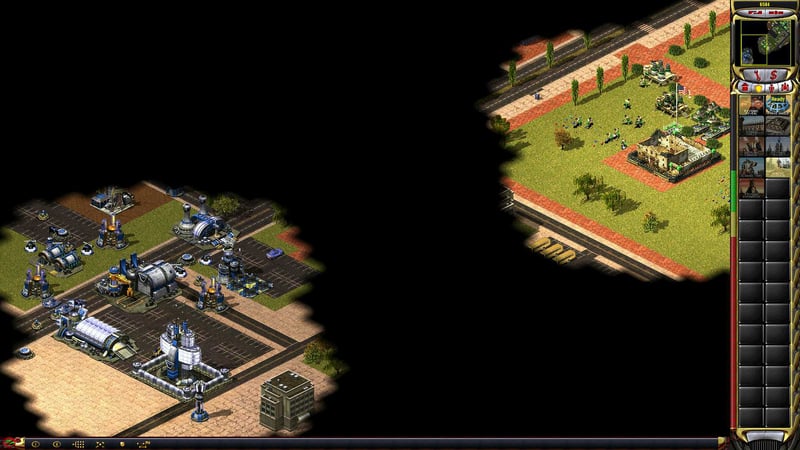
This concept—both in its military and gaming contexts—can be really helpful to guide our thinking about planning, prioritization, and execution. Let’s first look at the original meaning, and how the 3 uncertainties of the “fog of war” can effect our decision-making on planning and prioritization:
- The uncertainty regarding one’s own capability. We are often worried that what we build might not be good enough to win over customers.
- The uncertainty regarding adversary (competitor) capability. We are often worried that competitors might build something faster and better than we would (ChatGPT, anyone?) and that it will destroy us.
- The uncertainty regarding adversary (competitor) intent during [a project]. We don’t know what our competitors are planning to build next.
These uncertainties can sometimes paralyze our decision-making—or worse, lead us down a path of making decisions based on our fear of the unknown. When we go into our planning cycles we have to make sure that we act only on what we know about our business and our users, and the information we have available to us. We cannot let the fog of war derail us to make prioritization decisions out of fear and uncertainty of what others might do.
That leads into what we can learn about execution from the gaming context of this concept. When I talk to our teams about project plans I often refer to our planning documents as “a road sign into the fog.” I encourage teams to make sure the direction and first few steps are known based on the information we have, and then to add and edit their plans as the fog starts to lift.
At Postmark we use a project plan template that you can view on Github here. I’ve written about this document a couple of times (see here and here), and the most important principle we live by is our commitment to these plans being “living documents”. We don’t fill out the whole thing up front (there’s too much fog out there!), we host it in Google Docs, and everyone on the team has full edit access. We truly work on it together—and as the fog lifts, we keep editing until we feel comfortable with the level of uncertainty that remains in the system.
The next time you enter a planning cycle I encourage you to think about the fog of war and how it might be influencing your decisions. When are you guided by uncertainty, despite all the things you do know about your business and customers? When are you trying to map out areas that no one has explored, and that you simply don’t have enough knowledge about yet? How can you focus just on “the next right thing” and trust that as you go, the fog of war will lift, and the road will become clear?
How your product is discovered and adopted is part of the product
Shift left on go-to-market to build better products is a great post by Frank Tisellano on why product managers have to consider Go to Market efforts while they are still deep in the understanding/planning phase of a project:
Great PMs recognize that building a good product is table stakes and that the way to truly differentiate themselves is by taking a strategic approach to how customers or users find and adopt their products.
In other words, great PMs shift left on go to market, considering and developing their distribution strategy while they’re still prioritizing problems to solve, long before a PRD is written, let alone a line of code.
He goes on to give some practical tips—and examples—on how to make GTM a bigger part of the PM process.
Taylor Swift, Fender Guitars, and Product Management walk into a bar
I recently came across two articles that combine the topics of music and product management. That is basically catnip for me, so I have to share.
First, I know “What X Can Teach Us About Y” articles have become a bit of a trope, but trust me on this one. What Taylor Swift Can Teach Us About Business by Rex Woodbury is an excellent case study on what good product management is all about. I’ve always been impressed by Taylor’s business strategy, and this is the first article I’ve seen that really digs into it. On Taylor’s decision not to sign with RCA because they wanted to pigeonhole her into being a country singer:
The key insight here is that RCA underestimated the market. Yes, country listenership was declining among young people. But great products revitalize stale markets and ultimately expand their markets. Swift did both, first proving that there was an opportunity in country music, and later growing beyond country to become a bona fide pop star. Swift’s story reminds me of a fatal error in startups: underestimating market size.
There’s too much goodness to quote here, so just read it.
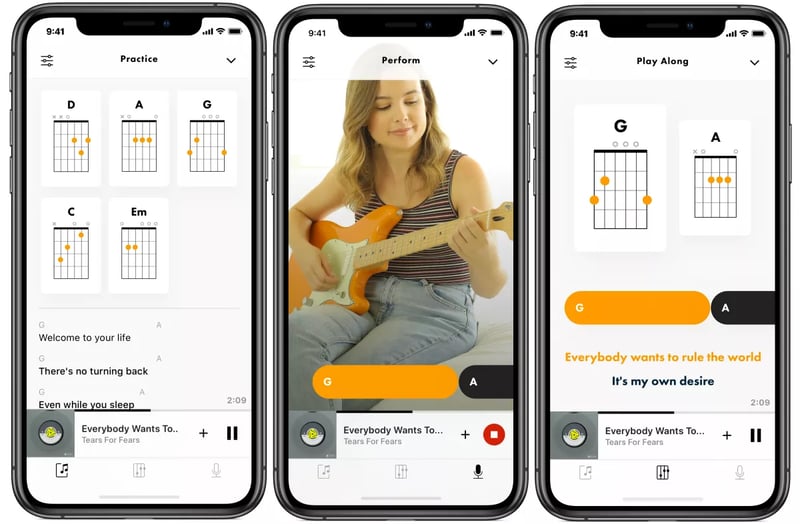
The second one is an older piece that I found via Jeff Gothelf’s blog. It’s an interview with Fender CEO Andy Mooney on the company’s mission, and once again it showcases some excellent product management principles. In the example below, Andy talks about the creation of the Fender Play app. I am breaking the quote up with some of my notes, since it encapsulates the process so well:
The marketing is tied around creating the emotional connection, being ‘why should I do this?’.
Note the focus on Jobs to be Done. Their research showed that people pick up the guitar mostly because they want to play and sing along to their favorite songs—not because they want to be rock stars. That’s the emotional connection they are going after.
Again, with Play, we felt that it was a milestone to get people to commit if they were able to master their first song. So we teach the skills that you need in Play around doing exactly that. You come into the product, you declare your genre and that gives you a potential setlist.
Note here how they identified their activation metric / a-ha moment and built the product around getting users to that moment as quickly as possible.
Then you get taught the skills to master those songs rather than the other way round. I taught when I was very much younger. You know, are you going to teach somebody to play major minor scales or are you going to teach them how to play House Of The Rising Sun? My approach—which I’m glad was all intuitive back then—was a song-based approach because you were teaching them how to play the chords within the context of the song.
Again, note how they focus on the how music makes you feel, not on the theory behind it. We are all used to this kind of marketing now but it’s worth remembering that until the iPhone came along, phone marketing was all focused on storage space and RAM, not on here’s what you can do with it.
There’s much more in the article about the extensive customer research that Fender did, and how they used those insights to create Fender Play.
Authentic leadership is about getting in the trenches with our teams
Here’s an interesting take by Sheril Mathews on why people often don’t trust their managers, or find them inauthentic:
Managers don’t come across as authentic because more often than not they don’t have an intimate understanding of the day to day realities of how their teams actually get work done.
Sheril goes on to discuss some some great advice on how to show up for our teams in authentic ways (spoiler: it’s about getting our hands dirty in the trenches). But I also wanted to share this 1973 (!!!) quote from Henry Mintzberg in The Nature of Managerial Work, because it really stopped me in my tracks:
The prime occupational hazard of the manager is superficiality. Because of the open-ended nature of the job and because of the responsibility for information processing and strategy-making, the manager is induced to take on a heavy load of work, and to do much of it superficially.
Hence the job of managing does not develop reflective planners; rather it breeds adaptive information manipulators who prefer a stimulus-response milieu.
Sheril’s article—and that quote—is inspiring me to take a real hard look at my own work, and where there could be opportunities to weed out the “superficiality”.
This is a bit of an addendum that I think is valuable enough to add here. I shared the above Mintzberg quote among some friends and the discussion ended up being really interesting. Vince pointed out that as for the assertion that superficiality is an inevitable outcome of management, he prefers Russell Ackoff’s take from 6 years later. Here’s what he said in 1979:
Managers are not confronted with problems that are independent of each other, but with dynamic situations that consists of complex systems of changing problems that interact with each other. I call such situations messes. Problems are abstractions extracted from messes by analysis; they are to messes as atoms are to tables and charts … Managers do not solve problems, they manage messes.
Pete (who I’ve been begging to start a blog, please go yell at him as well) also went the less cynical route with his comments:
As you move up the levels of a company, you move to higher levels of abstraction. Every level takes the output of the level below, and distills and summarises it, passing it up. It also takes direction from above and tries to nudge the processes below in that direction.
I think that’s the just way it is, the way it has to be. I can’t think of any examples where a different model has been applied successfully at scale.
The key to this working successfully though is to make sure that information is correctly analysed, distilled, summarised and communicated at every level.
The problem with superficiality is not abstraction. It’s dillution. If you throw away the good parts and keep the wrong parts when summarising, the system starts fraying. And you’re setting those above you up for making the wrong decisions, and thus setting up those below you for failure.
How to help our managers work with us more effectively
I’m sure we’ve all seen those “here’s how to work with me” documents (and the controversies around them), but I like this slightly different take. In her post 9 Managers in 4 Years: Creating Continuity in Chaos Genevieve Conley Gambill shares a framework for helping our managers understand our skills, our work, and our career goals:
- Foundation – What are my unique strengths and capabilities?
- Trajectory – How do I view my current role and performance?
- Aspirations – What am I working towards in the future?
- Support – What do I need to adjust or build on to get there?
She also shares a great Google Doc template with more details. The post goes into more detail on each section of the framework.
How to Be a PM That Engineers Don’t Hate
From How to Be a PM That Engineers Don’t Hate:
You see it everywhere: Engineers complaining about the product managers that they work with. Hating on PMs is kind of like complaining about your utility provider or the TSA—so universal that it’s always good for a light chuckle in the right circles. The PMs don’t know how the technology works. All they do is send emails and take credit. They’re meeting generation machines.
When I interview engineers my first question is always, “Tell me about your experience working with PMs.” I do it to calibrate what kind of PMs they are used to working with, or to put it another way, how much I should apologize for our profession before we continue…
Anyway, the linked post is less about that, and more about some things PMs can do to work more collaboratively with other teams—not just engineering. Lots of good, practical tips and examples here.
Using “steel threads” to reduce product delivery risk
Jade Rubick resurrects an old engineering concept (and dead Wikipedia page!) in Steel threads are a technique that will make you a better engineer:
A steel thread is a very thin slice of functionality that threads through a software system. They are called a “thread” because they weave through the various parts of the software system and implement an important use case. They are called “steel” because the thread becomes a solid foundation for later improvements.
With a Steel Thread approach, you build the thinnest possible version that crosses the boundaries of the system and covers an important use case.
He explains this in detail in the full post, with lots of helpful examples.
Product team principles for focusing on short-term growth
We’re shipping rafts this year, not boats is a sobering read from Nate Jones that covers 8 principles for product teams who had to make a shift to short-term growth projects in 2023. An example:
It’s long-term if it’s short-term. That’s two principles for the price of one. First, realize that building to keep the business going today is long-term. That can help product teams recognize they have a long-term role to play. Second, any product plays with long-term payoff have to also include short-term revenue potential. You need both-and this year to innovate.
You might not agree with everything he says in this post, but at the very least it will get you thinking about your own team’s principles and priorities as we continue to navigate this… “complicated” year.
The 4-subfunctions of growth marketing, and a good Figma example
In How to organize your B2B growth marketing team Emily Kramer explains growth marketing in a way that I think I finally understand:
To support full-funnel marketing, multiple GTM motions, and all of the data and tools available, 4 sub-functions of growth-marketing are needed: Demand Gen, Inbound & Web, Lifecycle Marketing, and Ops & Analytics.
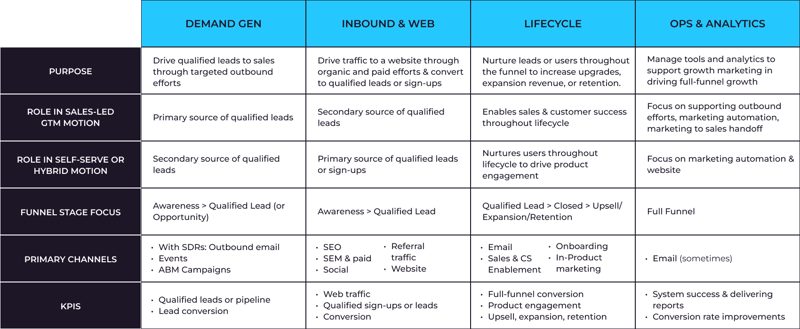
Emily also touches on the many ways that this team ideally works with Product and Engineering. It’s a highly recommended overview of this critical function in an organization.
And speaking of growth marketing… In Figma and product-led sales Jesus Requena, former head of growth marketing at Figma, shares some really interesting details on how Figma’s Growth team works with their Sales team:
We wanted to take this to the next level and learn what exact product behavior correlated with an upgrade. We partnered with our data product team, sales ops and sales leaders and created a model that surfaced around 10 data points. When two or more of these were triggered, there was a high likelihood for the account to upgrade. We showed sales and sales leaders the data and got their interest, then we tested it in a small group. Endgame, the product-led sales software, helped us display the data at account level and user-within-account level.