Menu

Posts tagged “mental health”

I accidentally made some New Year's resolutions

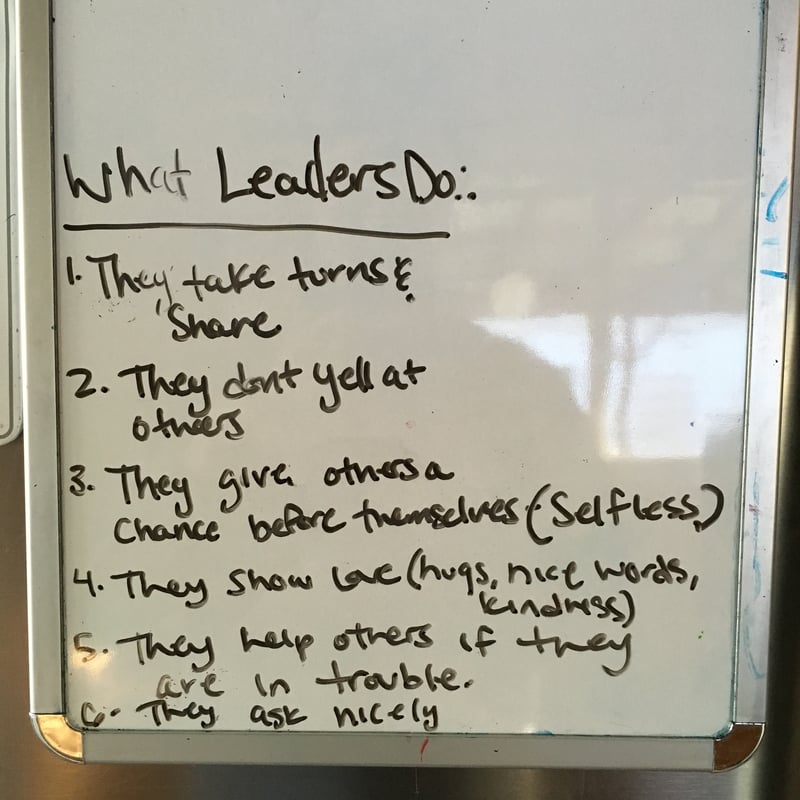
I’m pretty unsentimental about things like birthdays and new years, but I’m also only human and sometimes things sneak up on you unexpectedly. Earlier this week I was standing in our kitchen, staring into space as I waited for the water to boil, and suddenly my eyes focused on this—a series of guidelines my wife wrote down for our 6-year old daughter during the course of a particular trying day with her:

I looked at it, and then I saw it, and then I read it. And then I read it. And I realized that as silly as I usually think New Year’s Resolutions are, that’s some pretty good advice so what the hell, goals are good, right? So here they are, my 2016 resolutions:

  1. Care less about getting credit for things, care more about sharing victories (and defeats) with the people around me.
  2. Get angry a lot less, because anger just leads to yelling and yelling leads to the Dark Side. Or something.
  3. Be first less. Whether it’s getting on the bus or dividing up work on a project, let others go first. It’s not only the nice thing to do, I’ll probably end up learning a few useful new skills working on things I don’t normally work on.
  4. I should probably not hug my co-workers all the time, but I certainly want them to know how much I appreciate them. So I’ll tell them that more often. And my family will get a lot more hugs.
  5. Actively seek out places and projects where I can lend a helping hand. And—very important—don’t forget #1.
  6. Say “please” and “thank you” all the time—not only with words, but with how I live my life.

Work and identity (and the machines)

Michael Sacasas has an interesting viewpoint on the “machines are taking our jobs” argument. In Machines, Work, and the Value of People he argues that since we’ve so closely linked our value as human beings to the work we do, the issue of machines taking over hits us pretty hard:

So, to sum up: Some time ago, identity and a sense of self-worth got hitched to labor and productivity. Consequently, each new technological displacement of human work appears to those being displaced as an affront to the their dignity as human beings. Those advancing new technologies that displace human labor do so by demeaning existing work as below our humanity and promising more humane work as a consequence of technological change. While this is sometimes true–some work that human beings have been forced to perform has been inhuman–deployed as a universal truth, it is little more than rhetorical cover for a significantly more complex and ambivalent reality.

Kids, technology, and nonverbal communication

I’m not usually one to freak out about kids and technology use, but Bruce Feiler makes some interesting points in Hey, Kids, Look at Me When We’re Talking:

Dr. [Clifford Nass, a communication professor at Stanford University] told me about research he was doing that suggested young people were spending so much time looking into screens that they were losing the ability to read nonverbal communications and learn other skills necessary for one-on-one interactions. As a dorm supervisor, he connected this development with a host of popular trends among young people, from increased social anxiety to group dating.

That’s pretty alarming.

Face-to-face contact still matters

Susan Pinker explains why face-to-face contact matters in our digital age:

Our survival hinges on social interaction, and that is not only true of the murky evolutionary past. Over the last decade huge population studies have shown that social integration — the feeling of being part of a cohesive group — fosters immunity and resilience. How accepted and supported we feel affects the biological pathways that skew the genetic expression of a disease, while feeling isolated “leaves a loneliness imprint” on every cell, says the American social neuroscientist John Cacioppo.

And here’s the problem: being “more social” online doesn’t help:

Recent MRI studies led by neuroscientist Elizabeth Redcay tell us that personal contact elicits greater activity in brain areas linked to social problem-solving, attention and reward than a remote connection. When the identical information is transmitted via a recording, something gets lost.

I guess catching up for coffee is still better than texting.

Social media and our insatiable desire for approval

Jon Ronson looks into online shaming (and the lives it destroys) in a brilliant piece of journalism called How One Stupid Tweet Blew Up Justine Sacco’s Life:

Eventually I started to wonder about the recipients of our shamings, the real humans who were the virtual targets of these campaigns. So for the past two years, I’ve been interviewing individuals like Justine Sacco: everyday people pilloried brutally, most often for posting some poorly considered joke on social media. Whenever possible, I have met them in person, to truly grasp the emotional toll at the other end of our screens. The people I met were mostly unemployed, fired for their transgressions, and they seemed broken somehow — deeply confused and traumatized.

The conclusion is worth pausing over and pondering:

But perhaps [Sacco] had now come to understand that her shaming wasn’t really about her at all. Social media is so perfectly designed to manipulate our desire for approval, and that is what led to her undoing. Her tormentors were instantly congratulated as they took Sacco down, bit by bit, and so they continued to do so. Their motivation was much the same as Sacco’s own — a bid for the attention of strangers — as she milled about Heathrow, hoping to amuse people she couldn’t see.

We really are terrible at giving people grace — and the benefit of the doubt.

Sorry, I can't talk right now

The Economist tries to answer the question Why is everyone so busy? and it doesn’t tell a pretty story about ourselves. It starts with the economics of it:

When people are paid more to work, they tend to work longer hours, because working becomes a more profitable use of time. So the rising value of work time puts pressure on all time. Leisure time starts to seem more stressful, as people feel compelled to use it wisely or not at all.

This part makes us sound like terrible human beings, but it’s hard to disagree with:

The explosion of available goods has only made time feel more crunched, as the struggle to choose what to buy or watch or eat or do raises the opportunity cost of leisure (ie, choosing one thing comes at the expense of choosing another) and contributes to feelings of stress. The endless possibilities afforded by a simple internet connection boggle the mind. When there are so many ways to fill one’s time, it is only natural to crave more of it. And pleasures always feel fleeting.

And of course we tell ourselves that one day it will be different:

Writing in the first century, Seneca was startled by how little people seemed to value their lives as they were living them—how busy, terribly busy, everyone seemed to be, mortal in their fears, immortal in their desires and wasteful of their time. He noticed how even wealthy people hustled their lives along, ruing their fortune, anticipating a time in the future when they would rest. “People are frugal in guarding their personal property; but as soon as it comes to squandering time they are most wasteful of the one thing in which it is right to be stingy,” he observed in “On the Shortness of Life”, perhaps the very first time-management self-help book.

This is a long article and I know you’re busy, but try to make time for it…

The real reason for vinyl

Dave Pell in a short note about music streaming, radio, and high-res audio:

I’m at the tail-end of a pretty severe audio-related midlife crisis (related: Anyone want to buy some vinyl?) and I’m convinced that the return to Vinyl and the quest for audio excellence has less to do with sound quality and more to do with nostalgia for what listening to music used to be — an often communal activity that required focus and was more than just a soundtrack for whatever else you happened to be doing at the moment.

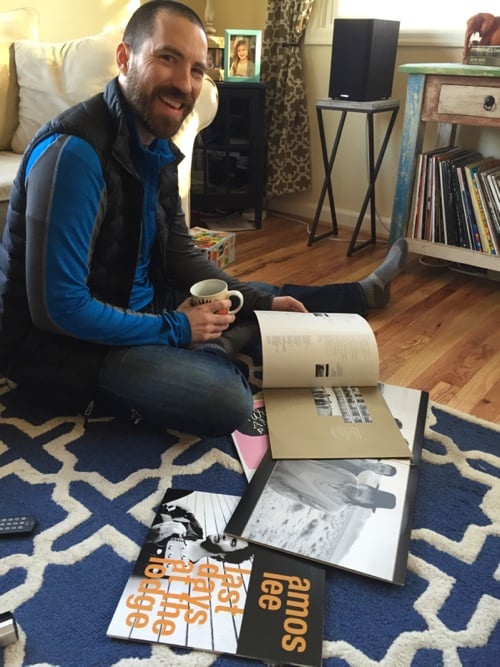
As someone who is at the beginning of his vinyl-related mid-life crisis, Dave’s words really resonated. Yes, I’m chasing upgrades and better sound, but I also know that one of the real reasons I’m doing it is because I get to sit on the floor with friends and nerd out about music:

Yes, it makes me write pretentious pieces on Medium about “the experience” of vinyl, and I feel a little bit embarrassed about that. But on the other hand, maybe it’s ok. I think it’s possible to be self-aware about the real reason why we do things, yet still embrace what we thought it represented and enjoy that. I have to believe it’s possible to hold those opposing things in my head without spontaneously self-combusting. And you know what, if my chase for audio excellence is actually about a chase for closer connection with other people, it’s probably ok anyway.

That’s my story and I’m sticking with it.

The downsides of tracking everything about ourselves

As is often the case with these things, I just noticed two articles that make very similar points about the quantified self movement. In Quantify Thyself LM Sacasas makes the point that we don’t know what we don’t measure:

Not only do we tend to pay more attention to what we can measure, we begin to care more about what can measure. Perhaps that is because measurement affords us a degree of ostensible control over whatever it is that we are able to measure. It makes self-improvement tangible and manageable, but it does so, in part, by a reduction of the self to those dimensions that register on whatever tool or device we happen to be using to take our measure.

In a similar vein, Anne Helen Petersen has a great piece on Buzzfeed called Big Mother Is Watching You: The Track-Everything Revolution Is Here Whether You Want It Or Not. Here’s the kicker:

But there’s something to be said for the allure and beauty of the mysteries not only of our confusing, previously unknowable bodies, but the intricacies of life. For the daily banalities of tuning the thermostat, or of knowing you had a good night’s sleep because you feel good, not because an app indicated as much. For the pleasure of running without knowing how fast or how long or how many calories but simply because your body could and did move, and that even without a digital trace, a GPS footprint, or way to leverage evidence thereof against friends and co-workers — it nonetheless felt something like being alive.

Being

I’ve been thinking about being recently. Being online, being at home, being at work, being in public, being in private. This year my family and I made some gigantic changes in our lives that I won’t bore you with, except to say that constant change and discomfort gave me a renewed appreciation for human frailty. In fact, I’ll go so far as to say that, for the first time, I feel like I truly understand these words by Thomas Kempis:

A true understanding and humble estimate of oneself is the highest and most valuable of all lessons. To take no account of oneself, but always to think well and highly of others is the highest wisdom and perfection. Should you see another person openly doing evil, or carrying out a wicked purpose, do not on that account consider yourself better than him, for you cannot tell how long you will remain in a state of grace.

We are all frail; consider none more frail than yourself.

All of this helped me figure some things out about being that I haven’t been particularly certain about before. Things like who I want to be and what I want to do with my life. The answers to those questions are probably irrelevant for what I want to write about here, so I won’t dwell on that. What I will do is share a few things I’ve become fairly sure of over the last few months (while I remain open to data-driven mind-changing next year, like any decent designer would).

So here are some things I learned in 2014:

Smaller networks are better

During some of the darker months of the year I retracted from Facebook and found some solace in the 5 or so active friends I have on Path (go ahead, laugh it up…). On Twitter I doubled down on what I’ve always done: being a link monkey, there for your daily dose of UX and product management links. There’s certainly comfort in that ritual and the feedback that comes from it. But it does get pretty empty after a while.

When things started to improve I gave Facebook a try again. I once again expanded my network. And suddenly it just felt really really loud and crowded and filled with people like me who are just looking for positive reinforcement and I didn’t like the way that made me feel.

So I went back to small. I’m still active on Path. On Twitter I share more personal things in addition to links I really like. It pisses some people off, but it feels more real. I also started writing a newsletter and I’m really enjoying the personal nature of that medium.

All of this to say that we’ll do well to remember that the web is people all the way down. And that smaller networks mean more meaningful relationships.

Who we amplify is who we are

Every day we choose whose voices we amplify online, and those choices make us who we are. After Ferguson happened I felt like I didn’t have a right to say anything about it. But what I could do is amplify the voices of those who did have something important to say. So that’s what I did. I retweeted articles and calls for help. I eventually did write something, and I still feel uncomfortable about it, but in the end I felt like I had to.

The things we say are important. They make us. Not to get all preachy, but Matthew sums it up pretty well:

But the things that come out of a person’s mouth come from the heart.

So I’m not always getting this right, but I want to amplify good things and people who say important things. Who we amplify is who we are. So let’s choose wisely.

Learning and sharing is what makes us a community

After much reflection I realized that to become a better designer and be a good web citizen there are only a few basic things you have to do:

  1. Read about a new thing.
  2. Practice new thing until it works for you.
  3. Write about what you learned while practicing the new thing.
  4. Repeat ad infinitum.

That’s it. That’s what community is: learn from others, practice until you get it, and teach others the new things you learned. We should really do more of that.

Being a small fish in a big pond is ok

I don’t know how to write this without sounding weird so I’ll just go ahead and put it out there and hope it comes out right.

When I lived in South Africa I thought what I wanted was to become an author and conference speaker. It was a bit easier there because there aren’t as many UX people as there are elsewhere in the world. And when I decided to move back to the US several people didn’t understand. “You’ll be a small fish in a big pond,” they said. “I know,” I would answer, “isn’t that awesome?”

The fact is that where I am right now is a much better fit, and I recognize the importance of being content in the situation we’re in. I do a job I love at a company with an awesome culture. Every once in a while I share things. My book didn’t become a bestseller, but the people who read it seem to enjoy it, and that makes me happy. I spend time with my family, and I tweet some jokes and links every once in a while.

I don’t get invited to speak at conferences, and I don’t have a major book deal coming. But I still enjoy writing, and I enjoy being with the people I hang out with — online and in person. After the year I’ve had, that is all I could ever ask for.

It was hard, but I’m thankful for 2014 and the meaningful lessons that came out of it.

Now let’s get it behind us and move on, shall we?

Be polite

Everyone is posting about this today but I don’t care because it is really that good and it wins all the points on the Internet today. Paul Ford in How to Be Polite:

People silently struggle from all kinds of terrible things. They suffer from depression, ambition, substance abuse, and pretension. They suffer from family tragedy, Ivy-League educations, and self-loathing. They suffer from failing marriages, physical pain, and publishing. The good thing about politeness is that you can treat these people exactly the same. And then wait to see what happens. You don’t have to have an opinion. You don’t need to make a judgment. I know that doesn’t sound like liberation, because we live and work in an opinion-based economy. But it is. Not having an opinion means not having an obligation. And not being obligated is one of the sweetest of life’s riches.

I wrote something slightly related (and, let’s be honest, not nearly as good) a while ago for Smashing Magazine: Making A Better Internet.