Menu

Posts tagged “culture”

Creativity around the edges of craft

Coffee and parenting

It’s not that I didn’t always have a strong connection with my eldest daughter. It’s just that recently, as she’s running headlong into her fifth year of life, we’ve started to connect in ways I didn’t expect. For example, this weekend we spent most of early Sunday morning building Lego models together. How did that happen? How did she suddenly get into stuff I remember liking as a child?

I know everyone always talks about how quickly kids grow up. I don’t agree with that at all. Growing up takes a long time. But I do find these sudden jumps in growth quite surprising sometimes. I feel like I should be better prepared for each jump so I can catch her if she stumbles. I guess that feeling will never go away. Especially when she starts dating. Man. That’s going to be rough.

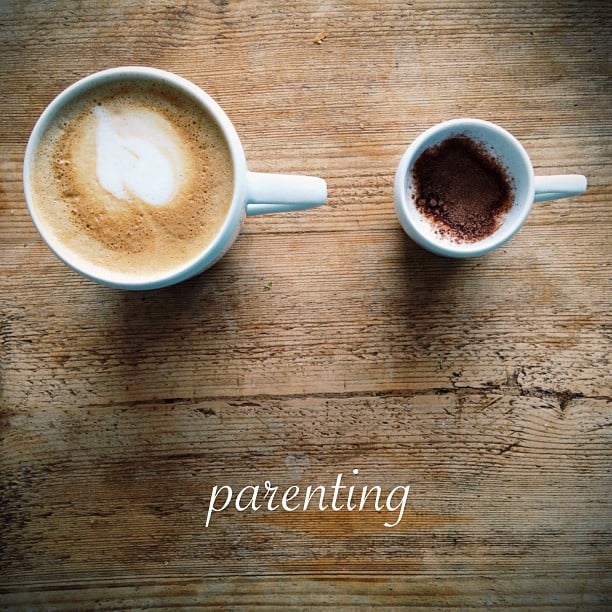
Anyway. I’m really into coffee. And this morning my wife brought the girls to our office for a visit. I made my daughter a Babycino (frothed milk + hot chocolate sprinkles), and I made myself a flat white (both pictured above). While I was making the drinks my daughter sat at the table, and asked me questions about what I’m doing and how the espresso machine works. I talked to her about coffee extraction and crema and milk steaming, thinking that would bore her to tears. But she was really into it. So I kept going and talked to her about craft and why it’s cool to take your time to learn how to do things well and how good it makes you feel when you really master something.

They left hours ago, but I’m still thinking about the brief time I had with my daughter this morning. I can’t help but feel like it was an important moment, and that I should create more of those types of moments with her. And not just with her, but with friends and colleagues too. A discussion about craft — especially if it happens around that craft — usually leads into a discussion about passion, and that easily spirals out of control to anything from a new appreciation of life to brilliant product ideas.

A big part of the joy of learning and practising a craft is the gathering of people around its edges, and the ideas that are sparked and shared as a result. We should actively create and seek out those moments of collaborative creative thinking.

You should read these two zombie books

This isn’t a zombie blog1. Still, I’d be doing you a huge disservice if I didn’t tell you about two excellent zombie books I read recently. The books are great because yes, they have zombies in them, but they’re not actually about zombies. They’re about how humans treat each other when we turn on each other. How it’s easy to speak about our values but a bit harder to stick to those values when the going gets really tough. And that’s a topic worth exploring.
Great zombie books

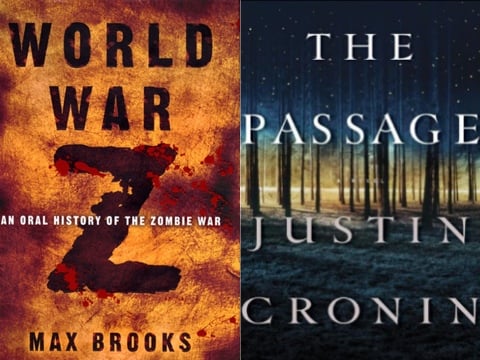
The first book I want to recommend is World War Z. The BOOK, not the movie! I saw the movie, and it’s fine, but it is not even remotely similar to the book. I don’t even know why they kept the title. It’s really strange. You should still see the movie, because it’s fun, but the book is something completely different. It is, as the subtitle promises, “an oral history of the zombie war”. The war happened. It’s over. This is a book about people reflecting on what went down. And it is fascinating.

There are commentaries about the media:

The only rule that ever made sense to me I learned from a history, not an economics, professor at Wharton. “Fear,” he used to say, “fear is the most valuable commodity in the universe.” That blew me away. “Turn on the TV,” he’d say. “What are you seeing? People selling their products? No. People selling the fear of you having to live without their products.” Fuckin’ A, was he right. Fear of aging, fear of loneliness, fear of poverty, fear of failure. Fear is the most basic emotion we have. Fear is primal. Fear sells. That was my mantra. “Fear sells.”

There are commentaries on what happens when “knowledge work” is not needed any more:

You’re a high-powered corporate attorney. You’ve spent most of your life reviewing contracts, brokering deals, talking on the phone. That’s what you’re good at, that’s what made you rich and what allowed you to hire a plumber to fix your toilet, which allowed you to keep talking on the phone. The more work you do, the more money you make, the more peons you hire to free you up to make more money. That’s the way the world works. But one day it doesn’t. No one needs a contract reviewed or a deal brokered. What it does need is toilets fixed. And suddenly that peon is your teacher, maybe even your boss. For some, this was scarier than the living dead.

And what happens when those workers relearn how to do stuff with their hands:

It gave people the opportunity to see the fruits of their labor, it gave them a sense of individual pride to know they were making a clear, concrete contribution to victory, and it gave me a wonderful feeling that I was part of that. I needed that feeling. It kept me sane for the other part of my job.

And finally, on freedom:

Freedom isn’t just something you have for the sake of having, you have to want something else first and then want the freedom to fight for it.

The deep thought that went into this book results in an engrossing story full of detail that makes you think about your everyday relationships, and what might happen if those relationships are strained beyond their limits. I loved it.

The second book is The Passage. First, the backstory is great. The author first began developing his ideas for the book when his daughter asked him to write a book about a “girl who saves the world.” Well, it’s about a girl, and she tries to save the world, but it’s like no hero story you’ve read before. It starts when the zombie apocalypse picks up steam, and then jumps ahead 100 years to focus on how one isolated community is dealing with the aftermath. In contrast to World War Z, the war is very much not over in The Passage. It’s gruesome at times, but again, beautifully written.

From interesting reflections on what zombies represent:

What were the living dead, Wolgast thought, but a metaphor for the misbegotten march of middle age?

To what it means to believe in the future:

A baby wasn’t an idea, as love was an idea. A baby was a fact. It was a being with a mind and a nature, and you could feel about it any way you liked, but a baby wouldn’t care. Just by existing, it demanded that you believe in a future: the future it would crawl in, walk in, live in. A baby was a piece of time; it was a promise you made that the world made back to you. A baby was the oldest deal there was, to go on living.

And the nature of hope:

Courage is easy, when the alternative is getting killed. It’s hope that’s hard.

The Passage is not just a great story (I couldn’t put it down), but also another interesting look at what happens when circumstances bring out the worst (and the best) in humans.

All this got me thinking again about an article I read recently about the Zombie Renaissance in literature. And I realised how true this part is about these two books:

We are living in a time when what counts as “life” is in significant scientific dispute, and in the heyday of zombie computers and zombie banks, zombie this and zombie that. Why wouldn’t we also be living in a time of zombie literary forms? Whatever their specific emphases and intricacies, all these zombies represent a plague of suspended agency, a sense that the human world is no longer (if it ever was) commanded by individuals making rational decisions. Instead we are witnessing a slow, compulsive, collective movement toward Malthusian self-destruction. Of course all monsters are projections of human fears, but only zombies make this fundamentally social and self-accusatory charge: we the people are the problem we cannot solve. We outnumber ourselves.

If this is an idea that interests you, I highly recommend these books. Even if you don’t like zombies, you’ll appreciate the thoughtful writing and gripping stories. Do it.


  1. Although, maybe a pivot is in order? I’ll think about it. 

[Sponsor] What Designers say about life at Booking.com

My thanks to Booking.com for sponsoring Elezea’s RSS Feed again this week to promote their career opportunities.

Forgive the cliche, but coming to work for Booking.com has been one of the best decisions. Within a week of arriving to the Netherlands, I had already created two UI experiments and pushed code to the live site. It was intimidating and thrilling at the same time. Those feelings haven’t left. I’m constantly humbled by the more than 300 super intelligent colleagues of 51+ nationalities! I learn every day. If there’s a day I don’t? It means I wasn’t in the office.

The warmth and acceptance of new hires is brilliant. I was invited for chess, football, drinks, and even knitting, within a fortnight. Friday after work drinks can easily evolve into an adventure anytime. There’s always something to do in this city. And at Booking.com, there’s always someone who’s willing to join in. The many parties are just something that has to be experienced. Come join and I’ll show you around!

Booking.com careers

Sponsorship by The Syndicate.

How Facebook makes us feel inadequate

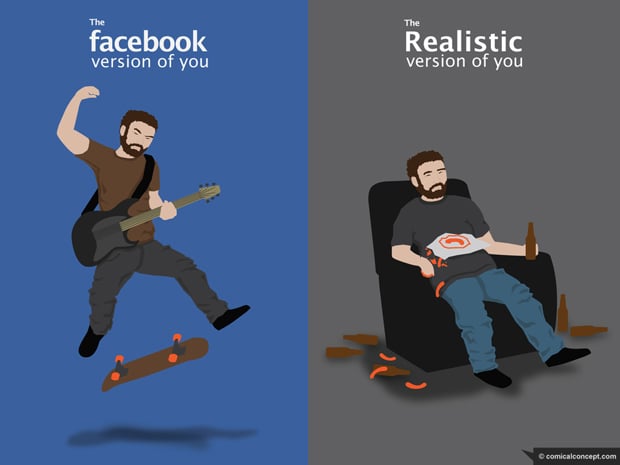
Why Generation Y Yuppies Are Unhappy is such a brilliant post. Funny, way too true, and great illustrations. It follows the story of Lucy, a fictional Gen Y yuppie who is not having such a good time right now. This part about social media sites (or what I guess is known as Facebook image crafting) really stuck with me:

Social media creates a world for Lucy where A) what everyone else is doing is very out in the open, B) most people present an inflated version of their own existence, and C) the people who chime in the most about their careers are usually those whose careers (or relationships) are going the best, while struggling people tend not to broadcast their situation.  This leaves Lucy feeling, incorrectly, like everyone else is doing really well, only adding to her misery

So that’s why Lucy is unhappy, or at the least, feeling a bit frustrated and inadequate. In fact, she’s probably started off her career perfectly well, but to her, it feels very disappointing.

I increasingly feel like Facebook has become a cacophony of ads and fake happiness, and I’m extremely turned off by it. I’m trying out Path again (I know, hypocrisy!), and I’m enjoying the quietness and sincerity there. It’s such a stark, appealing contrast to the endless shouting on Facebook.

The real Facebook

The city as panopticon

I continue to be fascinated by the smart city movement. The multiplexed metropolis is a very interesting look by The Economist at the pros and cons of connecting cities through open access to all kinds of information:

But clever cities will not necessarily be better ones. Rather than becoming paragons of democracy, they could turn into electronic panopticons in which everybody is constantly watched. They could be paralysed by hackers, or by bugs in labyrinthine software. They could furnish new ways to exclude the poor. They might even put at risk the serendipity that makes cities such creative places, argues Richard Sennett, a sociologist at the LSE, making them “stupefying” instead.

I have to admit that I had to look up the word “panopticon” — and it’s such a great analogy. From Wikipedia:

The Panopticon is a type of institutional building designed by English philosopher and social theorist Jeremy Bentham in the late 18th century. The concept of the design is to allow a watchman to observe (-opticon) all (pan-) inmates of an institution without their being able to tell whether they are being watched or not.

Let’s hope we can avoid this…

Emoji and post-literacy

In The ‘Mood Graph’: How Our Emotions Are Taking Over the Web Evan Selinger writes about the rise if emoji and other emotional signals in social media:

But there are costs to a mood graph too. The more we rely on finishing ideas with the same limited words (feeling happy) and images (smiley face) available to everyone on a platform, the more those pre-fabricated symbols structure and limit the ideas we express. Such general symbols can also lead to even more confusion or misunderstanding due to cultural, generational, and other differences.

And finally, drop-down expression makes us one-dimensional, living caricatures of G-mail’s canned responses — a style of speech better suited to emotionless computers than flesh-and-blood humans.

It’s a great article well worth reading all the way through. This trend is a continuation of something I’ve discussed quite often here over the years: our move towards a post-literate society:

What is post-literacy? It is the condition of semi-literacy, where most people can read and write to some extent, but where the literate sensibility no longer occupies a central position in culture, society, and politics. Post-literacy occurs when the ability to comprehend the written word decays. If post-literacy is now the ground of society questions arise: what happens to the reader, the writer, and the book in post-literary environment? What happens to thinking, resistance, and dissent when the ground becomes wordless?

I find myself here in full agreement with Guy English from his post Learn to X:

But, let’s not kid ourselves, literacy is the new literacy. The ability to read, comprehend, digest and come to rational conclusions — that’s what we need more of.

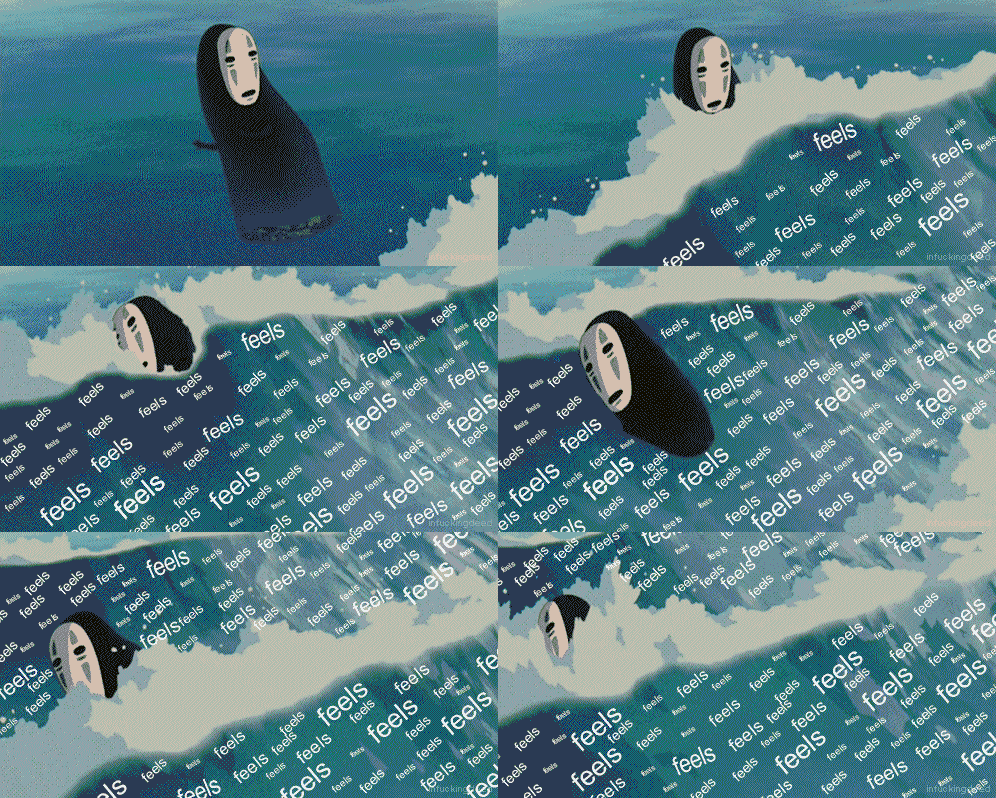
Emoji are fine, and I’m as much a fan of the animated gif as anyone. But I do feel like we’re trying to create all these shortcuts to express our emotions because it’s hard to do it in words. The thing is, though, it should be hard to express our emotions. That’s how we understand them and work through them. So let’s go easy on the giphy.com searches every once in a while, and try to find the right words instead.

The Feels

Nostalgia is what it used to be

John Tierney writes about the benefits of reminiscing in What Is Nostalgia Good For? Quite a Bit, Research Shows:

Nostalgia has been shown to counteract loneliness, boredom and anxiety. It makes people more generous to strangers and more tolerant of outsiders. Couples feel closer and look happier when they’re sharing nostalgic memories. On cold days, or in cold rooms, people use nostalgia to literally feel warmer. […]

Nostalgia serves a crucial existential function,” Dr. [Clay Routledge of North Dakota State University] says. “It brings to mind cherished experiences that assure us we are valued people who have meaningful lives. Some of our research shows that people who regularly engage in nostalgia are better at coping with concerns about death.”

Of course, there’s a fine line between reminiscing about great moments, and allowing those memories to make you feel depressed. In the words of Stephen Stills:

Don’t let the past remind us of what we are not now.

Microsoft's woes explained

Bundled Out is a great post by Charles Miller on how every problem Microsoft is experiencing today was written into its DNA in the 1980s. You really should read the whole post, so I’m just going to quote a short teaser:

Software isn’t an industry where the monster company selling the last generation’s product gets to stay being the monster for the next generation. It’s the industry where a thousand hungry small companies are waiting for a shift in the market that will allow them to slay the monster, carve them up and eat them for breakfast.

Loneliness, social networks, and the power to get up

Geoff Livingston wrote a great essay called Is Existing Online a Quest of Loneliness or Giving? It’s worth reading the whole thing, but here’s an excerpt that stuck out for me:

We exist in a time where anyone can determine and create unique lives online, accountable to no one, yet visible to and dependent upon all. Digital existentialism extends the sense of modernistic distress. There are so many red herrings and lost pursuits that distract. You can drug yourself digitally with almost any pursuit, and at the end find yourself nano-famous and alone.

That last line is so spot on. I thought about it again when I saw Shimi Cohen’s excellent video The Innovation of Loneliness, which is making the rounds this week:

Later in his post Geoff says this:

We exist in the moment. Every effort spent, every tap on the keyboard provides a chance to impact an individual, contribute to the world, and add light to the picture.

Sure, efforts can lead towards darkness. Sometimes when we awaken to our outcomes, we realize the fruitlessness, or worse the destructiveness of our actions. What are you going to do, condemn yourself to the desert for a long march of hermitage? Or get up?

This is another good point. We’re all going to make mistakes. We might look at that video and feel like helpless victims. But that’s not true. We do have the power get up, to connect with people in a way that doesn’t just ignore the bad bits (I tried to do that here, and it worked out ok).

Related to this, I really enjoyed Chris Bowler’s Congestion, in which he discusses some ideas on how we might deal with this new reality of overload and over-connection:

To create is better than to consume.

But create for the few, not for the many.

Create for those you can see face to face.

Consume, but remember that the dose makes the poison.

When you consume something that is good, great, transcendent, consume it over and over … meditate on it, then act on it, be changed by it.

So much has been written about this topic, but I really like the common theme that runs through these posts and video: we are not victims of technology. We have a choice.

The perils of perfect recollection

Quentin Hardy has some interesting thoughts on what happens in a world of perfect recollection in his essay What’s Lost When Everything Is Recorded:

There is much to be gained from storage, of course. Who would not thrill to hear Lincoln at Gettysburg, or Shakespeare playing even a lesser role at the Globe? But Shakespeare’s plays were also reconstructions from the memories of diverse actors, some years after a performance. Our greatest literature was generated by an imperfect collective recollection, as much as it was written by one person.

I wrote about this issue before in The unnecessary fear of digital perfection.