Menu

Posts tagged “user research”

Talking to customers

Oh my, Justin (from my favorite newsletter platform Buttondown) nails it here:

Customers make for good historians but poor futurists, and certainly they won’t do the hardest and most important job of identifying your leverage points for you.

That was your shot. Here’s your chaser:

None of this is to say you shouldn’t talk to customers: you should! But it should be neither the first nor the last step in your process: if someone needs to talk with people to figure out what to build next, it means they have insufficient vision; if someone needs to talk with people to figure out if something is truly ready for GA it means your org has insufficient conviction and process.

MrBeast and product management (sorry)

This is a fascinating profile of MrBeast and his YouTube empire (NYT Gift Article). It’s extensively researched and presented with a steady hand. The reason I link to it here is I think he would be a pretty good product manager, albeit a litte bit on the obsessive side:

Donaldson stands out for his dedication to understanding how YouTube works. For most of his teenage years, “I woke up, I studied YouTube, I studied videos, I studied filmmaking, I went to bed and that was my life,” Donaldson once told Bloomberg. “I hardly had any friends because I was so obsessed with YouTube,” he said on “The Joe Rogan Experience” last year.

After high school, he hooked up with a gang of similarly obsessed “lunatics” and planned out a program of study. He and his friends “did nothing but just hyperstudy what makes a good video, what makes a good thumbnail, what’s good pacing, how to go viral,” he told Rogan. “We’d do things like take a thousand thumbnails and see if there’s correlation to the brightness of the thumbnail to how many views it got. Videos that got over 10 million views, how often do they cut the camera angles? Things like that.”

That reminds me of the famous 41 shades of blue testing at Google. Also, one thing I never realized about the whole thing is that MrBeast’s pitch is basically “Hey, you do charity just by watching me because I use the money I get for charity, so the more you watch me the more charitable you are.” That is a bit disturbing but also pretty clever.

Design with users, not just for them

In What we’ve learned from our users about designing for accessibility Andrew Gosine describes how their team lived out one of Slack’s primary design principles, which is to design with users, not just for them:

In another proposed update, we tried to get clever about where we placed a user’s focus when they opened a thread. If there was an unread message, we’d drop them into that first message in the thread. If there were no unread messages, we’d move focus to the message input. We believed this would increase efficiency for screen-reader users. Our feedback group reacted strongly to this. We’d unintentionally deteriorated the reliability of knowing exactly where you would be when you open a thread, and, as a result, we broke the way-finding our users relied on in Slack. Thanks to our group, we reverted that change.

This is a great read with lots of examples from the project.

Taylor Swift, Fender Guitars, and Product Management walk into a bar

I recently came across two articles that combine the topics of music and product management. That is basically catnip for me, so I have to share.

First, I know “What X Can Teach Us About Y” articles have become a bit of a trope, but trust me on this one. What Taylor Swift Can Teach Us About Business by Rex Woodbury is an excellent case study on what good product management is all about. I’ve always been impressed by Taylor’s business strategy, and this is the first article I’ve seen that really digs into it. On Taylor’s decision not to sign with RCA because they wanted to pigeonhole her into being a country singer:

The key insight here is that RCA underestimated the market. Yes, country listenership was declining among young people. But great products revitalize stale markets and ultimately expand their markets. Swift did both, first proving that there was an opportunity in country music, and later growing beyond country to become a bona fide pop star. Swift’s story reminds me of a fatal error in startups: underestimating market size.

There’s too much goodness to quote here, so just read it.
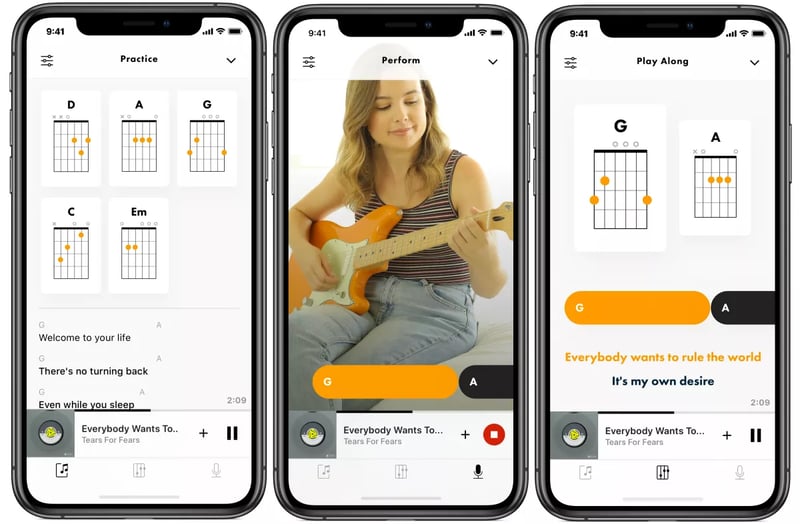
The second one is an older piece that I found via Jeff Gothelf’s blog. It’s an interview with Fender CEO Andy Mooney on the company’s mission, and once again it showcases some excellent product management principles. In the example below, Andy talks about the creation of the Fender Play app. I am breaking the quote up with some of my notes, since it encapsulates the process so well:

The marketing is tied around creating the emotional connection, being ‘why should I do this?’.

Note the focus on Jobs to be Done. Their research showed that people pick up the guitar mostly because they want to play and sing along to their favorite songs—not because they want to be rock stars. That’s the emotional connection they are going after.

Again, with Play, we felt that it was a milestone to get people to commit if they were able to master their first song. So we teach the skills that you need in Play around doing exactly that. You come into the product, you declare your genre and that gives you a potential setlist.

Note here how they identified their activation metric / a-ha moment and built the product around getting users to that moment as quickly as possible.

Then you get taught the skills to master those songs rather than the other way round. I taught when I was very much younger. You know, are you going to teach somebody to play major minor scales or are you going to teach them how to play House Of The Rising Sun? My approach—which I’m glad was all intuitive back then—was a song-based approach because you were teaching them how to play the chords within the context of the song.

Again, note how they focus on the how music makes you feel, not on the theory behind it. We are all used to this kind of marketing now but it’s worth remembering that until the iPhone came along, phone marketing was all focused on storage space and RAM, not on here’s what you can do with it.

There’s much more in the article about the extensive customer research that Fender did, and how they used those insights to create Fender Play.

It’s not about the clicks

Page Laubheimer explains that The 3-Click Rule for Navigation Is False:

The 3-click rule is a persistent, unofficial heuristic that says that no page should take more than 3 clicks (or taps on a touchscreen) to access. A variation pronounces that the most important information should take no more than 3 clicks to get to. […]

The big problem with the 3-click rule is that it has not been supported by data in any published studies to date. In fact, a study by Joshua Porter has debunked it; the study showed that user drop-off does not increase when the task involves more than 3 clicks, nor does satisfaction decrease. Limiting interaction cost is indeed important, but the picture is more complicated than simply counting clicks and having a rule of thumb for the maximum number allowed.

YES. I’ve been on this bandwagon for a long time. In 2013 I wrote in Don’t optimize for the fewest number of clicks:

Let’s get away from this idea that we should optimize for the fewest number of clicks and taps. Instead, we should optimize for an information architecture and visual hierarchy that makes the next step as obvious as possible.

Education as customer research for product development

I enjoyed this interview with Todd Curtis, Chief Product Officer at You Need a Budget. They cover a lot of ground in From spreadsheet to digital product: You Need a Budget’s Product Excellence evolution, but I especially like the discussion about the many different customer touchpoints they maintain:

As ideas move into discovery and validation, Todd and his team go to customers directly. Todd tries to have hour-long sessions with two customers every week to learn about their budgeting story. Through the company’s frequent online workshops, YNAB is able to engage with hundreds of customers each day and hear their questions and concerns.

All these efforts help YNAB gain a deep understanding of what their customers really need and informs product strategy with actionable intelligence.

The use of workshops (or in our case, webinars) to engage and get feedback from customers is a great practice. It provides tons of value to customers while also helping companies to understand their needs better.

Product management is about building carrots, not sticks

Paul Ford’s Carrot Centralization is a great plea for the importance of user research, but I think he also inadvertently came up with an excellent definition for product management:

You might think our job is to build software but just as often it’s to help you avoid building the wrong software. And when you build, build carrots.

Because, as he says earlier in the post:

Carrots work. Sticks don’t. Computers can’t make people do things. They have to want to do things.

The importance of getting customer feedback before product launches

I’m not usually a fan of posts like this, but I just couldn’t resist clicking on Pink Floyd Were Masters At Achieving Product-Market Fit. The first of seven “lessons” is the one that stands out for me:

Obtain Customer Feedback Before You Release Your Product

Musicians spend their entire youth writing songs and performing them in front of live audiences, which ensures that their initial album is validated by their fans before they enter the recording studio.

Unfortunately, successful musicians seldom have the luxury of market testing their subsequent albums. Instead of refining their material based on customer feedback, they are often lock away in a recording studio, isolated from their fans. Thus, it is no surprise that many bands suffer the sophomore jinx, in which their second album fails to achieve the success of their initial release.

Pink Floyd recorded Dark Side of the Moon after a year of writing and performing the material in front of live audiences. This audience feedback allowed the band to iteratively modify their creation.

Lesson: Avoid the sophomore jinx with your product launches by continuing to seek market validation, despite your initial success.

I guess in the interest of full disclosure, I should admit that I wrote a post like this once: A story about Miles Davis and the nature of true genius.

The primary cause of disruption, and how incumbents should respond

Thales S. Teixeira distills years of research on how companies are disrupted in his HBR article Disruption Starts with Unhappy Customers, Not Technology:

For eight years I’ve visited leading companies in more than 20 industries around the world that claimed to be in the process of being disrupted. Each time, I’d ask the executives of these incumbent companies the same question: “What is disrupting your business?” No matter who I talked to, I would always get one of two answers: “Technology X is disrupting our business” or “Startup Y is disrupting our business.” But my latest research and analysis reveals flaws in that thinking. It is customers who are driving the disruption.

He goes on to explain why disruption is a customer-driven phenomenon, and how incumbents should respond.

Empathy and Optimism as complementary forces in product management

Jase Clamp asks, What’s in the DNA of Product People? I especially like his depiction of the complementary forces of empathy and optimism.

This process of synthesis we call empathy. We all know that is what is needed to begin the job of product. But if it stopped there, we’d just be counselors, sitting with people, understanding their pain, and journeying with them.

We harness an opposing force that provides balance — it’s our ability, while reaching into the present to understand problems, to also reach into the future and feel what could be. As product people we often don’t know the exact shape a solution will take, but we have to believe that there is one and we’ll keep striving until we find it — which is an essential sense of optimism.

And on the topic of empathy… I shared this in the weekly newsletter, but I feel like I’m seeing a lot more articles on the importance of empathy in product management and design. One way I know this is that the blowback articles have started popping up as well (“6 Reasons Why Empathy Is A Bunch Of Crap!”). I recently came across this video from Brené Brown on the differences between sympathy and empathy. Even though on the surface it has nothing to do with technology work, it gave me a lot to think about in terms of how we interact with colleagues and customers. Check it out, it’s only 3 minutes long.