Menu

Posts tagged “user experience”

The one thing missing from UX today? Hope

This is a wonderful essay by Vivianne Castillo that encourages designers to hold fast to the belief that things could be better for users—and for themselves. From The one thing missing from UX today? Hope:

Today, it’s clear that many designers are feeling overwhelmed, disillusioned, and even unsafe within their organizations—and design leaders are recognizing that conversations around burnout and stress aren’t quite cutting it. I’ve found a deep sense of comfort in the words of American activist, grassroots organizer, and abolitionist Mariame Kaba: “Hope doesn’t preclude feeling sadness or frustration or anger or any other emotion that makes total sense. Hope isn’t an emotion…Hope is not optimism. Hope is a discipline… we have to practice it every single day.” 

Kaba’s quote is a reminder that the answer to feeling hopeless isn’t toxic positivity or forced optimism. The answer is to make our engagement with hope a discipline because of what’s at stake if we don’t: namely that designers will begin to believe that a better future is not possible within our lifetime.

She goes on to provide examples of how to uphold a comittment to hope in creative, human-centered ways, specifically as it relates to values of belonging, integrity, and power.

The state of product and design content in 2023: “meme content wins”

These types of reports can be a bit vapid sometimes, but I am happy to say that The State of UX in 2023 by Fabricio Teixeira and Caio Braga is an extremely thoughtful, well-researched look at what’s going on in the design industry. They talk about the current economic and labor landscape, the type of skills required, how design tools are evolving, and much more. They also addresses the topic of “algorithm-driven thought leadership”, which is a topic that’s close to my heart:

When content is shorter and maximized for engagement, we often lose track of the origin, history, and context behind it: a new designer is more likely to hear about a UX law from a UX influencer on an Instagram carousel than through the actual research which brought it about.

The lack of nuance from algorithm-suggested posts undermines any value we could get from them. For a discipline known for asking “why” and for striving to understand users’ context, it’s time we become more intentional about our own information sources.

I recently did a bit of research on what type of product content “works” on LinkedIn in terms of engagement, and all I can say is that it’s really weird. If you want to get a lot of “engagement” on LinkedIn you can’t post outside links in the content (that gets down-ranked by the algorithm). For some reason long posts with one-sentence paragraphs and tons of emojis do really well. And, of course, carousels with screen shots of Twitter threads. I decided not to even try.

Things aren’t that much different on Twitter, where content is driven by long threads of fortune cookie sayings. Kyle Lambert said it well: “Meme content wins.”

I don’t want to go all old person “no one wants to read anymore” on you, but we have to admit that the current algorithmic web is optimized for extremely low attention spans. Here’s another example: there’s a specific type of Tik Tok video that’s really popular right now where users stitch random, unrelated videos together and rack up millions of views. The always-interesting Ryan Broderick wrote about it in his Garbage Day newsletter:

People on TikTok have realised that literally everybody who uses it have really short attention spans and get bored super easily. To “keep people engaged” they put 2 or more videos together with the audio being part of the “main content” while the other one or two videos are there to keep them entertained so they don’t immediately scroll down and ignore their content.

I don’t see a clear solution to all this, except to just continue to read as much longform content as we can, encourage the authors, and share that content with our peers. And also to try my best to write more like that as well.

I don’t want it sound like I think tweets or funny videos are bad or stupid. But if that’s the primary way we learn design and product principles, that is bad. Without the context of the thought process behind the decisions someone made or the framework they used, all you could ever do is copy something and apply it to a situation it almost certainly isn’t applicable to. So let’s do a little less thought-leadering and a little more explaining our “why”, is all I’m saying.
How Brasília’s urban design affects citizen behavior during political violence

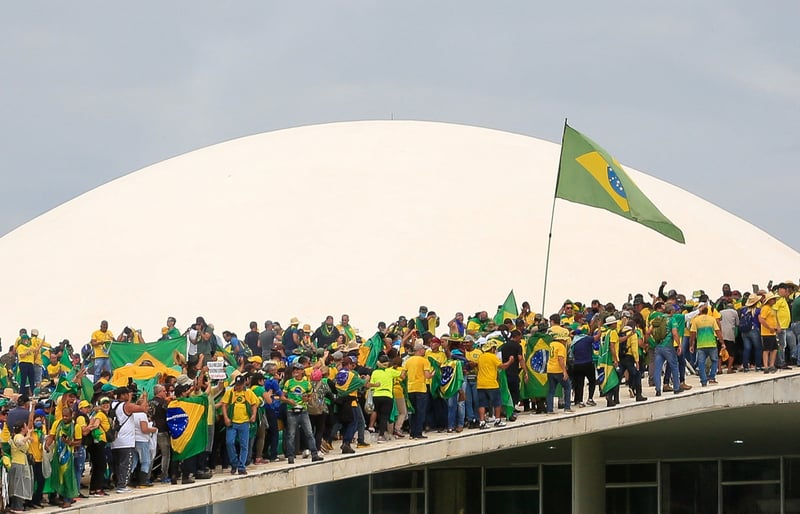
My friend Allan sent me an article about the city of Brasília, and how its architecture affected the recent insurrection (Ryan wrote the best overview about what happened that I’ve seen). I have long been fascinated with Brasília, every since I researched it for a product management article called Usable yet Useless: Why Every Business Needs Product Discovery:

A “shiny citadel” from far away, as The Guardian once wrote, up close Brasília has “degraded into a violent, crime-ridden sprawl of cacophonous traffic jams. The real Brazil has spilled into its utopian vision.”

This problem echoes across today’s web landscape as well, where the needs of ordinary users spill constantly into designers’ utopian vision.

So I read In Brasília, Modernist Architecture Met Political Violence with great interest:

Brasília’s so-called Monumental Axis, or Eixo Monumental, isn’t a walkable touristic path dotted by free museums. Instead, it is an otherworldly landscape of red earth, open grass and enormous roadways, an anti-pedestrian landscape best viewed from the air. So vast are its voids that the sheer scale of the space may have helped temper the energies of the crowds.

The city’s design had specific consequences for the political unrest:

More than 60 years later, Brasília’s real-world shortcomings are well known: Its population far outgrew what its designers imagined, with most residents living in satellite developments that sprawl far from Costa’s planned central district. Many politicians commute via plane, making the city more a symbolic site than a place where one finds gatherings of politicians. President Lula was not in Brasília at the time of the riot, nor were legislators of Brazil’s National Congress, which is in recess: The protesters attacked mostly empty buildings.

This is a really interesting look at how urban design affects the behavior of citizens.

Simple product design is about removing the forces that block users

Kate Clayton wrote an excellent essay on simplicity in design that goes way beyond the usual platitudes. From Be an Elegant Simplifier:

When I saw Danny Kahneman speak at a meeting last year, he shared a similar principle to the Crystal Goblet he took from psychologist Kurt Lewin, who, like Beatrice Warde, was active in the 1930s. Imagine, Lewin said, you have an object with forces pushing against it from opposite sides. Human nature would say if you want it to move one way, add more force to one side. But Lewin advised against this. A much stronger solution, Kahneman said, is to remove the force blocking the user’s way. Eliminate some of the muck.

This principle is very close to the product forces concept of Jobs-to-be-Done, and it’s great to see it framed from a slightly different perspective.

It’s not about the clicks

Page Laubheimer explains that The 3-Click Rule for Navigation Is False:

The 3-click rule is a persistent, unofficial heuristic that says that no page should take more than 3 clicks (or taps on a touchscreen) to access. A variation pronounces that the most important information should take no more than 3 clicks to get to. […]

The big problem with the 3-click rule is that it has not been supported by data in any published studies to date. In fact, a study by Joshua Porter has debunked it; the study showed that user drop-off does not increase when the task involves more than 3 clicks, nor does satisfaction decrease. Limiting interaction cost is indeed important, but the picture is more complicated than simply counting clicks and having a rule of thumb for the maximum number allowed.

YES. I’ve been on this bandwagon for a long time. In 2013 I wrote in Don’t optimize for the fewest number of clicks:

Let’s get away from this idea that we should optimize for the fewest number of clicks and taps. Instead, we should optimize for an information architecture and visual hierarchy that makes the next step as obvious as possible.

Product management is about building carrots, not sticks

Paul Ford’s Carrot Centralization is a great plea for the importance of user research, but I think he also inadvertently came up with an excellent definition for product management:

You might think our job is to build software but just as often it’s to help you avoid building the wrong software. And when you build, build carrots.

Because, as he says earlier in the post:

Carrots work. Sticks don’t. Computers can’t make people do things. They have to want to do things.

Make accessibility part of planning for every project

In Getting to the Heart of Digital Accessibility Carie Fisher makes a compelling argument for making accessibility a priority in tech companies. Her conclusion really resonated with me:

Maybe I’m naive, but I’d like to think we’ve come to a point in our society where we want our work lives to have meaning. And that we don’t want to just hear about the positive change that is happening, but want to be part of the change. Digital accessibility is a place where this can happen! Not only does understanding and writing purpose-driven code help people with disabilities in the short-run, I believe strongly that is key to solving the overarching diversity issue in tech in the long-run. Developers who reach Stage 4: Understanding, and who prioritize accessible code because they understand it’s fundamentally about people, will also be the ones who help create and cultivate an inclusive environment where people from more diverse backgrounds are also prioritized and accepted in the tech world.

She mainly mentions developers in this article, but I’d argue that it is very much also the responsibility of product managers to make sure accessibility is always in the discussion on projects. We need to make sure that if extra time is needed for accessibility, we build that into the planning.

Further reading

For some practical advice on how to make emails more accessible, see Accessibility vs. Inclusion: What it Takes to Create More Inclusive Email Marketing Experiences and Email Accessibility: Looks aren’t everything.

For an example of how not to approach this topic, see Should websites be accessible to everyone? Domino’s says no.

Don’t get customers hooked, focus on healthy retention instead

I’m getting increasingly nervous about the ongoing emphasis on getting users “hooked”, which is taking the product world by storm. The latest example (of many) I’ve read over the past few months is Sticky From the Start: How to Create a Sticky Product Experience, which includes advice such as “Create habits to keep them hooked”:

But thanks to notifications, emails, and other prompts, SaaS products have the option to nudge new users to engage in the behaviors most likely to deliver initial value. In-app messages can build awareness of features, spark usage, and beckon users back to apps even when they’re not using them. They’ve been found to increase user engagement by 4X and when combined with push notifications can increase engagement rates by 30-40%.

Thinking only about engagement rates without the impact that has on users is a short-sighted and unethical way to build a lasting product. Think about the proliferation of chat widgets on websites that ask you if you need anything before you’ve even had a chance to read a few words. What thoughts go through your mind when that happens? Or when a site immediately asks permission to send you notifications, before you’ve been able to figure out if you’re interested in what they have to say. My guess is that you are as annoyed and turned off by those tactics as I am.

I am way more interested in the idea of healthy retention, which is based on the principle of “fewer but better interactions”. We don’t need to get people hooked or “increase engagement” to make them happy customers for life. Emile Ledure makes that point well in the post Healthy Retention: What Makes People Keep Coming Back? with three proposed principles:

  1. Define how you empower people — what do you help people accomplish in their lives?
  2. Have fewer but better interactions — how do you focus on value rather than frequency?
  3. Care — what makes your experience human?

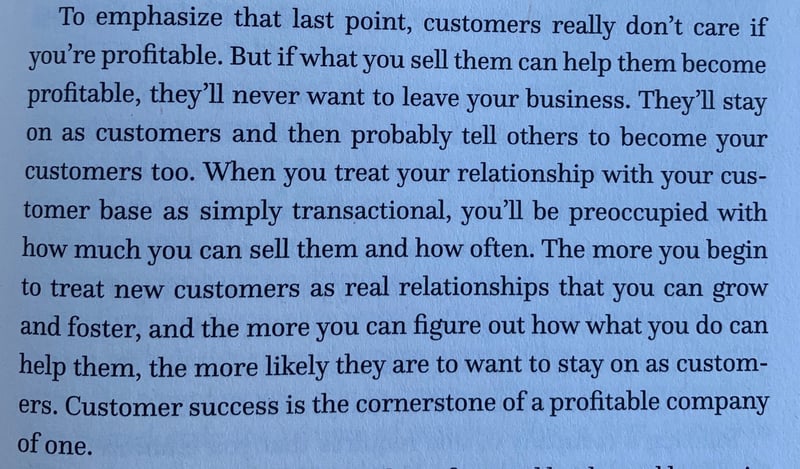
In his excellent book Company of One: Why Staying Small Is the Next Big Thing for Business Paul Jarvis makes a similar point in a slightly different way:

I 100% agree with his point that the cornerstone of a profitable company is customer success — not people who are hooked on us. Let’s look for ways to have fewer but better interactions with our customers. Let’s measure our success by how happy people are to pay us, not by how often they log in. That’s how you create lifelong fans instead of temporary “users”.

Collaboration > tooling

Brad Frost argues that design tools are holding us back because “they require a specific toolchain in order to function”. Instead, what we need is closer collaboration:

Tooling can help, sure, but it’s not a silver bullet. To truly address the realities of the medium for which you’re designing, designers and developers should collaborate as equals to solve problems together. That means more talking and real-time collaboration and less time spent throwing static artifacts and Zeplin links at each other.

Reducing Time to Value, and other important product-led growth metrics

In 8 essential metrics for measuring product-led growth Katryna Balboni discusses a few important metrics for measuring and monitoring product-led growth (i.e., turning users into advocates so that they can they drive more acquisition and growth). Time to Value is one that seems particularly useful:

Time to value (TTV) is the amount of time it takes new users to realize your product’s value. Your goal should be to reduce time to value as much as possible-the sooner users reach their first aha moment or activation event, the better.

To do this, focus on optimizing your user onboarding experience around the key actions within your product that correlate to activation-like inviting colleagues to your platform, importing customer data, or integrating with other tools in their tech stack.