Menu

Posts tagged “product discovery”

Product quality as differentiator

I fully agree with Chris Coyier’s main point in Other People’s Busted Software is an Opportunity:

If you make software that does work reliably, you’ve got a leg up. Even if your customers don’t tell you “I like your software because it always works”, they’ll feel it and make choices around knowing it.

It feels like so many teams prioritize “innovation” over quality, so we end up getting stuck with products that have an overwhelming number of features but they all barely work—or the whole thing is slow and cumbersome. At some point we seem to have forgotten that product quality is not optional, and that it should be built in from the start.

Not only that, but in a “project” mindset teams just continue to move on to the next feature without taking the time to learn and improve what they shipped, as Marty Cagan points out in From Projects to Products:

Most efforts lose all hope of providing real value, and just try to get something shipped. Then as soon as they do finally ship, it’s not like they can iterate to improve the product. Instead, the people usually scatter off to their next assignments; nobody owning the outcome, and any important learnings from the effort likely lost.

This seems almost silly to point out, but a feature is not going to help your business if (1) it doesn’t add value and/or (2) it doesn’t work well. And yet somehow lots of teams put validation and quality on the backburner while they rush to get more features out. So Chris is right in his post: focusing on product quality is a huge differentiator in today’s software market.

Link roundup for June 27, 2023

Ask Questions, Repeat The Hard Parts, and Listen →

Michael Lopp’s latest is an excellent reminder of what good leadership is all about:

Earlier in this piece, I wrote I was disappointed when you asked me to decide. I’m not disappointed in you; I’m disappointed with myself. See, my primary job as your leader is to give you the skills and experience I’ve gained over the years. If I cannot guide you toward making the decision, I’m reminded I’ve not yet achieved my primary goal in our professional relationship.

My job is to teach you not to need me.

The Creators of Disney’s New Platformer Explain the Hard Lessons of Making Games for Kids →

Patrick Klepek writes about making games for kids, but there are some great generalizable product lessons throughout. Like this reminder not to drift toward the “average” user:

“We have this phrase internally, we say ‘don’t make a rosé,” said Grand-Scrutton. “And it’s because one of my friends in the industry, one of my mentors, he said this phrase to me, and he said that if you go to a restaurant and you’ve got someone that loves red wine, or someone loves white wine, you don’t give them a rose because no one’s happy. You gave them an awesome red or an awesome white. So we say that internally, when we are riding this line of only half doing something, we say ‘it’s too rosé.’ Rosé is a perfectly fine wine choice, but we felt we were rosé-ing it.”

Failure →

Mike Fisher writes about a really interesting tool to get teams comfortable with taking risks, called the Failure Workshop:

One strategy to familiarize team members with failure is to conduct a Failure Workshop. Think of it as a tabletop exercise on failure in a safe environment. The workshop’s objective is to “stay in the failure” while fostering a supportive space for peer interaction. This is similar to a pre-mortem but it keeps the participants thinking about possible failure scenarios instead of brainstorming solutions. 

Reality has a surprising amount of detail →

I missed this 2017 piece by John Salvatier, and it’s so good. He talks about how easy it is to get intellectually stuck in our ways, and how to break out of that:

The direction for improvement is clear: seek detail you would not normally notice about the world. When you go for a walk, notice the unexpected detail in a flower or what the seams in the road imply about how the road was built. When you talk to someone who is smart but just seems so wrong, figure out what details seem important to them and why. In your work, notice how that meeting actually wouldn’t have accomplished much if Sarah hadn’t pointed out that one thing. As you learn, notice which details actually change how you think. If you wish to not get stuck, seek to perceive what you have not yet perceived.

Fitness Technology and the Templated Body →

In today’s example of “technology is not neutral” Audrey Watters talks about how depressing fitness tracking can be:

Fitness technologies shape how we think about fitness; they shape how we think about our movement — why we move, how we move, and so on. We covet the gadgets that promise to give us more and more data and deeper and better insights about ourselves, supposedly to learn more about ourselves. And yet, we are simultaneously un-learning to trust ourselves (or trust professionals — our teachers and coaches), waiting for the “nudge” and the badge to compel us move.

Related, also see Lukas Mathis’s Streak Redemption about what happens when you break a streak in one of these apps:

Conversely, losing a streak can be so demoralizing that it can be difficult to start from scratch, and get going again.

The Slow Productivity of John Wick →

You’re going to have to trust me that this is actually really good:

John Wick may be shallow entertainment, but the story of its success highlights some deep lessons about what the rest of us might be missing in our pursuit of a job well done.

A Practical Guide to Executive Presence →

Some great advice here:

If you take nothing else away from this post, it’s this first point: Don’t freak out. Visibly losing control of yourself is one of the most damaging ways that leaders self-sabotage. Seeing the person who’s supposed to be in charge lose control under pressure is confidence-destroying and can take a very long time to recover from.

Also:

You only sound as smart as the dumbest thing that comes out of your mouth. The more you say, the more dumb stuff that you have the chance to say. Consciously try to have a timer going in your head that tells you to wrap it up after you’ve been talking for ~30 seconds, unless there’s a specific reason that you need to speak for longer (e.g. a presentation).
Experimentation in the real world: Southwest Airlines

The post 7 innovations that Southwest is testing to improve its crucial turn times is a great real-world example of experimentation in product (make sure your ad blockers are charged for this one, it’s published on The Points Guy…).

Zach Griff goes over several ideas Southwest Airlines are trying to improve the time between when a flight arrives and leaves again. For instance, for when you’re queuing on the jet bridge:

The first is the installation of Bluetooth speakers in the jet bridge, which play (royalty-free) disco, electronic dance music, hip-hop and kids music during boarding and deplaning. Listening to music at a high beats-per-minute rate is scientifically proven to get people moving faster and more efficiently, according to McCartan, which is exactly what Southwest wants during one of the most critical phases of the turn.

There are lots of learnings for PMs sprinkled throughout the post.

How much product data is enough?

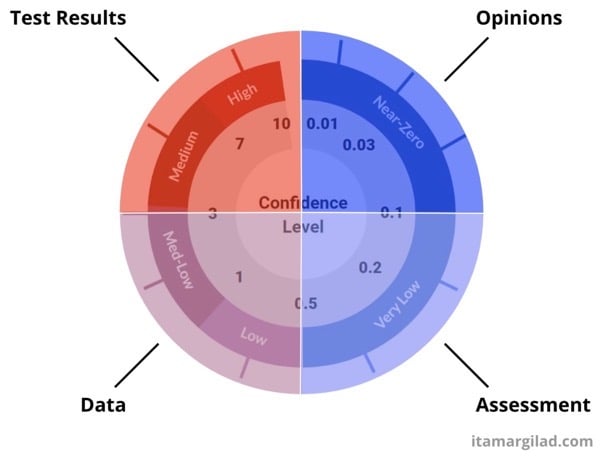
I really like this list of heuristics by Itamar Gilad for how much data you should have before launching product features/improvements:

  • Never launch anything solely based on opinions.
  • It’s ok to release minor tweaks based on assessment.
  • Having supporting data (without testing) is enough to launch only very small, low-risk, easy-to-revert changes.
  • Everything else should be validated through tests and experiments. However there are various levels of testing to choose from with different associated costs and confidence levels.  
  • How much validation you need depends on: a) the cost of building the idea in full, b) how risky it is, and c) your risk tolerance. 

Conf Meter Quads scaled

It’s also the first time I’ve come across his confidence calculator, which looks like a really useful tool (email-gated, though…).

A good definition of “product sense”

I think this is the best definition I’ve seen so far of that elusive term “product sense”:

I define great product sense as the ability to do two things without having extensive data (i.e. without running lengthy research upfront):

  • Generate many solid, highly profitable ideas for ways to make money
  • Intuit whether a product is likely to be successful with a high degree of confidence

The detail of having this sense without extensive data is important. Anyone can get to a great product via guess-and-check. The best product minds reliably take a more direct path.

Principles for building software for developers

Kathy Korevec started a series about her principles for building software/tools for developers. Since I work on Postmark—one such tool—I read the intro post with great interest. The second installment is on the principle she calls You are a chef cooking for chefs:

Developers are masters of building applications, so when you’re building tools and experiences for them, you’re cooking in their kitchen. You can marvel at the delight you bring to the experience because no one can appreciate your hard work more than another developer. Developers can spot inconsistencies, antipatterns, and hurdles a mile away, so you must pay close attention to these details. At the same time, they know the challenges, understand the concerns, appreciate the details, and can provide crucial feedback to make your product even better.

This is one of the main reasons why I love working on developer tools. It’s an audience that can be brutal critics. But for the most part they do that because they care and want to see the product succeed—not because they want to fight just for the sake of it. And because they care, feedback generally have a degree of specificity that is invaluable for troubleshooting, use case discovery, and improving the product.

Anyway, this looks like a fantastic series and I can’t wait to read the rest. You can sign up for Kathy’s newsletter here.

Don’t delete your old backlog

There’s a sentiment I started to see in the agile development world that advocates for deleting old/stale items off a backlog completely. A good recent example is Jason Knight’s latest newsletter:

The backlog becomes a dumping ground for every single customer support query. Every account manager and every salesperson has something in there from conversations with customers and prospects. […]

It’s tempting to see “length of time in backlog” as some kind of vector for prioritisation, but it really isn’t. It’s quite the inverse, in fact. So let’s all try to get comfortable, embrace the idea of getting rid of old stuff in our backlogs, and give people a “no” rather than a “one day”.

I’m not trying to pick on Jason—his work is great and it’s another very good edition of his newsletter! I am just using it as an example that got me thinking about this a bit more deeply.

My take is that we should absolutely keep all customer feedback around in our backlogs, because that is continuous discovery data that would be a shame to lose. Instead, my proposal would be to normalize the backlog as a place to build organizational memory and a customer feedback knowledge base—not as a list of things that all have to get done.

Two tactics can help with this approach. First, a Now/Next/Later roadmap keeps the focus on the list of current priorities. The entire backlog doesn’t go into the “Later” column—only things that are currently prioritized to start within the next few months.

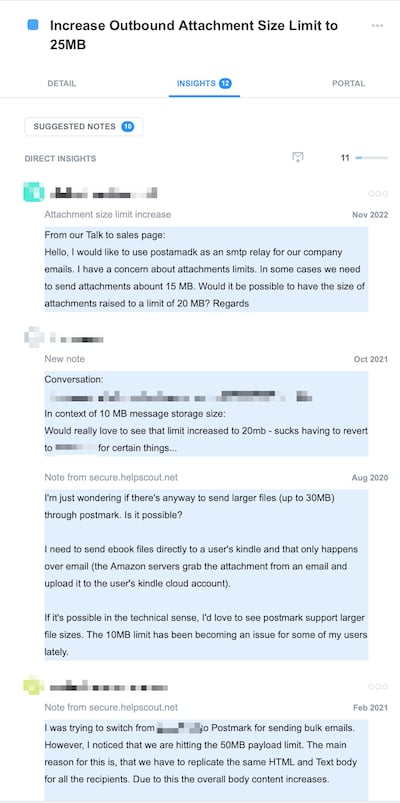
Second, have a standard process that the entire company (especially the customer success team) can use to collect user feedback and attach it to features. In our case that’s Productboard, and our success team can easily add and process customer feedback via a browser extension.

I guess our list of features in Productboard is technically our “backlog”, but it doesn’t cause us stress in terms of feeling like we need to work on everything that’s on there. However, as part of our planning cycle we can go through this list and figure out if anything is important enough to pull into the “Later” column of our roadmap. An added bonus: if/when we start to work on any of those features we have access to lots of customer data about each feature, and we can reach out to those customers to have more in-depth conversations with them about their needs.

So instead of deleting old issues off our backlogs, let’s rather remove the pressure and stigma around what backlogs are for (maybe we should rename it to “customer needs knowledge base”?). And then let’s use our actual roadmaps for the list of things we know we’re going to work on.

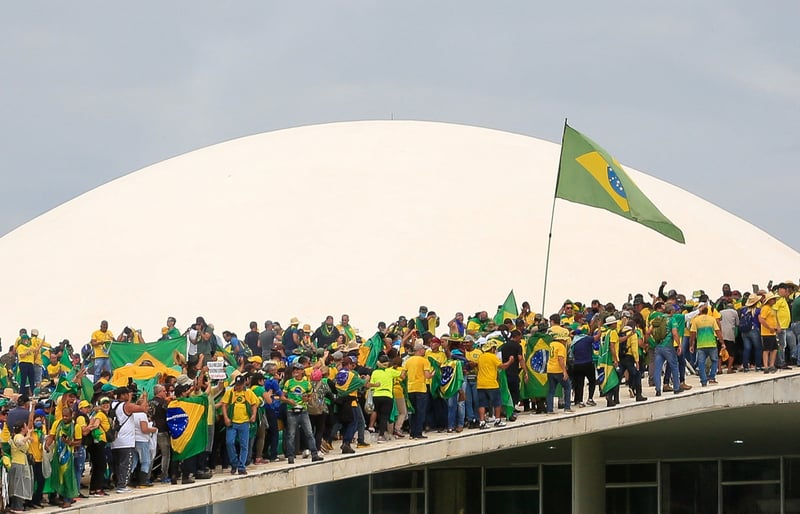
How Brasília’s urban design affects citizen behavior during political violence

My friend Allan sent me an article about the city of Brasília, and how its architecture affected the recent insurrection (Ryan wrote the best overview about what happened that I’ve seen). I have long been fascinated with Brasília, every since I researched it for a product management article called Usable yet Useless: Why Every Business Needs Product Discovery:

A “shiny citadel” from far away, as The Guardian once wrote, up close Brasília has “degraded into a violent, crime-ridden sprawl of cacophonous traffic jams. The real Brazil has spilled into its utopian vision.”

This problem echoes across today’s web landscape as well, where the needs of ordinary users spill constantly into designers’ utopian vision.

So I read In Brasília, Modernist Architecture Met Political Violence with great interest:

Brasília’s so-called Monumental Axis, or Eixo Monumental, isn’t a walkable touristic path dotted by free museums. Instead, it is an otherworldly landscape of red earth, open grass and enormous roadways, an anti-pedestrian landscape best viewed from the air. So vast are its voids that the sheer scale of the space may have helped temper the energies of the crowds.

The city’s design had specific consequences for the political unrest:

More than 60 years later, Brasília’s real-world shortcomings are well known: Its population far outgrew what its designers imagined, with most residents living in satellite developments that sprawl far from Costa’s planned central district. Many politicians commute via plane, making the city more a symbolic site than a place where one finds gatherings of politicians. President Lula was not in Brasília at the time of the riot, nor were legislators of Brazil’s National Congress, which is in recess: The protesters attacked mostly empty buildings.

This is a really interesting look at how urban design affects the behavior of citizens.

Education as customer research for product development

I enjoyed this interview with Todd Curtis, Chief Product Officer at You Need a Budget. They cover a lot of ground in From spreadsheet to digital product: You Need a Budget’s Product Excellence evolution, but I especially like the discussion about the many different customer touchpoints they maintain:

As ideas move into discovery and validation, Todd and his team go to customers directly. Todd tries to have hour-long sessions with two customers every week to learn about their budgeting story. Through the company’s frequent online workshops, YNAB is able to engage with hundreds of customers each day and hear their questions and concerns.

All these efforts help YNAB gain a deep understanding of what their customers really need and informs product strategy with actionable intelligence.

The use of workshops (or in our case, webinars) to engage and get feedback from customers is a great practice. It provides tons of value to customers while also helping companies to understand their needs better.

The importance of getting customer feedback before product launches

I’m not usually a fan of posts like this, but I just couldn’t resist clicking on Pink Floyd Were Masters At Achieving Product-Market Fit. The first of seven “lessons” is the one that stands out for me:

Obtain Customer Feedback Before You Release Your Product

Musicians spend their entire youth writing songs and performing them in front of live audiences, which ensures that their initial album is validated by their fans before they enter the recording studio.

Unfortunately, successful musicians seldom have the luxury of market testing their subsequent albums. Instead of refining their material based on customer feedback, they are often lock away in a recording studio, isolated from their fans. Thus, it is no surprise that many bands suffer the sophomore jinx, in which their second album fails to achieve the success of their initial release.

Pink Floyd recorded Dark Side of the Moon after a year of writing and performing the material in front of live audiences. This audience feedback allowed the band to iteratively modify their creation.

Lesson: Avoid the sophomore jinx with your product launches by continuing to seek market validation, despite your initial success.

I guess in the interest of full disclosure, I should admit that I wrote a post like this once: A story about Miles Davis and the nature of true genius.