
Menu

Posts tagged “career”

How to Interview

Last year I accidentally became an expert on interviewing. I didn’t want to, but hey, we do what we need to do. I just published some things I learned in the process on A List Apart, in an article called How to Interview. Here’s one piece of advice on how to get companies to email you back…

Send separate, personal emails to each of the likely hiring managers you found. Make it really, really short. Don’t go on about how awesome you are—you’ll get a chance to do that later. Tell them you like their company, you like the role, you’re interested in talking. Link to stuff you’ve done: your LinkedIn profile, your portfolio, articles/books you’ve written, etc. Then ask them if they’d be willing to have a call, or forward your information on to the right person. The point is to not burden people. If they see a long email, the chances are high that they will delete it. But if they see a short email that’s respectful of their time and gives them the information they need to make a quick decision—that’s a different story.

Do what you love?

My latest column for A List Apart is called How to Do What You Love, the Right Way, and it’s out today. It’s a response to that mantra we hear so often, and loosely based on a rant by Merlin Mann on one of his Back to Work podcasts. Here’s the gist:

Doing what you love doesn’t necessarily mean quitting your job and starting a coffee shop. Most often, it means building your own platform, and crafting your own work, one step at a time.

Don't be a manager like Dora

Just as my 5-year old exits her Dora the Explorer phase (to replace it with “Let it go! Let it gooooo!”), my 2-year old enters hers with the force of a thousand purple monkeys. So, look, I read a lot of Dora books these days. Recently Penny the Pony’s Big Race has been quite the hit. It’s about Dora trying to get her horse to… wait, who am I kidding. I’m sure you care about the plot as much as I do.

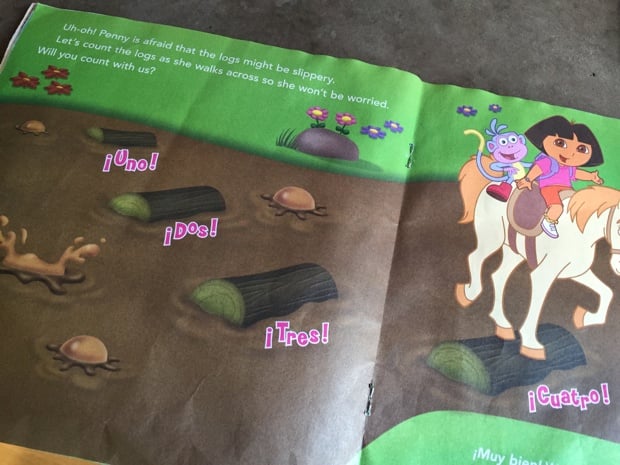
Anyway, there’s one part of the story that irritates me way above my average annoyance levels with these books (which is already quite high). Dora, Boots, and Penny are trying to cross a mud pit, but Penny is a bit scared. This is where we pick up the narrative:

Dora ugh

Let’s reflect on this for a moment. Penny is scared of jumping across the logs, because she thinks she might slip and fall into the mud. Dora’s proposed solution is infuriating:

Uh-oh! Penny is afraid that the logs might be slippery. Let’s count the logs as she walks across so she won’t be worried.

How is that a good solution? There are a number of things you could do to solve Penny’s fear of the slippery logs. They could walk around the mud pit. They could make sure the logs are more secure. They could give Penny special horse-shoes that increase friction. Look, I don’t know, I’m not an expert at horses jumping over logs, but I’m sure there are people who are, and who could come up with a good solution for the problem. Counting the logs to distract Penny is a pretty superficial and condescending approach to address this particular problem.

The thing is, this is all too often how managers operate in the context of their teams. Oh, you’re unhappy with the culture of the company? Let’s throw a company BBQ. On a Sunday afternoon. You’re concerned that the product development process is not optimal? Let’s hire another development manager. Instead of spending time to understand the cause of the anxiety communicated by team members, managers often rely on distraction or easy answers that give the illusion of a solution, but is nothing more than a way to check a box to say that they “did something.”

I read two really good management articles recently that are relevant here. The first is Gregg Satell’s What To Do While You’re Waiting For Steve Jobs (beware, that’s a Forbes link, so you’re going to have to do a lot of clicking around to dismiss all the things that try to distract you from reading it). He says this about treating people with respect:

If you expect your employees to be motivated to do their jobs well, you’d better treat them with dignity. Leadership is not the art of getting people to do what you want, but inspiring them to want what you want.[…] While many leaders believe that they can bend the organization to their will, that’s rarely true.  Being a jerk doesn’t make you Steve Jobs, it just makes you a jerk.

The second is Lindsay Holmwood’s It’s not a promotion — it’s a career change. It’s a great post and you should read the whole thing, but I want to quote most of the opening in full, because it’s great:

Your job is not to be an engineer. Your job is not to be a manager. Your job is to be a multiplier.

You exist to remove roadblocks and eliminate interruptions for the people you work with. You exist to listen to people (not just hear them!), to build relationships and trust, to deliver bad news, to resolve conflict in a just way.

You exist to think about the bigger picture, ask provoking and sometimes difficult questions, and relate the big picture back to something meaningful, tangible, and actionable to the team.

You exist to advocate for the team, to promote the group and individual achievements, to gaze into unconstructive criticism and see underlying motivations, and sometimes even give up control and make sacrifices you are uncomfortable or disagree with.

You exist to make systemic improvements with the help of the people you work with.

If I could summarize the advice in these articles, and what I’ve personally experienced about good managers vs. bad managers, I’d say this. If someone on your team complains that they’re worried about slippery logs across a mud pit, don’t tell them you’ll count loudly as they jump to distract them from the fear. Instead, take the time to understand the cause of their fear, and help them solve the real problem behind that fear.

In other words, don’t be like Dora. She’s a terrible manager.

Book Excerpt: Making It Right

As I’m sure you’re extremely tired of hearing by now, I recently wrote a book on Product Management. For those of you who are too cheap to buy it (I kid, I kid1), there is now an edited chapter excerpt up on Smashing Magazine. In Why Companies Need Full-Time Product Managers (And What They Do All Day) I give my definition of Product Management, and go into some of the characteristics of a good PM. Also:

The truth is that, to be effective, the role of a manager for a particular product or area must not be filled by multiple people. It is essential for the product manager to see the whole picture — the strategic vision as well as the details of implementation — in order to make good decisions about the product. If knowledge of different parts of the process resides in the heads of different people, then no one will have that holistic view, and all value will be drained of the role.

Enjoy the freebie!


  1. But not really. PLEASE BUY IT

Seek first to understand, then to defend your design

Empathy

Alvin Hsia’s What I Learned In My First Year as a Product Designer is a good refresher and reminder about what’s important when working with others. This point is worth discussing further:

Make a deliberate effort to cultivate empathy for other team functions and be able to explain your designs to whoever it is you’re talking to, in their terms. It’s ok to use design jargon as long as you’re able to educate others on what the impressive-sounding words you use actually mean. Break down how your designs fit into the context of what they do and/or company goals. This requires you to get inside the mind of people in a variety of functions and gain a basic understanding and appreciation of what they do and can manifest itself in many ways.

Two books were a really big deal when I was in high school. The first is Stephen Covey’s The 7 Habits of Highly Effective People. Everyone was reading this thing. I was obsessed with the book, and even read all the prequels and sequels — although the only title I can remember is First Things First, because it just seemed way too obvious to me at the time. I even bought the Covey Daily Planner™ (or whatever it’s called) and kept it up religiously. Paper — how cute.

The other book that was a big deal is To Kill A Mockingbird. I must have read it 10 times as part of English class. Up to then, most of my reading was confined to a very limited set of prudish Afrikaans authors. To Kill A Mockingbird was different. It awoke in me an obsession with words and reading that I’m thankful for to this day.

I bring this up because both these books — as different as they are — have served me well over the years in my career. All because at their core, they have the same theme: empathy. I’ve long forgotten the 7 habits — except for one:

Seek first to understand, then to be understood.

And I don’t remember much from To Kill A Mockinbird, except for this passage:

You never really understand a person until you consider things from his point of view — until you climb inside of his skin and walk around in it.

More than 20 years after reading the books, these are the phrases I can’t get out of my head, especially if I’m tempted to get frustrated when someone doesn’t “get” the reasoning behind one of my designs. Instead of going into defensive mode, I’ve learned to hold back and simply say: Tell me more about that. Trust me, this is a magical, powerful phrase. It shows that you want to understand, that you don’t know everything, that your only desire is to make the product better. It breaks down aggression, it improves communication, it teaches you things.

I’m not perfect at this — I admit that I sometimes still lose my cool. But whenever I have the wherewithal to seek first to understand, then to be understood, I come out the other side a better designer. And I think that’s worth sacrificing a bit of pride for.


If you’re a business that would like to reach Elezea’s audience, have a look at my sponsorship opportunities.

What motivates us

Managers, take note:

Employees are vastly more satisfied and productive, it turns out, when four of their core needs are met: physical, through opportunities to regularly renew and recharge at work; emotional, by feeling valued and appreciated for their contributions; mental, when they have the opportunity to focus in an absorbed way on their most important tasks and define when and where they get their work done; and spiritual, by doing more of what they do best and enjoy most, and by feeling connected to a higher purpose at work.

This isn’t rocket science, but an important reminder. It’s similar to Jocelyn Glei’s conclusion in What Motivates Us To Do Great Work?:

For creative thinkers, [author Daniel] Pink identifies three key motivators: autonomy (self-directed work), mastery (getting better at stuff), and purpose (serving a greater vision). All three are intrinsic motivators. Even a purpose, which can seem like an external motivator, will be internalized if you truly believe in it. […]

As creative thinkers, we want to make progress, and we want to move big ideas forward. So, it’s no surprise that the best motivator is being empowered to take action.

How to get hired as a Product Manager

We’re in the process of hiring UX designers and Product Managers, so I’m currently looking through a lot of resumes. I’m finding the breadth and depth of UX resumes really impressive — there are a ton of great people looking to make a shift at the moment. But on the Product Management side, not so much. I don’t want to believe it’s because most Product Managers suck. I just think there is a big supply/demand issue in this area at the moment.

But not just that, I also think that Product Managers need to write better resumes. Designers have, for the most part, figured out that it’s more about showing than telling. It’s easy to go to someone’s sites and portfolio to get a sense of what they’re about. Product Managers still appear to be stuck in the “Let me tell you how awesome I am” rut, though. This is a generalization, of course, but what I’m mostly seeing right now is resumes that excel at vagueness. It’s not uncommon to see a sentence like “Applied world-class methodologies to create a successful customer-centric product”, or some variation of that. What does that mean?

It’s great to see proof of success, yes — stats about conversion improvements, etc. are extremely useful. But hiring managers need more than that to assess Product Managers. We need to know how you think. We need to know how you approach problems, how you work, what methods you like and don’t like, and why. And for some reason most PMs I speak to seem surprised by those questions and have trouble answering them.

I’ve now gone so far as to send a short list of questions to our HR department. I’ve asked them to forward these questions on to potential candidates, and send their answers to the hiring team along with their resumes. So I wanted to share those questions here in case it’s useful to PMs looking for a new opportunity. This isn’t an exhaustive list, but here are some of the questions Product Managers need to be able to answer at any time of day or night:

  • How would you describe your ideal product development process? Please share details including, but not limited to, the following:
    • Roles and responsibilities within the team
    • How to develop a strategy and vision for the product
    • How to decide what to build, and when (include thoughts on different prioritization methods and, in your experience, what works best)
    • Development methodology
  • In your experience, what are the most important characteristics of a good Product Manager?
  • In your experience, what are the conditions for success that have to exist in an organization for a Product Manager to be successful?

This is one of those classic “there is no wrong answer” situations. The absolute answers matter, but what matters more is the thought process. I want to hire PMs who think about these things. PMs who have an opinion on UCD vs. ACD. On Kano vs. KJ prioritization. On user stories vs. job stories. I want to work with people who read and think and build, and have found a way to balance those different activities effectively.

So, if you’re looking for a Product Management role, communicate those things to the recruiter and/or hiring managers. I’m pretty sure it will get you an interview. Oh, and if you want to move to Portland to help us make better healthcare software, and you have good answers to those questions, let me know!

Audacity, courage, or madness?

John Maeda on The Great Discontent:

I’ve never met anyone who is good at what they do creatively and is super-confident.

Well, that’s a relief. Because I’m not feeling particularly confident right now. He goes on to say this:

If you have audacity and take on a risk, it means you don’t know what you’re getting into; you’re walking through a door, into a dark room, with no idea what’s there. If you have courage, it means that you know exactly what’s behind that door; there’s something dangerous, hard, and it’s going to make you really uncomfortable.

I don’t know if I’m audacious, courageous, or just plain crazy, but in case you were wondering why it’s been so quiet here over the past couple of weeks, it’s because I just moved from Cape Town to Portland, and today started a new job as Director of Product at HealthSparq. I’m excited about the move and the role, but also pretty nervous about the dark room I’m walking into. But I guess that’s what makes life exciting. That not knowing that keeps us pushing to find our own limits so we can break through them.

I expect things to stay a little bit slow on Elezea for another week or so. This week is obviously crazy, next week I’m speaking at Industry Conf, and after that things will hopefully return to a reasonably regular posting schedule. I just felt that I probably owed you guys an update.

Thanks for caring.

On moving to Portland, and how the internet is (still) awesome

Portland skyline

Take care of the people you love, and try to make yourself known and understood. Dial it down, work with your hands, keep it quiet, and share what you know.

— Frank Chimero, This One’s for Me

In 16 days our family will walk out of an empty house in Cape Town and get on a plane to Portland, OR. It will be a one-way journey. I’ve been searching for the words to write about it, but I haven’t quite found the right ones. So I guess these ones will have to do.

I started my first blog in 2004. It was hosted on Windows Live Spaces, and it was terrible. I called it Leave The Great Indoors (yes, because of the John Mayer song and we just moved countries and just roll with it ok?). I have no idea what I wrote about back then, but I must have felt that there was something to this writing thing, because a year later I moved it to Blogger (because more features!). It still exists, but please don’t tell anyone.

The writing thing kept growing on me, and a couple of months later I started a UX-focused blog called UX-SA (because User Experience, and I’m from South Africa, and yes it’s a stupid name for a blog). That one also still exists, but again, please don’t tell anyone.

It was only in late 2009 that I got serious about it, bought a domain name (I don’t know what I was thinking — no one can pronounce Elezea), installed WordPress, and got stuck in. I proceeded to go through several identity crises, which included a move from Silicon Valley to Cape Town, 2 kids, and realizing that I’ll never learn how to deal with angry comments so I should probably turn those off.

One day I wrote a post that got mildly popular, and Jim Dalrymple linked to it from The Loop. He also must have subscribed to my RSS feed, because he has linked to the site a few times since then — something I’m still surprised by and incredibly grateful for every time it happens.

Some time after that a guy I’d never met, who lives in Portland, started following me on Twitter. He’s a regular reader of The Loop, and he decided to check out this guy who has the same last name as he does (let’s call him Rudolph, because that’s his name). We started chatting a bit, and when he came to visit his extended family in Cape Town we caught up for coffee. We kept in touch, as like-minded people are prone to do.

Last August my wife and I went to San Diego for a family reunion. I also set up some interviews because we were strongly considering moving there. But we took one look at California and realized we won’t be able to live there again (Cape Town kind of gets you addicted to leafy mountain beauty, and well, California). On a whim I gave Rudolph a call, and asked him if he thinks we should move to Portland. I’d been following him on Instagram for a while, and it looked like a nice place.

So this random guy I met on the Internet went to work and helped us figure out if Portland might be the city for us. A few months later I started looking for jobs there. Since I’d never been to Oregon I took a one-week trip to check it out and speak to some people in person. Of course I stayed with Rudolph and his lovely family.

I talked to several companies in Portland, but the conversations that kept sticking in my mind were the ones I had with HealthSparq, a healthcare transparency company that’s part of Cambia Health Solutions. I never thought I’d work in the healthcare field, but the team’s passion and vision won me over. So on April 13th I’m starting at Healthsparq as a Director of Product. Healthsparq’s president, Scott Decker, wrote a post the other day that’s a pretty good summary of why I decided to join them. From Health Care Transparency: Opening Up the Market:

It’s important that these new transparency tools provide robust information that people want to know in a way they can make actionable. While more and more health care data is being generated and released — from personal tracking devices to government and payer data — the information won’t be useful unless it is understandable and easy to navigate. These new transparency tools should provide as complete a picture as possible of price and quality, from the moment a person begins receiving care for a specific condition to the time when they no longer require treatment.

That’s a tough UX problem, and a vision I can get behind. I’m excited about the move to a new city with new beginnings and new things to explore — and a product I can believe in.

Anyway, I’m telling you the strange story of how this all happened because I’m worried that we don’t always appreciate how cool the internet can be. My decision to start a crappy blog in 2004 eventually led to a bunch of connections with fantastic people who decided to give me a shot (remind me to tell you about the day that Francisco sent me a DM to ask if I’d like to write for Smashing Magazine). This move wouldn’t have happened if I hadn’t met Jim and Rudolph online, and if they weren’t such nice people, and I can’t quite get my brain around how great that is.

We give the internet a lot of crap, and yes, it can be a vile place sometimes. But we’re moving to Portland because of relationships that were started and cemented on the internet, so I’m going to remain in awe of this technology that has the power to help us make each other’s lives so much better.

Always choose meaning over recognition

I’ve been thinking about this whole “being online” thing quite a bit over the past week or so, so James Shelley’s The Overinflated Currency of Personal Brands struck quite a chord:

What happens when the fame contagion infects an entire society? [American historian Daniel Boorstin] speculated that “The quest for celebrity, the pressure for well-knownness, everywhere makes the worker overshadow the work.” Increasingly we will go about our lives and work not actually concerned with the living and working itself, but with being known for our lives and work. Our lives and work become nothing but source material for the promotion of our personalities. Ultimately, achievement and accomplishment come to mean nothing, if they are not mechanisms for propagating our individual cult stories.

I see this more and more online, and it’s a worrisome trend — this tendency to measure the value of our work by the number of people who see it and comment on it. Our search for meaningful work should always outweigh our search for recognition. This idea of individual stories and meaning remind me of Donald Miller’s words in one of my favorite books, A Million Miles in a Thousand Years:

If [it’s true about] a good story being a condensed version of life — that is, if story is just life without the meaningless scenes — I wondered if life could be lived more like a good story in the first place. I wondered if a person could plan a story for his life and live it intentionally.

Planning a good story for our lives has nothing to do with “well-knownness” and everything to do with the amount of meaning we pack into each day. I know I’m being a bit sentimental today, but it’s because our family is on the verge of a very big change, and much of it is driven by a renewed appreciation for living life with greater intention. Over the past few years I’ve seen my decisions increasingly being influenced by a desire for my daughters to one day say to their friends, “My Dad wasn’t afraid to take risks.” So that’s what we’re doing…