Menu

The necessity of risk and failure in the creative process

There’s an interesting discussion on The Verge entitled Filters vs. failure: Instagram’s perfect messes could spell trouble for creativity. Joshua Kopstein argues that the problem with Instagram and other digital creation tools like Paper is that it removes the ability to make mistakes. It’s virtually impossible to take a bad picture on Instagram, and he believes that this is a problem for creativity in general:

By removing risk we have fundamentally changed the nature of the medium, or technically speaking, switched to an entirely different one. Because the process is now streamlined and offers near-infinite forgiveness, the way we approach a camera has changed drastically from tools defined by limited exposures and semi-predictable chemicals, and the resulting product always reflects that.

Instagram’s foremost blasphemy isn’t that it “ruins” images or misrepresents reality ”” it’s that it mines another medium for selective, aesthetic purposes despite being unable to represent the processes and risks that define that medium. The software curates, emulates and packages appropriated qualities that its creators consider desirable, creating a risk-free detour that fast-tracks the creative process.

Kopstein also links to a very interesting article by Derek Holzer called Schematic as Score: Uses and Abuses of the (In)Deterministic Possibilities of Sound Technology. Holzer discusses the move from analog to digital creation in the music industry, and makes a similar point about the absence of risk in the creative process:

I consider it axiomatic that, for any art work to be considered experimental, the possibility of failure must be built into its process. I am not referring to the aestheticized, satisfying glitches and crackles valorized by Kim Cascone, but to the lack of satisfaction produced by a misguided or misstepped procedure in the experiment, whether colossal or banal. These are not errors to be sought out, sampled and celebrated, but the flat-on-your-ass gaffs and embarrassments that would trouble the sleep of all but the most Zen of musicians or composers.

The presence of failure in a musical system represents feedback in the negative, a tipping point into anti-climax, irrelevance, the commonplace, the cliche or even unintended silence. Many artists try to factor out true, catastrophic failure by scripting, scoring, sequencing or programming their work into as many predictable, risk-free quanta as possible ahead of time. But this unwelcome presence also guarantees the vitality of that hotly-contested territory ”“ the live electronic music performance.

The resulting compositions from the most “easy” and “simple” software tools are often nothing more than “digital folk” art ”“ the endless and endlessly similar permutations which are possible merely from the tweaking of a few basic presets. Perhaps the artistic tragedy of the digital age lies in the social and economic pressure to immediately release “results” which barely get beyond this initiatory phase.

I find these discussions fascinating. Sweeping generalizations are dangerous, of course, but I do agree that taking the risk out of creativity also makes it much harder to make something truly great. I see this in my own creative pursuits as well. I love writing first drafts of pieces. I absolutely hate editing those pieces to become something that’s worth publishing. But it’s in the editing process - which is basically the discovery and correction of failures - that the opportunity for doing good work really presents itself.

If software came along that magically made every first draft look acceptable, writers would lose out on the surprising spurts of creativity that come from the editing process. And I think this is the same for Instagram and electronic music. If we can walk any direction we want and never get a course correction, how will we get where we need to go?

George Orwell on writing: we're all vain, selfish, and lazy

My wife just emailed me this quote on writing. I can’t figure out if she’s encouraging me or insulting me. Ah, the wonderful mysteries of marriage.

All writers are vain, selfish and lazy, and at the very bottom of their motives lies a mystery. Writing a book is a long, exhausting struggle, like a long bout of some painful illness. One would never undertake such a thing if one were not driven by some demon whom one can neither resist nor understand.

George Orwell, Why I Write

Where to find design inspiration

In Designing Ideas Paul Scrivens reminds us that distraction-free writing apps aren’t new - typewriters and pen & paper have been around for a very long time. He then encourages us to look beyond our immediate time and medium for ideas on how to solve design problems:

The problem with designing new ideas is that we are too busy looking at what the people are designing around us to realize that many of the solutions to the problems we are facing have been solved already in a different time.

You will never be first with a new idea. You will be first with a new way to present the idea or a new way to combine that idea with another. Ideas are nothing more than mashups of the past. Once you can embrace that, your imagination opens up a bit more and you start to look elsewhere for inspiration.

This is partly why I’ve spent so much time reading up on architecture. It’s a mature, related craft that can teach us a great deal about web design - arguably more than Dribbble can.

How research findings are distorted for the sake of journalism

I was reading an article called The Internet’s Battle For Our Digital Souls on Big Think when I stumbled on this sentence:

We get approximately the same type of pleasure from talking about ourselves on social media as we do from having sex.

That just didn’t sit right with me. I’ve posted plenty of updates on Facebook and Twitter, and it definitely didn’t… ok, I’ll stop there. I don’t want this to get awkward. All I’m saying is that this doesn’t feel right. So I decided to trace the statement back to the original study that it’s talking about, to see what’s going on.

The post on Big Think appears to be a rehash of an article in the LA Times called Study helps explain why we over-share on Facebook, Twitter. The first thing I found interesting is that their conclusion about the sex thing is a little more measured:

In a series of experiments, the researchers found that the act of disclosing information about oneself activates the same sensation of pleasure in the brain that we get from eating food, getting money or having sex. It’s all a matter of degrees of course, (talking about yourself isn’t quite as pleasurable as sex for most of us), but the science makes it clear that our brain considers self-disclosure to be a rewarding experience.

The LA Times links back to the original research paper, which has the decidedly less sexy title Disclosing information about the self is intrinsically rewarding (PDF link). The paper explains that the study was about whether or not people would give up money to talk about themselves (my emphasis added):

Just as monkeys are willing to forgo juice rewards to view dominant groupmates and college students are willing to give up money to view attractive members of the opposite sex, our participants were willing to forgo money to think and talk about themselves.

The word “sex” appears six times in the 6-page paper, and only once in the context that these other news stories use it. The “Discussion” section starts off as follows (my emphasis added):

Despite the frequency with which humans disclose the contents of their own thoughts, little has been known about the proximate mechanisms that motivate this behavior. Here, we suggest that humans so willingly self-disclose because doing so represents an event with intrinsic value, in the same way as with primary rewards such as food and sex. Intriguingly, findings also suggested that both parts of “self-disclosure” have reward value. Although participants were willing to forgo money merely to introspect about the self and doing so was sufficient to engage brain regions associated with the rewarding outcomes, these effects were magnified by knowledge that on’s thoughts would be communicated to another person, suggesting that individuals find opportunities to disclose their own thoughts to others to be especially rewarding.

Note that they talk about “rewards”, not “pleasure” like in the news stories. The core research hypothesis is that sharing about ourselves has intrinsic value. To quote from a different section (my emphasis added):

Interestingly, a number of earlier researchers have put forward the hypothesis explicitly tested here — that self-disclosure will act as an intrinsic reward; however, despite calls to do so, this notion has not previously been tested empirically. As such, the current study validates a long-standing hypothesis that self-disclosure arises — at least in part — from the subjective value associated with it.

No mention of sex there, whatsoever. It’s also important to know what the phrase “intrinsic value” means in the philosophical sense of the word, because it’s essential to understanding the results of the study:

The intrinsic value of something is said to be the value that that thing has “in itself,” or “for its own sake,” or “as such,” or “in its own right.”

So let’s be very clear about what this research shows. The hypotheses tested (and confirmed) is that people like talking about themselves on social media because it has intrinsic value. In other words, we like sharing because it’s enjoyable for its own sake as a social activity. They make the point (in passing) that this is similar to other activities with intrinsic value such as food and, yes, sex. It’s not that posting on Facebook makes you feel the same way that having sex does. It’s that all these things share a common thread: the subjective, intrinsic value that they possess.

But hey, that message isn’t nearly going to rack up the same number of page views as saying that “We get approximately the same type of pleasure from talking about ourselves on social media as we do from having sex.” I read so many “a new study suggests that…” articles that I just take at face value. Today I decided to read the actual research paper, and realized what kind of distortions happen the further you get from the source of a story. I’ll certainly be a lot more cautious about these kinds of stories going forward. Welcome to the new age of journalism, I guess.

Is it time to stop writing headlines that end in question marks?

Betteridge’s Law of Headlines states the following:

Any headline which ends in a question mark can be answered by the word ‘no’.

Ian Betteridge explains his theory as follows:

The reason why journalists use that style of headline is that they know the story is probably bollocks, and don’t actually have the sources and facts to back it up, but still want to run it.

Betteridge’s point is that if a story had enough proof and citations, the headline would be assertive. Consider the latest story on TechCrunch, as of this writing: “Warren Buffett Is A Punk”. Regardless of its journalistic appeal, doesn’t that sound much better than “Is Warran Buffett A Punk?”. Headlines end in question marks when the authors want to retain a certain measure of deniability if their story turns out to be false (“Will iOS 6 Be Able To Make You Coffee?”).

However, lately these headlines have morphed into something beyond just a mixture of deniability and laziness: pure link bait. Consider a few randomly selected headlines from the last week:

  • Should Celebrities Create Their Own Branded Social Networks?
  • Could in-store navigation tech be a shopper’s worst nightmare?
  • Samsung Galaxy S III: Is the Screen Its Achilles Heel?

The idea is to get people interested enough to click through, and then make them scroll past the ads until the answer (usually, “no”) is revealed in the last paragraph. It’s effective, but I just don’t think it should be done. Unfortunately I don’t have a business reason for my opinion, but I do have a reader reason.

I believe in respecting your audience’s intelligence, and not wasting their time. I believe in stating an article’s thesis and/or purpose clearly in the title, and trusting that if it’s interesting enough, the people you want on your site will click through and read it.

So, is it time to stop writing headlines that end in question marks? I’m going to break Betteridge’s Law and say, unequivocally, yes.

What if you had made different choices about your life?

The best article I read all week is Eric Puchner’s The Cooler Me. Puchner wondered what his life would have been like if he had made different choices, so he set off to find his doppelgänger to see what he’s missing out on. The results are funny and poignant, and it’s just such a well-written article. If you’re a parent, I think you will particularly enjoy it.

It’s very long, and hard to quote from, but here are just a couple of paragraphs as a teaser:

For some reason, I told [my doppelgänger] Kyle about how I’d asked my daughter recently what she wanted to be for Halloween, and she’d said “a confused chicken.” This apparently meant dressing up like a chicken but pretending not to know what she was. I couldn’t help thinking she’d hit upon a deep ontological truth: the idea that who you were would be obvious to everyone else but yourself.

And shortly thereafter:

There’s a reason we drift toward attachment, I think, as we get older - attachment to people, to work, to things. As death moves closer, we try our hardest to dig in. We pound in the stakes so that our tents don’t blow away. Still, it makes sense to me that the perceptions we once had of ourselves would be hard to cast off. We miss our youth, our freedom — which is not the same thing as wanting it back. We may think it is, but it’s not. We’re all confused chickens.

But please, do yourself a favor and carve out some time this weekend to read the whole thing.

Jumping to conclusions about how the brain jumps to conclusions

In The Irrationality of Irrationality Samuel McNerney discusses cognitive bias from an interesting angle. What if all the popular psychology books about this phenomenon, like Dan Ariely’s Predictably Irrational and Daniel Kahneman’s Thinking, Fast and Slow, are actually complicit in strengthening some of our incorrect biases? He says:

People seem to absorb these books uncritically, ironically falling prey to some of the very biases they should be on the lookout for: incomplete information and seductive stories. That is, when people learn about how we irrationally jump to conclusions they form new opinions about how the brain works from the little information they recently acquired. They jump to conclusions about how the brain jumps to conclusions and fit their newfound knowledge into a larger story that romantically and naively describes personal enlightenment.

His observations on the power of narrative are also really interesting.

The Shape of Design by Frank Chimero: closing remark

I just finished reading Frank Chimero’s The Shape of Design. My closing remark on Readmill:

Highly recommended to anyone who wants to step back and get a sense of the state of design beyond the tools that we use. It makes us think about the reasons why we design, and how to give our work purpose and meaning. I found part 1 to be the strongest, but it’s a quick, easy read throughout.

You can follow the link to see the highlights I made - there are some really great quotes in there, such as this one:

Design doesn’t need to be delightful for it to work, but that’s like saying food doesn’t need to be tasty to keep us alive. The pedigree of great design isn’t solely based on aesthetics or utility, but also the sensation it creates when it is seen or used. It’s a bit like food: plating a dish adds beauty to the experience, but the testament to the quality of the cooking is in its taste. It’s the same for design, in that the source of a delightful experience comes from the design’s use.

In related news, I thoroughly enjoyed reading this on the Readmill app for iPad. I will try to read books with this app whenever possible from now on, with the Kindle as a backup if I can’t find the book as DRM-free ePub. The reader itself needs a bit of work to get to the standard that iBooks set, but the social features are really great. I love seeing who else is reading the book I’m reading, what they’ve highlighted, etc. Readmill embraces the digital reading experience in the best way that I’ve seen so far.

Design for learning

Hey, I dislike the word “gamification” as much as the next guy. The topic of game mechanics has been twisted and applied to everything with almost as much success as the recent “infographic” craze. And yet, I can’t help but link to this excellent post by Michael Lopp. In Two Universes he provides one of the few worthwhile explorations of game mechanics in software that I’ve seen:

The plethora of online Photoshop tutorials demonstrate its power and its flexibility, but I believe they also demonstrate its poor design. Think about it like this: what if each time you plunked down in front of World of Warcraft, you had to spend an hour trying to remember, wait, how do I play this?

Great design makes learning frictionless. The brilliance of the iPhone and iPad is how little time you spend learning. Designers’ livelihood is based on how quickly and cleverly they can introduce to and teach a user how a particular tool works in a particular universe.

His observations on what it takes to motivate people to learn are spot on.

A story about Miles Davis and the nature of true genius

I’ve been listening to Kind of Blue all week. More specifically, I have the 180g vinyl copy of the Miles Davis jazz classic on constant rotation. It’s an album that never gets old and therefore needs no specific reason to be listened to, but in this case I do have one. See, I’m reading Frank Chimero’s excellent book The Shape of Design at the moment, and he references Kind of Blue quite a bit. It’s this passage in particular that sent me back for another listen:

Kind of Blue is unequivocally a masterpiece, a cornerstone to jazz music created in just a few short hours by altering the structure of the performance. The musicians accepted the contributions of one another, and ventured out into a new frontier, using their intuitions as their guides. Davis amassed a stellar group of musicians, and with a loose framework of limitations to focus them but plenty of space for exploration, he knew they would wander with skill and play beyond themselves.

This is such a great description of the album, and as Chimero points out in his book, an apt metaphor for meaningful creative work. I started going down the rabbit hole a bit more (thanks, Wikipedia!), and eventually found Stephen Thomas Erlewine’s review of the album. He says:

Why does Kind of Blue possess such a mystique? Perhaps because this music never flaunts its genius. Yet Kind of Blue is more than easy listening. It’s the pinnacle of modal jazz - tonality and solos build from the overall key, not chord changes, giving the music a subtly shifting quality.

Ok, hold on a second. Did you catch that? This music never flaunts its genius. What an interesting way to put it, and I’ve been thinking about that phrase all week. I’ve been wondering what it means not to flaunt your genius, and why we find it so compelling in the rare cases that we stumble upon such genius.

As I dug deeper into my own obsession with Kind of Blue, I realized that my truth lies somewhere in the middle of Chimero and Erlewine’s respective takes on it. I think what draws me to this album is the enormous restraint that each of these brilliant musicians show. Just look at the members of the sextet: Miles Davis, Bill Evans, Jimmy Cobb, Paul Chambers, John Coltrane, and Julian “Cannonball” Adderley. They were all extraordinary musicians at the top of their games, and yet they came together and produced a piece of work that doesn’t feel strained or over the top. There is a sense of comfort - of rightness - to every note on the album.

But why am I so drawn to this restraint? I think it’s because we all know instinctively that restraint is so much harder than flaunting, and therefore takes much more skill. Consider social media - the perfect platform for flaunting your undeniable awesomeness. I was just at a conference yesterday where one of the speakers stopped for a moment so we could all tweet how awesome he is. Yes, of course he was making a joke, but it’s precisely the non-absurdity of the idea that makes the joke funny. The speaker was simply exaggerating behavior we see online every day.

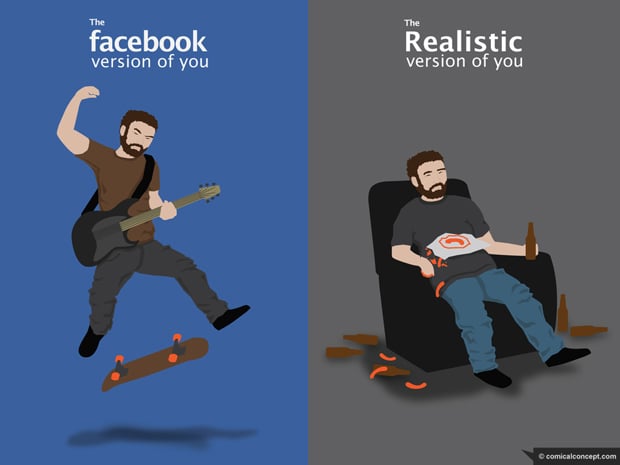
But here’s the thing. Telling people how awesome you are is easy. You don’t even have to be awesome to tell people how great you are. It’s the unwritten rules of the game: online, we get to be the versions of ourselves that we wished we were in real life. And it’s easy to do so. On Twitter, talking is easy; shutting up is the hard part.

And this brings me to the point of this little journey: what having Kind of Blue on endless rotation for the past few days has taught me. Three things:

One, be exceptional at something. These musicians didn’t just show up and play some tunes. They spent years and years practicing and honing their respective crafts. They weren’t all great at everything, but they were exceptional at their chosen instruments. These days we call it being T-shaped, but I think the point is simple: pick one or two instruments, and become really good at playing them through continuous learning and practice.

Two, give others room to shine. On Kind of Blue these giants of jazz somehow manage never to step on each other’s toes. Instead, they know when it’s time to play a solo and when it’s time to hang back and be the support for whatever is going on in the foreground. Ubuntu says that “a person is only a person through other people”, and we’d be well served to remember that philosophy in our work. We are stronger - and we can accomplish more - once we know when it’s time to lead, and when it’s time to make others look good.

Let’s not be afraid to celebrate the successes of others, and partner with people we feel threatened by. If Coltrane didn’t think he was good enough for Miles Davis - or that he’s much better and deserved more solo time - we wouldn’t have had the album they ended up giving us.

Three, proceed with cautious courage. Kind of Blue marked a change in recording style for Miles Davis:

In 1953, the pianist George Russell published his Lydian Chromatic Concept of Tonal Organization, which offered an alternative to the practice of improvisation based on chords and chord changes. Abandoning the traditional major and minor key relationships of classical music, Russell developed a new formulation using scales, or a series of scales, for improvisations: This approach led the way to “modal” in jazz. Influenced by Russell’s ideas, Davis implemented his first modal composition with the title track of his studio album Milestones, and his first sessions with Bill Evans, 1958 Miles. Satisfied with the results, Davis prepared an entire album based on modality

Notice the progression here. George Russel brings modality to jazz music. Miles Davis then tries it out on a single track. Once he tested it and liked the results, he proceeded to record a full album in that style. Davis recognized a change in musical styles and embraced it, but he did so with cautious courage - testing his ideas on a small scale first before going all out.

There are so many ways we can apply this idea to the work we do. On the one end of the spectrum, think of industries like music, movies, and publishing - industries that are in trouble because they refuse to embrace the digital changes that happened despite their attempts to stop it. On the other end, think of products that are launched without an audience or a purpose, stuck in endless cycles of “pivoting”. Somewhere in the middle lies the Miles Davis approach: recognize opportunity and go for it, but do so in a measured, careful way.

Maybe Kind of Blue has something very specific to teach us about the nature of true genius. It shows that there is a kind of magic to things that are made by exceptional people who are not in need of the false security that flaunting so often provides. And maybe this is the message that all jazz music tries to teach: make great things with your friends, and don’t be afraid to let them have the spotlight every once in a while. If it’s good, your recognition will come. Just ask Miles Davis.